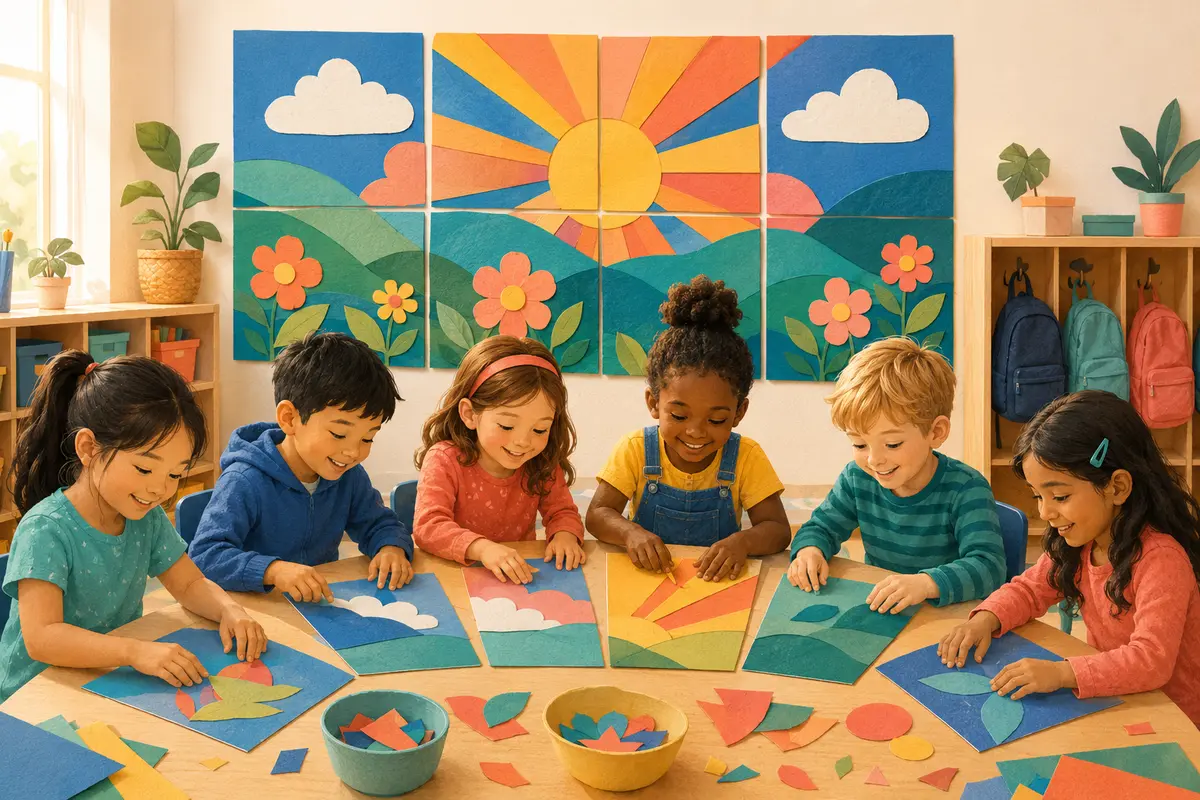
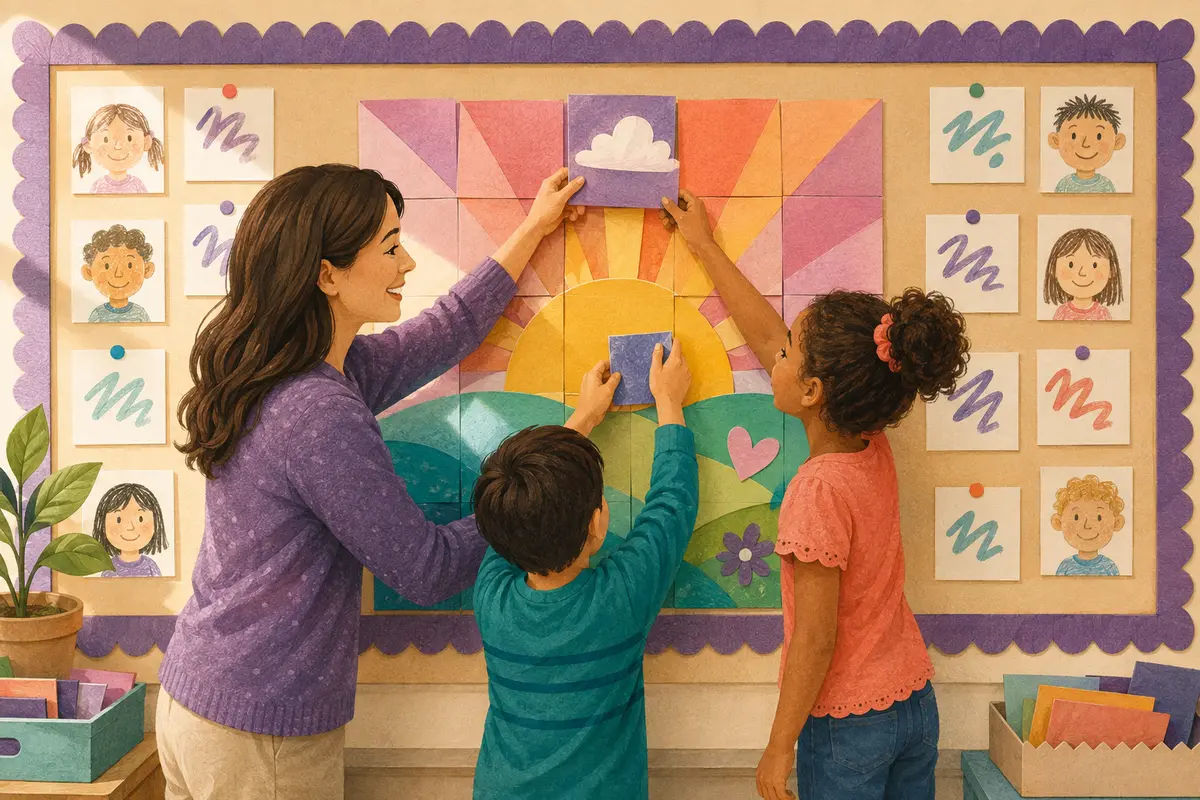
A first-week bulletin board works best when it welcomes students and gives them a role in creating the room. Start with a simple frame, then let student work become the main decoration.
1. We are better together
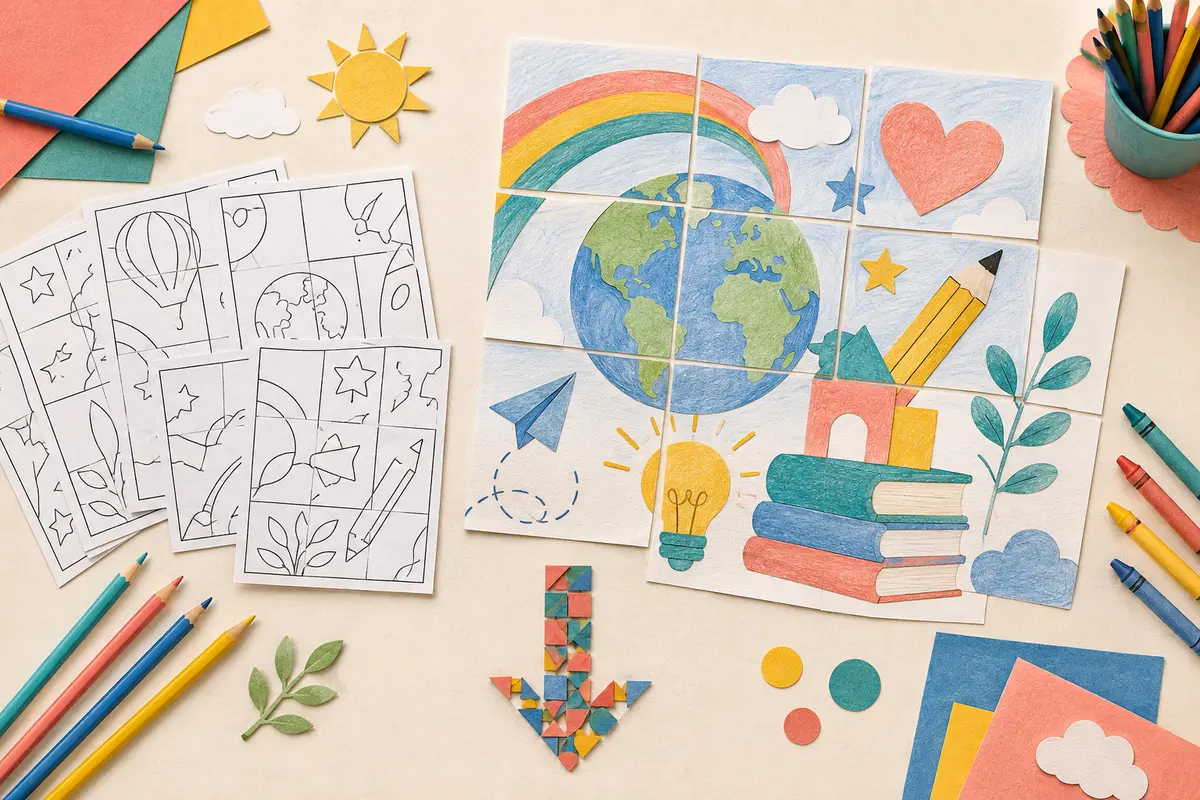
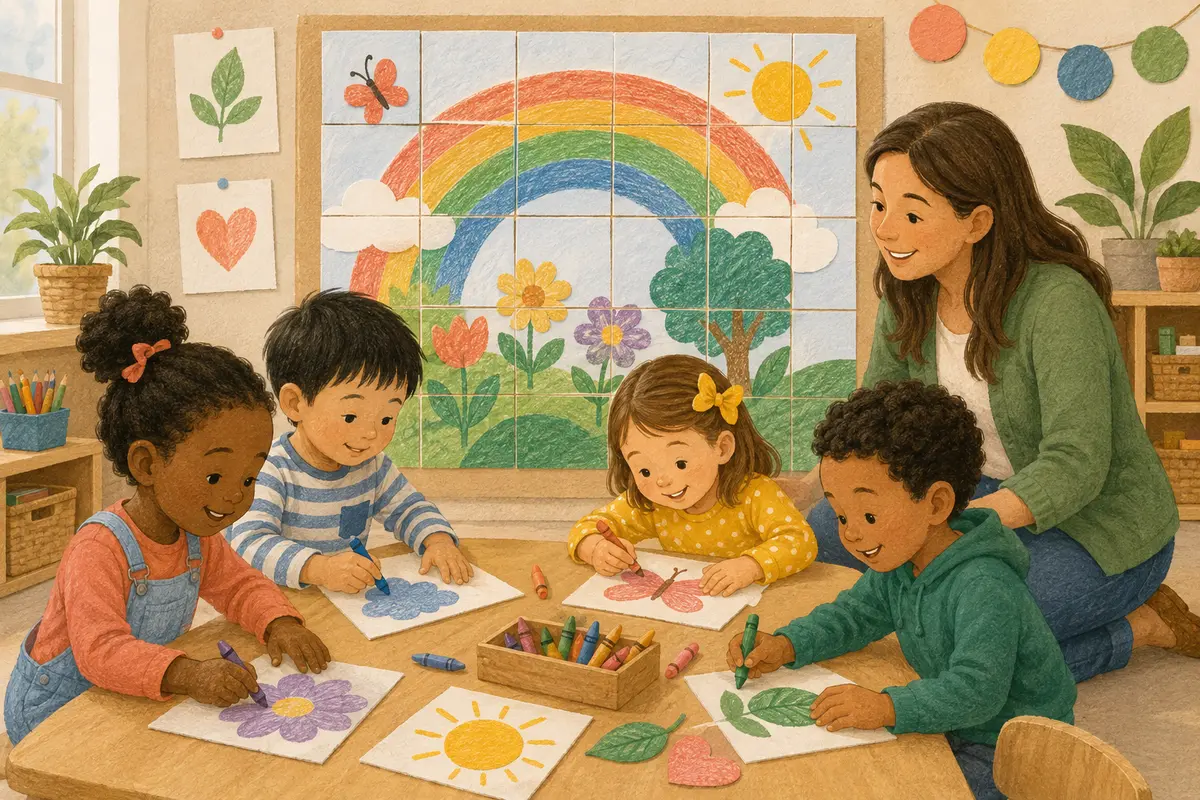
Place a collaborative poster in the center and surround it with student names. Because the display is made from equal pieces, it communicates belonging visually: every student helped complete the picture.
2. Our goals are taking flight
Give each student a paper airplane, balloon, or star to decorate with one hope for the year. Arrange the pieces moving toward a shared title. Younger students can draw their goal and dictate a short caption.
3. A classroom of readers
Create book-shaped name cards and ask students to add a favorite story, character, or topic they want to explore. Add new book recommendations throughout the term so the board stays useful.
4. Pieces of our class
Use puzzle-piece templates for student self-portraits. Arrange them around a short community statement. Keep the design uncluttered by using one background color and repeating the same name-label style.
5. Watch us grow
Start with a large paper plant, tree, or garden. Each student adds a leaf or flower with a strength they already have. Save space to add new skills later in the year, turning the board into a record of growth.
- Prepare only the title and border before school starts.
- Use removable mounting putty for pieces you will update.
- Photograph the board before changing it for the next season.
Keep it low-prep
Choose one focal piece, one readable title, and one repeated student element. A limited palette makes varied student work feel connected. Most importantly, leave open space—the board will look calmer and students’ contributions will be easier to see.
Ready to create together?
Choose a printable, give every student a piece, and watch the big picture come to life.
Browse Back-to-School activities ↗Frequently asked questions
What should I put on a first-week bulletin board?
Choose one clear focus, such as a shared welcome poster, reading interests or learning strengths. Add a repeated student element such as a name card or short response, and leave room for work produced during the first week.
How can students contribute before everyone is comfortable writing?
Offer drawings, dictated responses and simple name cards. A colored poster tile is another contribution that does not depend on a long written introduction.
How can I keep a student-made display easy to read?
Use a readable title, a consistent label style and space between responses. A limited background palette helps different student contributions remain visible without competing with the main artwork.
Can I keep using the board after the first week?
Yes. Add new book recommendations, examples of learning and revised goals over time. Keep the central display and update selected student cards so the board continues to serve a classroom purpose.