In this guide: all 12 posters
An Anti-Bullying Week collaborative poster gives a class something to build together while practicing a specific action: inviting someone to join, listening carefully or finding a trusted adult. Choose a message that connects to your existing classroom routines, then use the finished mural as a visible reminder of that lesson.
This guide covers all 12 products in the Anti-Bullying Week collection, checked on November 4, 2026. Each design below has its own classroom idea, two real product previews and a direct link to the printable. The activities are suggested teacher-led extensions; the downloadable products are coloring-poster PDFs.
Explore the complete Anti-Bullying Week collection.
Looking for the printables? Browse the Anti-Bullying Week collection ↗ or use the classroom plan below.
Start with a clear, supportive purpose
The Anti-Bullying Alliance definition identifies intentional harm, repetition and a power imbalance. A general kindness lesson and a response to bullying serve different purposes. Use the poster to teach a practical classroom routine alongside your school’s anti-bullying procedures.
StopBullying.gov’s prevention guidance encourages children to talk with trusted adults about concerns. Build that route into the lesson. Use fictional examples, allow children to pass on a discussion question and handle real reports privately through your school’s procedures. The artwork is not an official campaign resource, a reporting system or a substitute for an adult response.
Compare all 12 Anti-Bullying Week designs
| Poster message | Classroom focus | Product |
|---|---|---|
| Let Support Carry Your Voice | Finding support and choosing a way to communicate | View product |
| Pause, Save, Report, Get Support | Discussing help-seeking when something online feels wrong | View product |
| Make Every Game a Fair Game | Fair turns and clear rules during shared games | View product |
| Practice Asking, Practice Listening | Practicing a respectful request and a listening response | View product |
| Respect Grows When We Include | Welcoming different learners into a shared activity | View product |
| You Can Ask for Help in Your Own Way | Recognizing spoken, written and supported requests for help | View product |
| Respect Reaches Everyone | Turning the word respect into observable classroom actions | View product |
| Listening Makes It Safer to Speak | Listening in ways that make a conversation easier | View product |
| A Trusted Adult Can Help | Identifying the school adults who can provide support | View product |
| Leave No Classmate Outside the Game | Inviting a classmate to join a game | View product |
| A Safer Space Is Everyone's Job | Sharing responsibility for everyday classroom routines | View product |
| Make Space for Every Voice | Making room for different contributions in group discussion | View product |
1. Let Support Carry Your Voice Collaborative Poster
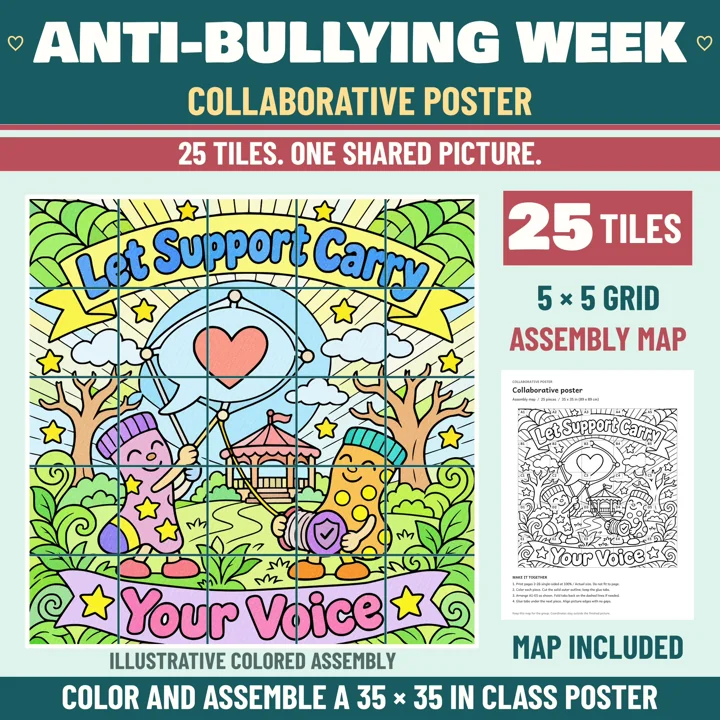
Best for: Finding support and choosing a way to communicate.
Pencil characters, a heart and a leafy outdoor scene surround a message about finding support. The bright arch makes this a welcoming choice for a class display near a familiar help routine. Use the picture to introduce the idea that someone can help a learner communicate a worry.
Classroom idea: Make a teacher-led example about an imaginary learner who wants help but cannot find the words. Offer several routes: speak privately, write a short note, point to an agreed symbol or use a usual communication aid. Let students choose a route to rehearse with a neutral classroom request. Identify how the request reaches an available adult; avoid asking children to describe real incidents to the whole class.
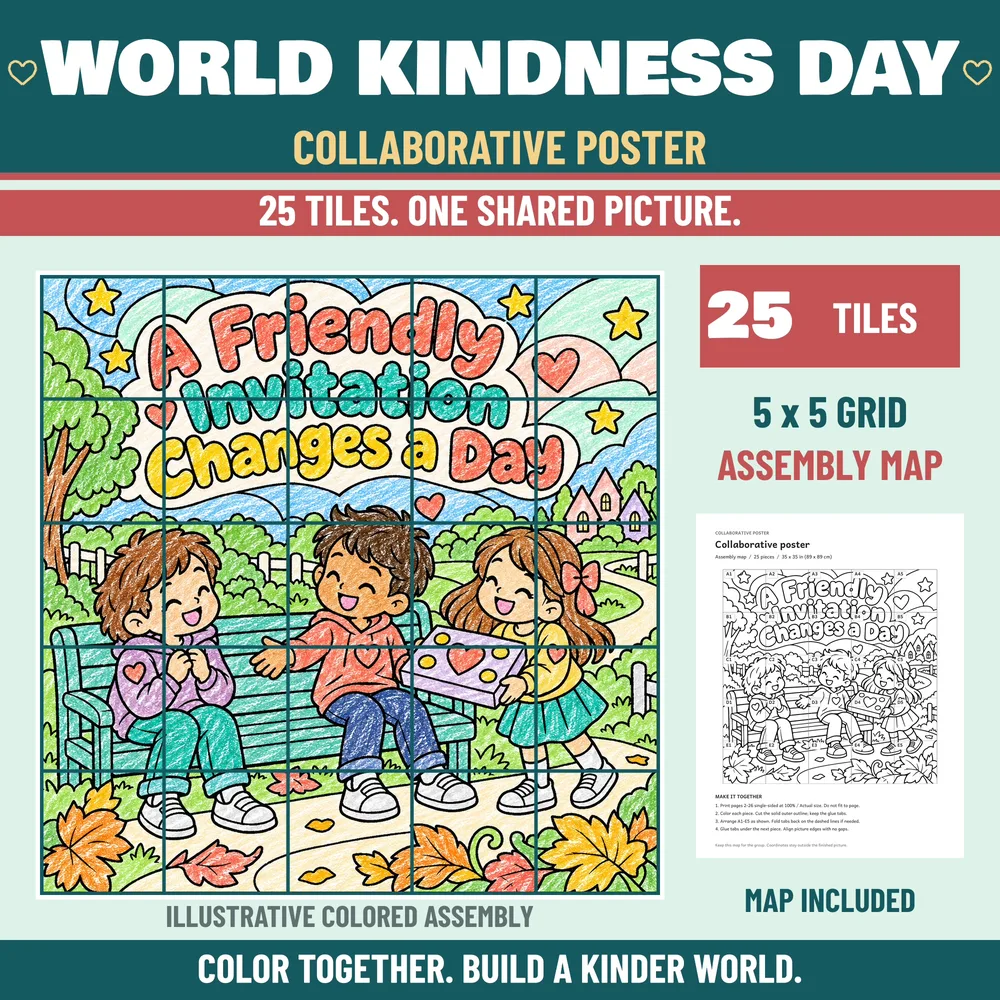
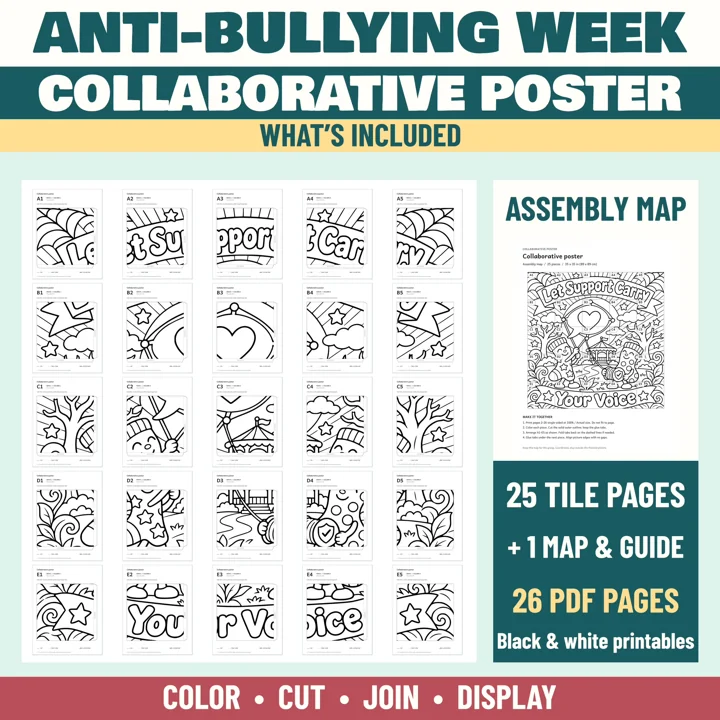
Printable details: One 26-page PDF: 25 black-and-white coloring tiles, a 5 × 5 assembly map and joining guidance. The listed finished picture is 35 × 35 inches (about 89 × 89 cm). Colored artwork in the preview illustrates a possible finished result.
2. Pause, Save, Report, Get Support Collaborative Poster
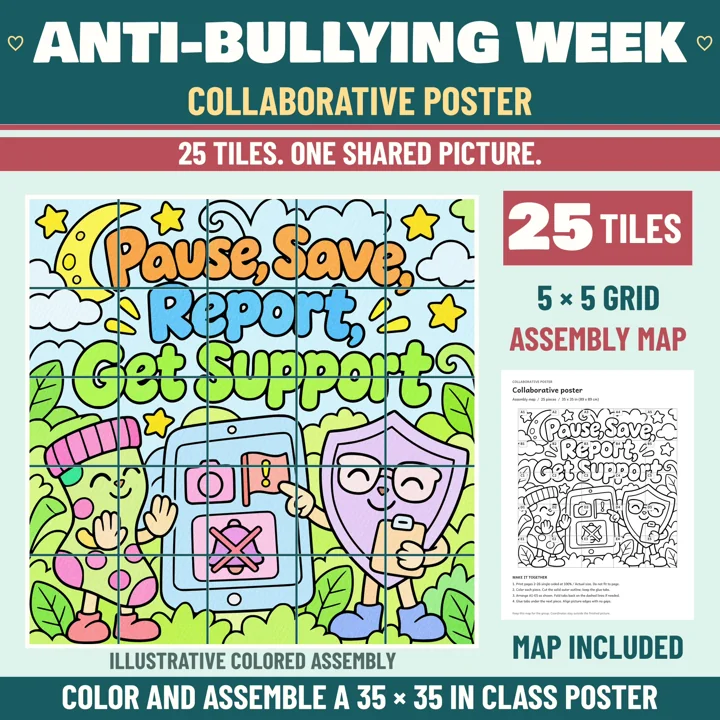
Best for: Discussing help-seeking when something online feels wrong.
A tablet, stop-hand character and shield turn the online-safety message into a colorful shared image. This is a useful visual anchor for a digital-citizenship conversation about pausing and getting adult support. Its words can stay visible after the lesson as a reminder of a school-approved reporting route.
Classroom idea: Show a teacher-made, fictional example of an unkind message with no real names or screenshots. Ask which trusted adult could help and practice a sentence such as I saw something online that worried me. Discuss reporting through the routes your school uses. An adult should guide any handling of evidence; children do not need to search for harmful material, circulate messages or confront the sender to complete this activity.
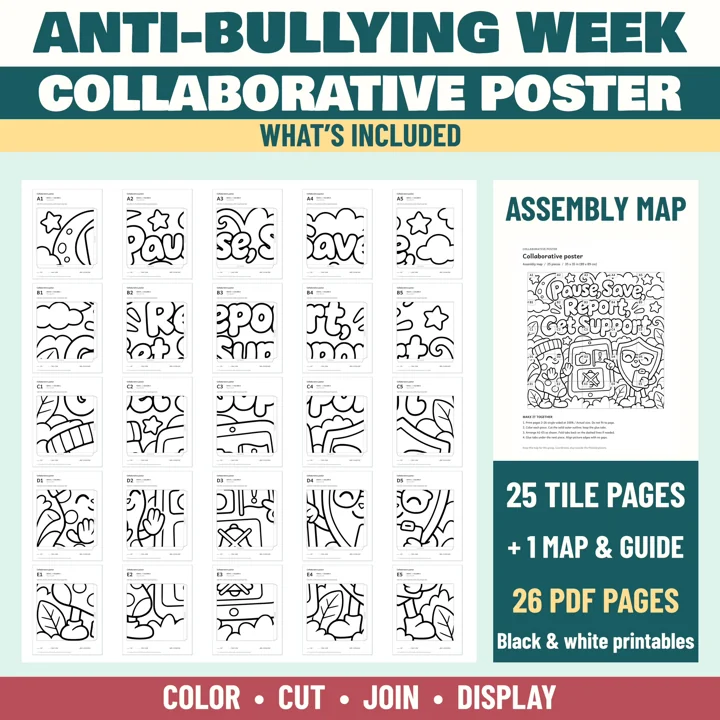
Printable details: One 26-page PDF: 25 black-and-white coloring tiles, a 5 × 5 assembly map and joining guidance. The listed finished picture is 35 × 35 inches (about 89 × 89 cm). Colored artwork in the preview illustrates a possible finished result.
3. Make Every Game a Fair Game Collaborative Poster
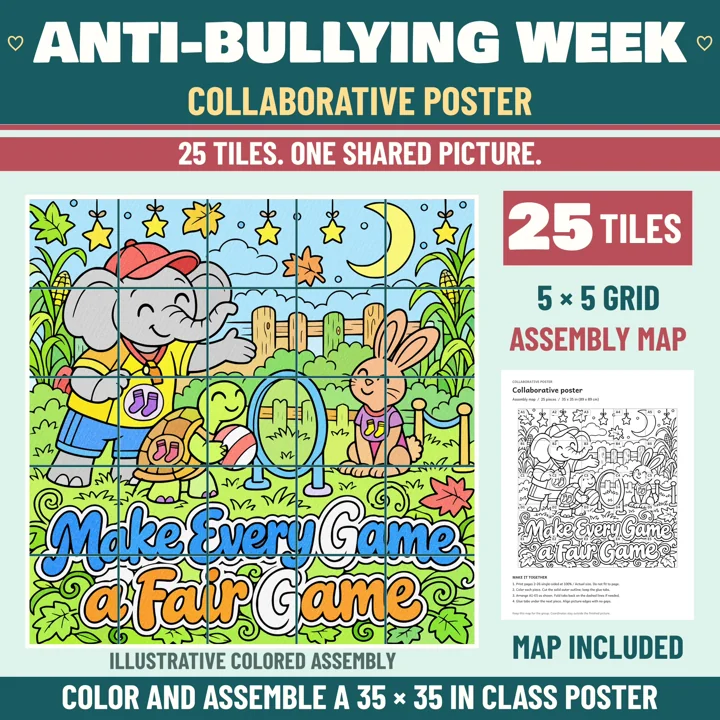
Best for: Fair turns and clear rules during shared games.
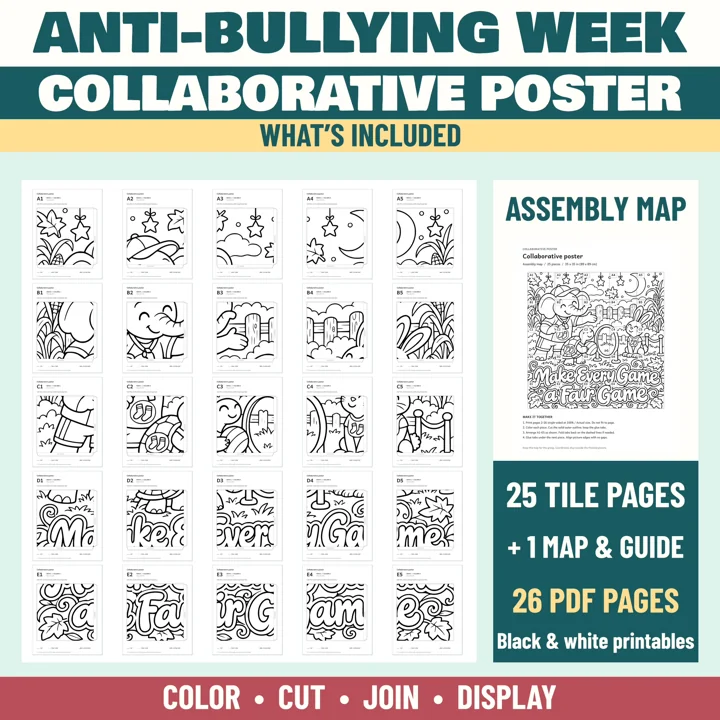
Friendly animal characters gather around a playground game beneath a large fair-play message. The familiar game scene gives students something concrete to notice: who is joining, how turns might work and what makes a rule understandable. Choose this design for a playground or shared-games discussion.
Classroom idea: Use a familiar, low-stakes classroom game. Before play, agree how a learner joins, how turns move around the group and what happens when someone needs a different role. Afterward, write one class caption explaining a change that made participation easier. Distinguish an ordinary rules disagreement from ongoing exclusion or other concerns that need an adult response. The goal is a usable routine, not finding a child to blame.
Printable details: One 26-page PDF: 25 black-and-white coloring tiles, a 5 × 5 assembly map and joining guidance. The listed finished picture is 35 × 35 inches (about 89 × 89 cm). Colored artwork in the preview illustrates a possible finished result.
4. Practice Asking, Practice Listening Collaborative Poster
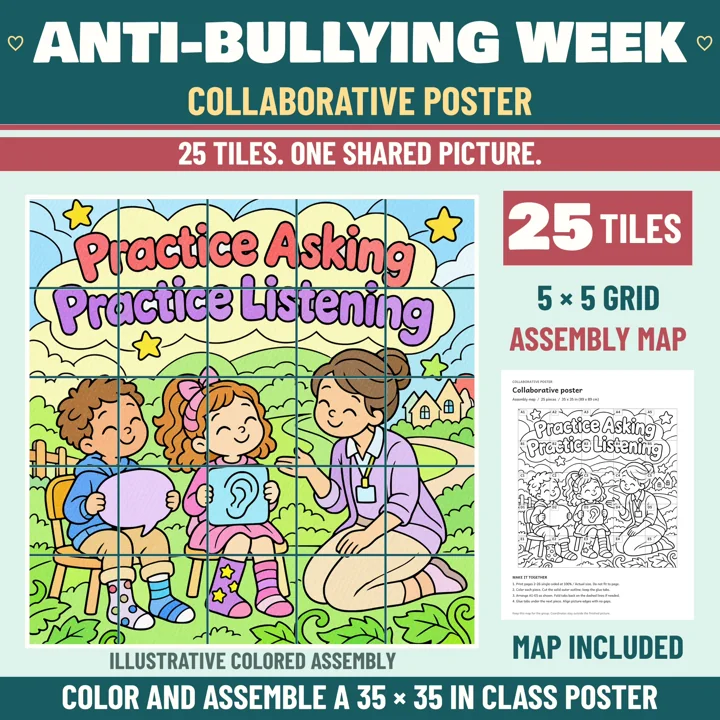
Best for: Practicing a respectful request and a listening response.
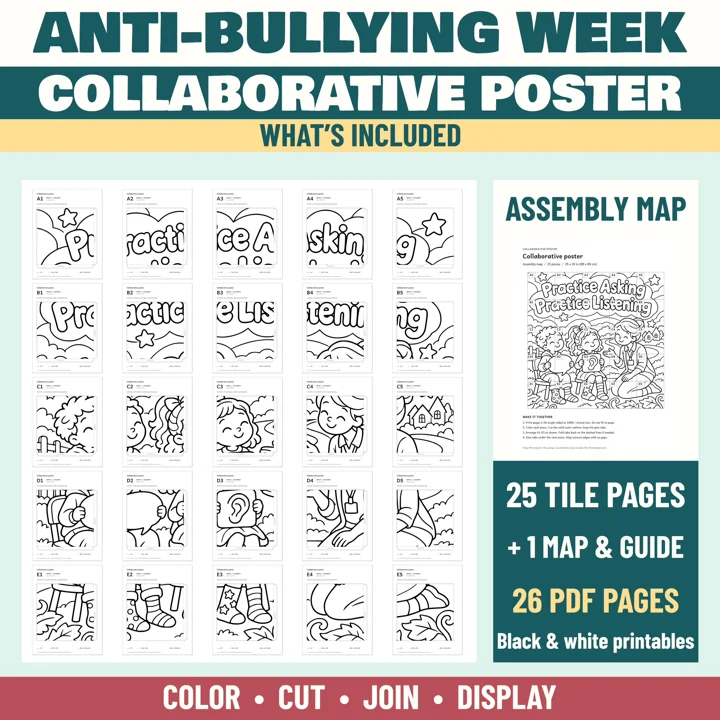
Children talk with a supportive adult while speech and listening symbols reinforce the message. This design connects a shared art activity with two skills that can be practiced separately: asking for help and giving someone time to explain. It suits a display beside agreed classroom conversation routines.
Classroom idea: Model a short exchange about a neutral problem, such as not understanding a task. One partner asks for help; the other restates what they heard and offers a next step. Swap roles or let learners use drawings and communication supports. Make clear that a classmate can listen kindly while an adult handles a safety concern. Do not require eye contact, public disclosure or acting out a real bullying incident.
Printable details: One 26-page PDF: 25 black-and-white coloring tiles, a 5 × 5 assembly map and joining guidance. The listed finished picture is 35 × 35 inches (about 89 × 89 cm). Colored artwork in the preview illustrates a possible finished result.
5. Respect Grows When We Include Collaborative Poster
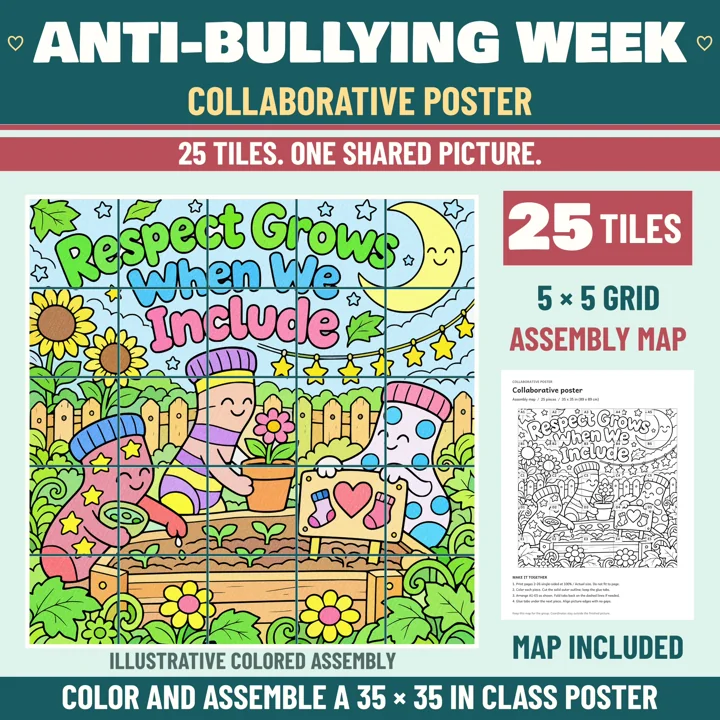
Best for: Welcoming different learners into a shared activity.
Pencil characters share a garden filled with flowers and patterns. The growing-garden setting gives the inclusion message a clear visual metaphor: a shared space can hold different contributions. This poster works well when a class is planning how everyone can take part in its next group task.
Classroom idea: Ask groups to design a welcome for an imaginary new learner joining an art table. Offer practical choices: explain the task, provide a quieter workspace, show the materials or suggest a role. Turn the useful ideas into a short teacher-made invitation list beside the mural. Inclusion should offer real choices and respect a person who prefers a different activity; it does not mean forcing friendship or physical contact.
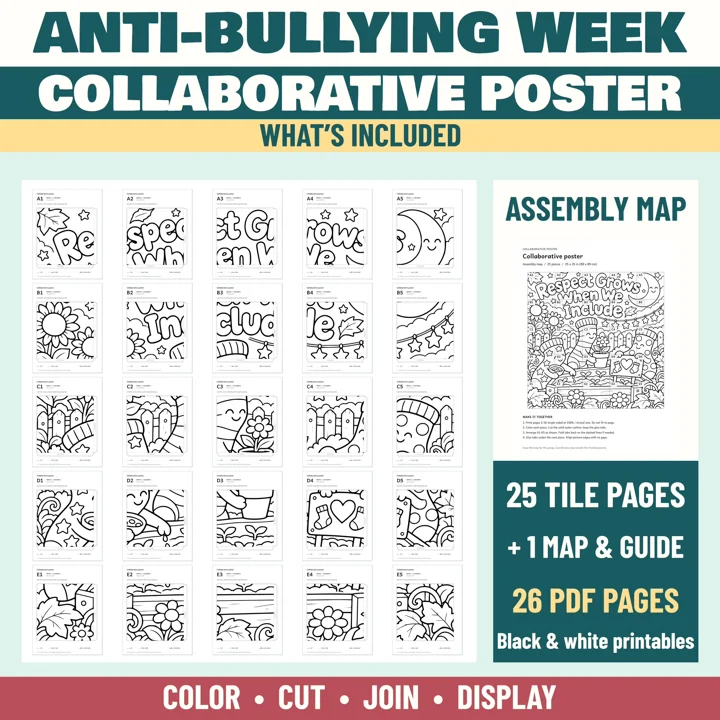
Printable details: One 26-page PDF: 25 black-and-white coloring tiles, a 5 × 5 assembly map and joining guidance. The listed finished picture is 35 × 35 inches (about 89 × 89 cm). Colored artwork in the preview illustrates a possible finished result.
6. You Can Ask for Help in Your Own Way Collaborative Poster
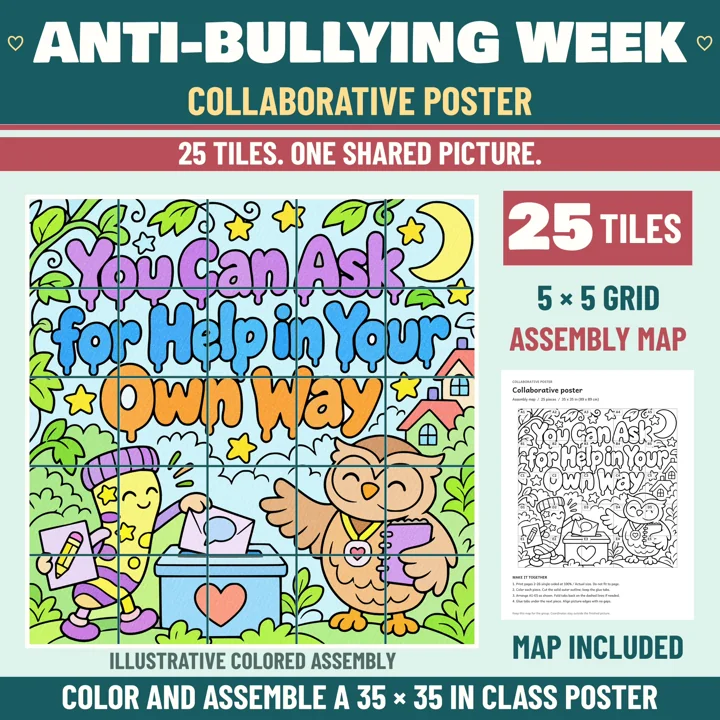
Best for: Recognizing spoken, written and supported requests for help.
An owl and pencil character stand beside a heart-marked box and envelope. The different objects support the idea that a request for help can take more than one form. Choose it to make an existing, accessible help-seeking system visible to your group.
Classroom idea: Demonstrate two or three ways to contact a trusted adult using a made-up classroom concern. If your school has a written reporting or worry system, explain who checks it and when; do not introduce an unattended box as a safety solution. Students can practice with a simple request for materials. Keep any real concern private and follow your school procedures. A note template or reporting box is an optional teacher-created addition, not part of the PDF.
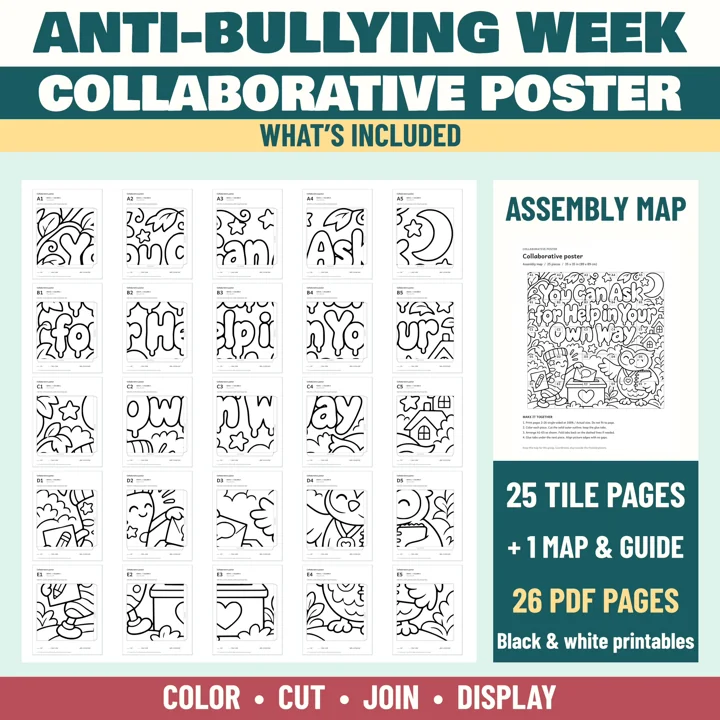
Printable details: One 26-page PDF: 25 black-and-white coloring tiles, a 5 × 5 assembly map and joining guidance. The listed finished picture is 35 × 35 inches (about 89 × 89 cm). Colored artwork in the preview illustrates a possible finished result.
7. Respect Reaches Everyone Collaborative Poster
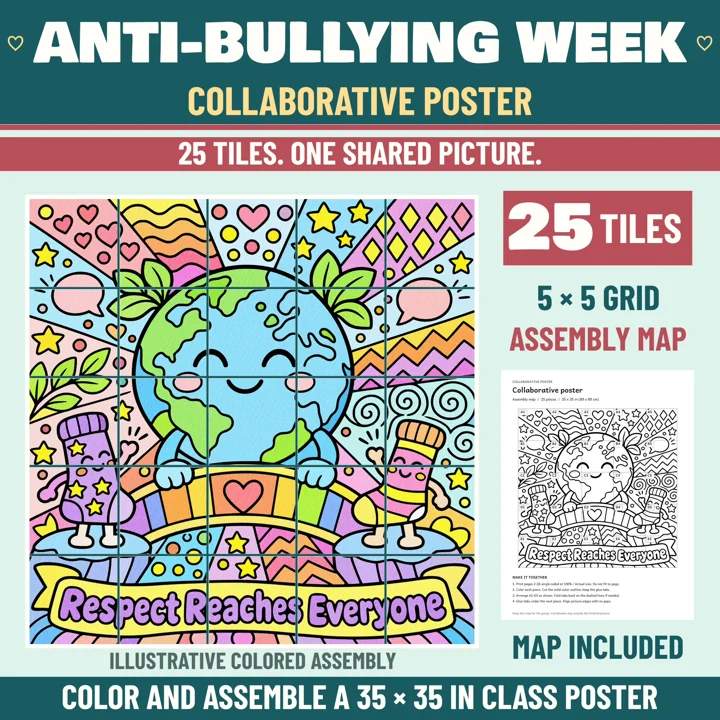
Best for: Turning the word respect into observable classroom actions.
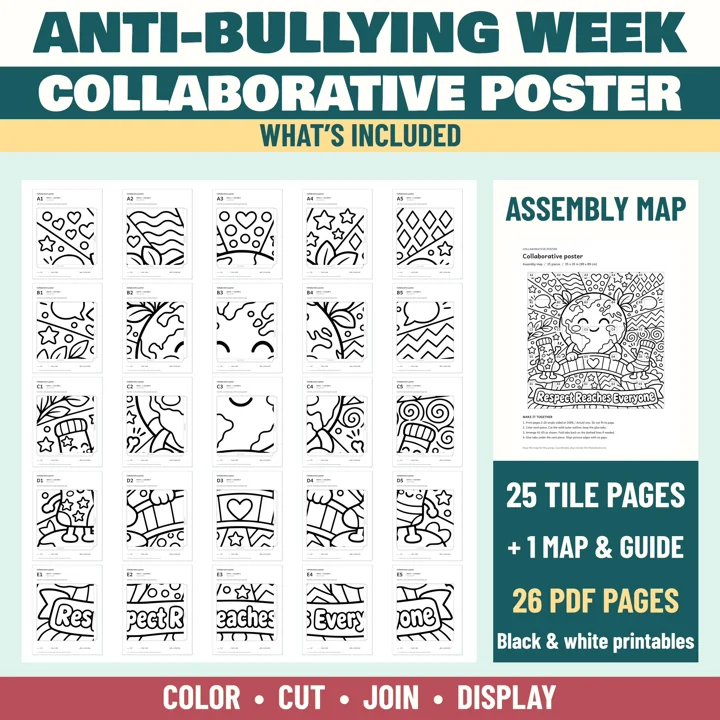
A smiling globe, pencil characters, hearts and patterned panels frame a message that reaches beyond one friendship group. Its many small sections suit a mural in which individual coloring choices remain visible. The artwork can support a class conversation about valuing differences without expecting everyone to look or work the same way.
Classroom idea: Invite learners to finish a concrete sentence: In this room, respect can look like ___. Use examples such as asking before borrowing, saying a name correctly, making space for a communication aid or accepting a different coloring choice. Select a few actions the class can actually practice. Write them on separate teacher-made cards for the display. Avoid rating children as more or less respectful based on how they communicate or move.
Printable details: One 26-page PDF: 25 black-and-white coloring tiles, a 5 × 5 assembly map and joining guidance. The listed finished picture is 35 × 35 inches (about 89 × 89 cm). Colored artwork in the preview illustrates a possible finished result.
8. Listening Makes It Safer to Speak Collaborative Poster
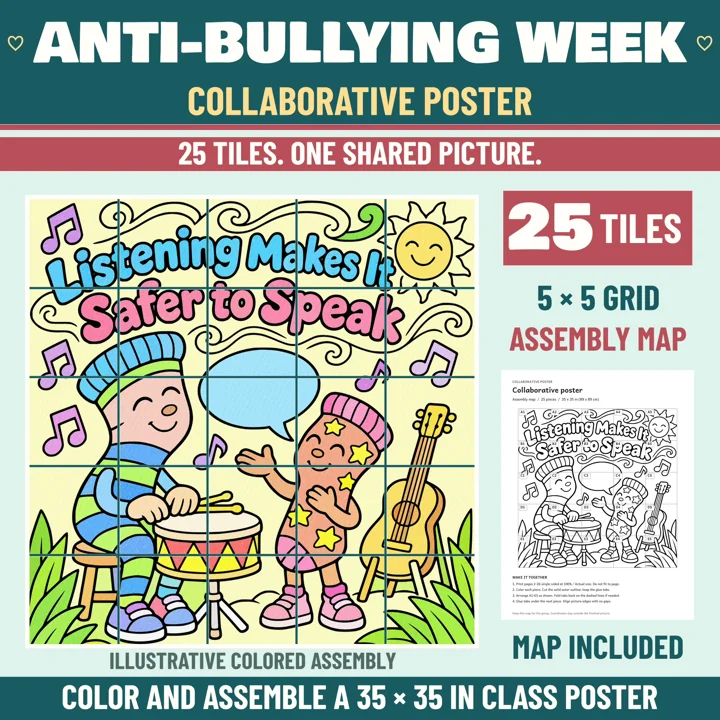
Best for: Listening in ways that make a conversation easier.
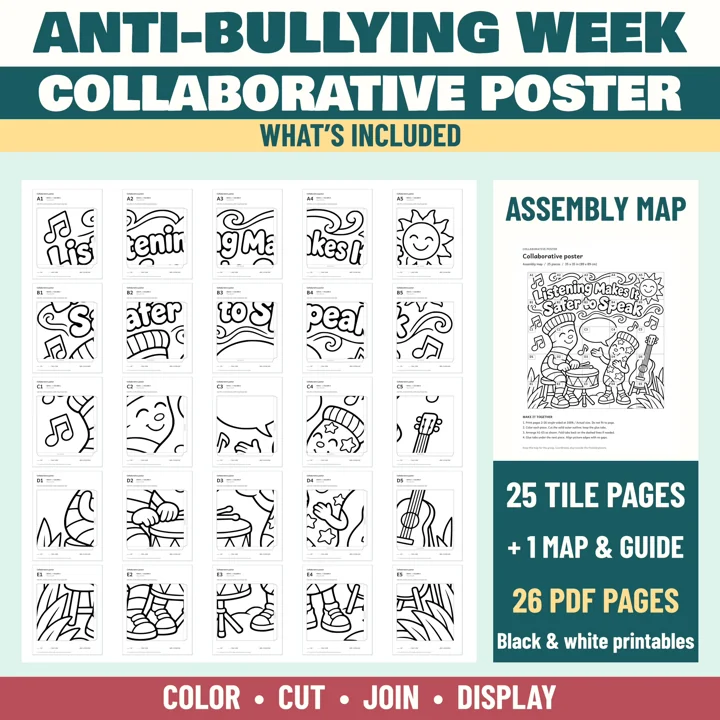
A drum, microphone, musical notes and friendly characters give the listening message an energetic setting. The large speech bubble makes the connection between a speaker and a listener easy to discuss. It is a good match for a speaking-and-listening activity that ends with a shared visual reminder.
Classroom idea: Give partners a neutral topic, such as a favorite story character. Ask the listener to notice one detail, give the speaker time and check whether they understood. Swap or offer a drawing-based version. After assembly, choose one useful response for a small caption: Do you want me to listen, help you find an adult, or both? Listening can involve different body positions and communication methods; stillness and eye contact are not the assessment.
Printable details: One 26-page PDF: 25 black-and-white coloring tiles, a 5 × 5 assembly map and joining guidance. The listed finished picture is 35 × 35 inches (about 89 × 89 cm). Colored artwork in the preview illustrates a possible finished result.
9. A Trusted Adult Can Help Collaborative Poster
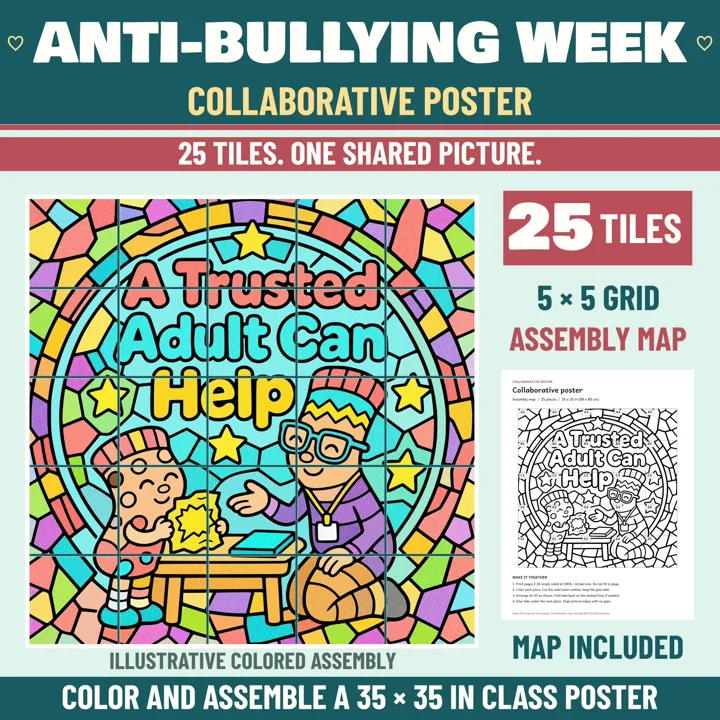
Best for: Identifying the school adults who can provide support.
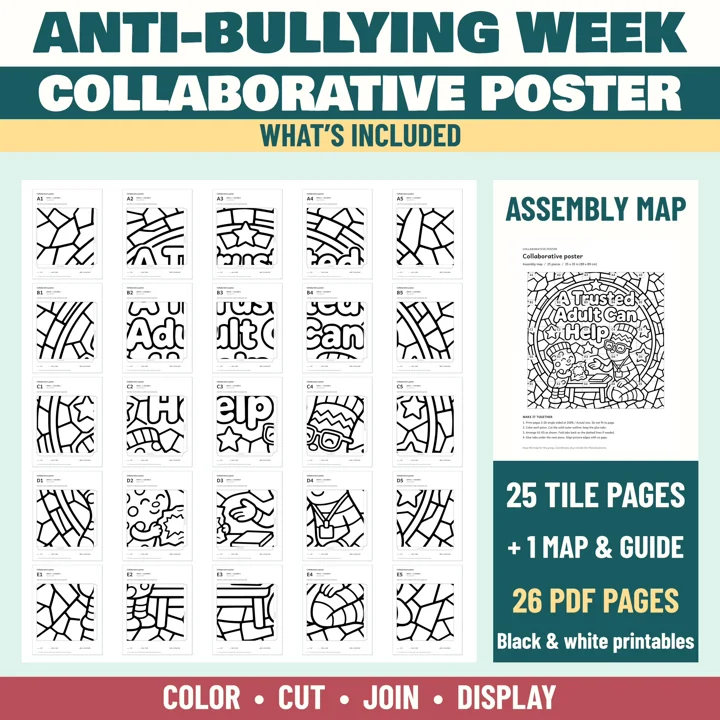
A child talks with an adult beside a book and speech bubble, surrounded by bright geometric shapes. The direct help message makes this a clear choice for a display near information about trusted adults. The illustration is a conversation starter rather than a promise that a poster alone will solve a concern.
Classroom idea: Using roles rather than pupils’ personal stories, identify the adults available in your own setting and how a child can reach them. Make a teacher-checked help map that fits your school: for example, a class teacher and another designated member of staff. Practice what an imaginary learner might say if the first adult is unavailable or more help is needed. Keep private names, contact details and actual reports off the public display.
Printable details: One 26-page PDF: 25 black-and-white coloring tiles, a 5 × 5 assembly map and joining guidance. The listed finished picture is 35 × 35 inches (about 89 × 89 cm). Colored artwork in the preview illustrates a possible finished result.
10. Leave No Classmate Outside the Game Collaborative Poster
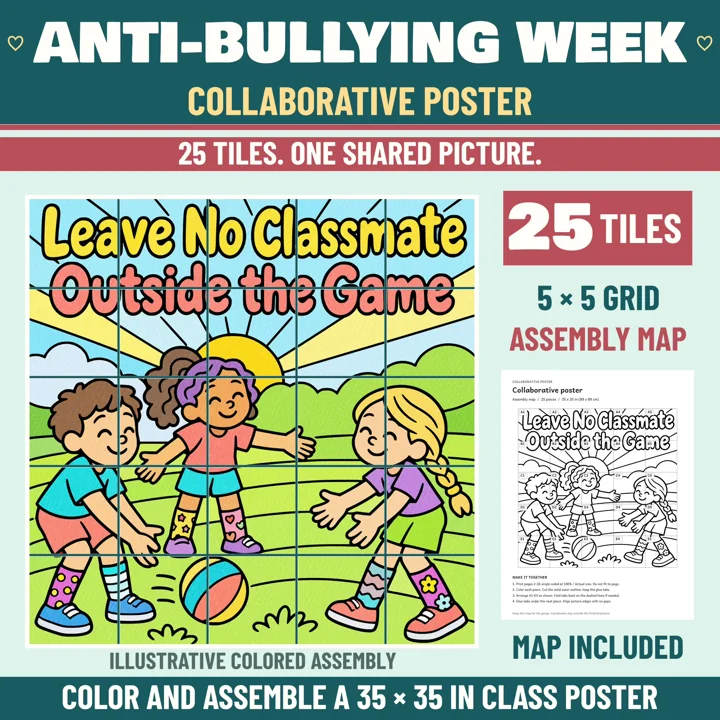
Best for: Inviting a classmate to join a game.
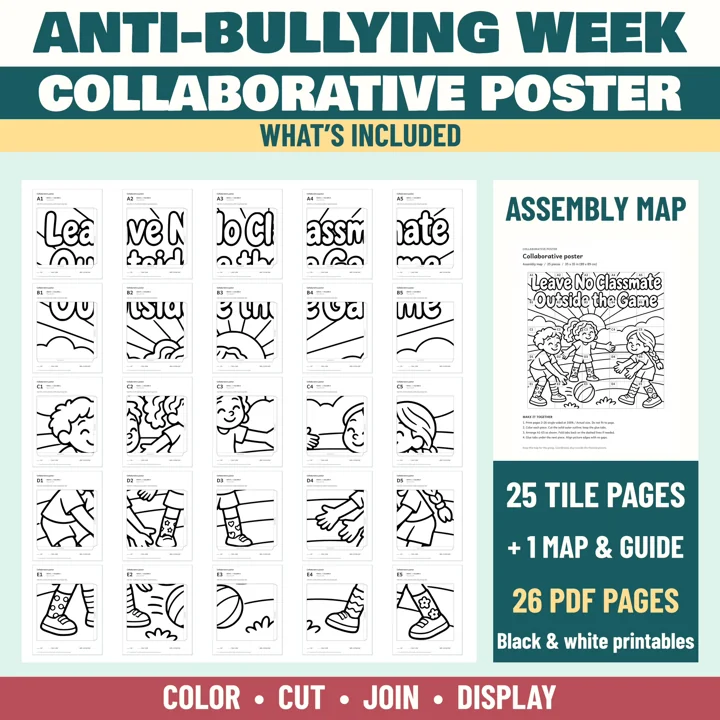
Three children gather around a ball on a green playing field. The invitation theme is visible in the open gestures and shared space, making this design especially useful for discussing entry into a game. It offers a different focus from the fair-play poster: noticing someone who has not joined yet.
Classroom idea: Practice a short invitation with an imaginary classmate: Would you like to join this round? Then plan an accessible way to take part, such as an adapted rule or a choice of role. Include a respectful response when someone says no. Put a few invitation phrases beside the assembled mural. Adults should address repeated exclusion through school routines; pupils are not responsible for fixing a serious concern on their own.
Printable details: One 26-page PDF: 25 black-and-white coloring tiles, a 5 × 5 assembly map and joining guidance. The listed finished picture is 35 × 35 inches (about 89 × 89 cm). Colored artwork in the preview illustrates a possible finished result.
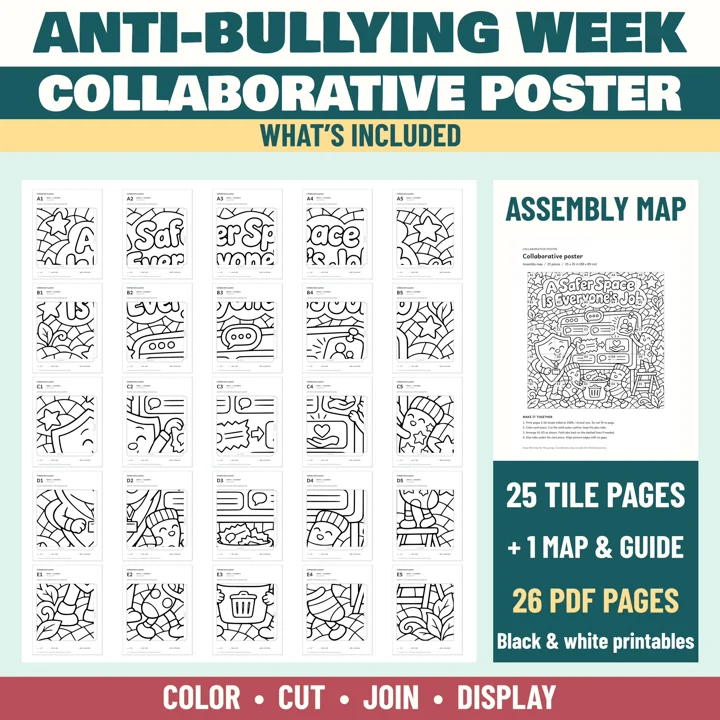
11. A Safer Space Is Everyone's Job Collaborative Poster
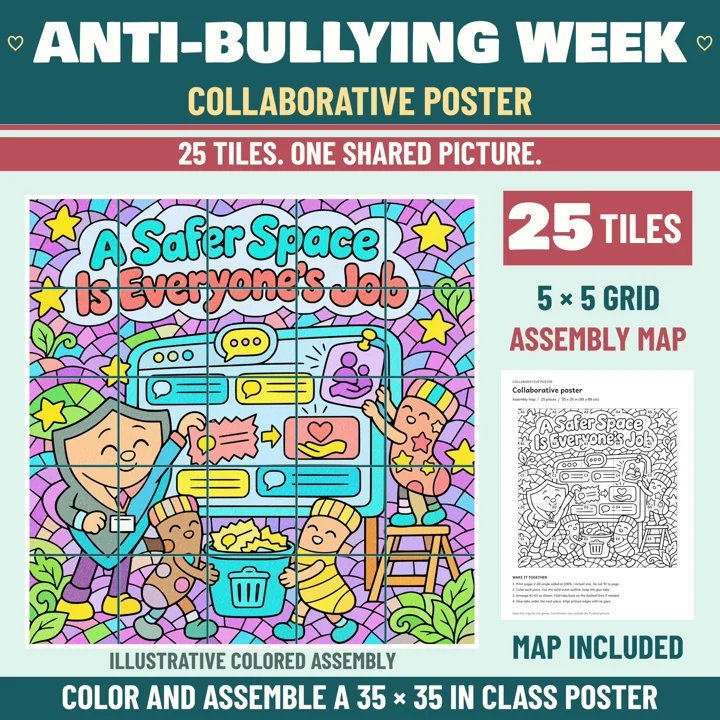
Best for: Sharing responsibility for everyday classroom routines.
Children work around a colorful organization station with materials, symbols and storage spaces. The shared-job message fits a practical discussion about how a classroom runs. Choose it when you want the art display to connect with a small routine learners can help improve.
Classroom idea: Choose one manageable task, such as returning shared tools or making a group station easier to use. Let students suggest and choose roles, then try the new routine while assembling the poster. Reflect on which action helped someone else participate. Keep the responsibility proportionate: children can care for materials and classmates, while adults remain responsible for responding to bullying and maintaining safety. Display the routine beside the mural as a reminder.
Printable details: One 26-page PDF: 25 black-and-white coloring tiles, a 5 × 5 assembly map and joining guidance. The listed finished picture is 35 × 35 inches (about 89 × 89 cm). Colored artwork in the preview illustrates a possible finished result.
12. Make Space for Every Voice Collaborative Poster
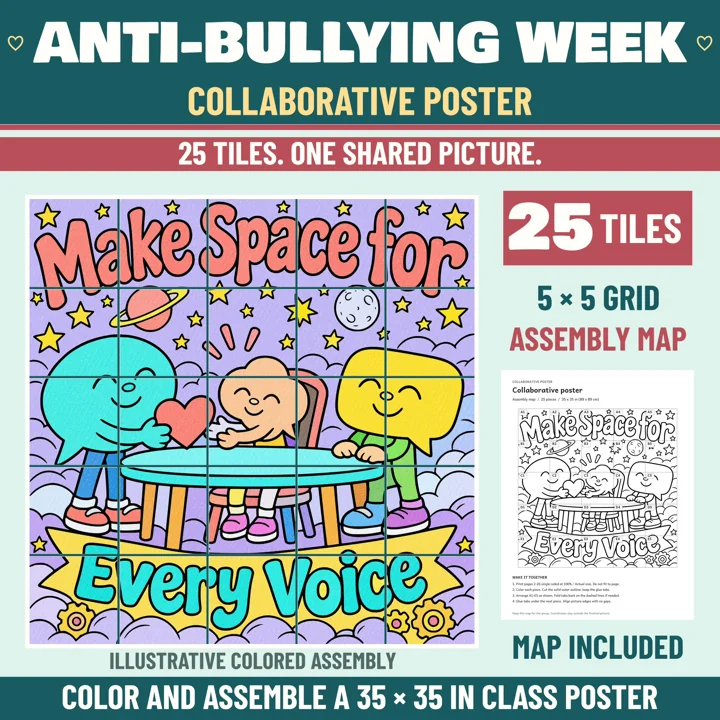
Best for: Making room for different contributions in group discussion.
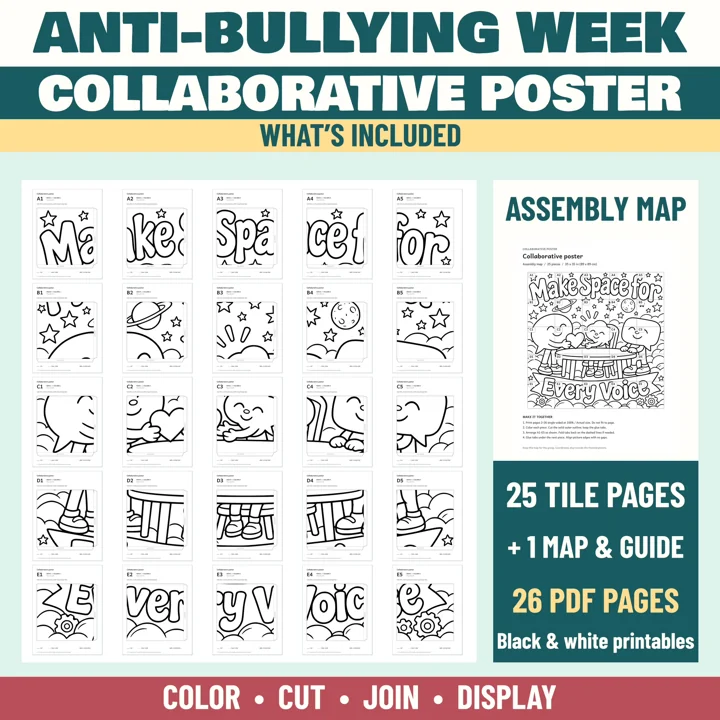
Three smiling characters sit around a round table beneath speech bubbles. The message gives the class a strong closing image for a week of listening and inclusion activities. A completed mural can represent shared contribution while keeping each learner’s individual page visible.
Classroom idea: Use a neutral planning question, such as choosing a class story. Give learners different ways to contribute: speaking, drawing, using a communication aid, asking an adult to read a note or passing for now. Try a simple turn system that gives time without forcing an answer. After the reveal, ask how the group made space for ideas. Keep the discussion about the routine, rather than asking anyone to identify a child whose voice is missing.
Printable details: One 26-page PDF: 25 black-and-white coloring tiles, a 5 × 5 assembly map and joining guidance. The listed finished picture is 35 × 35 inches (about 89 × 89 cm). Colored artwork in the preview illustrates a possible finished result.
Print, color and assemble the 25 tiles
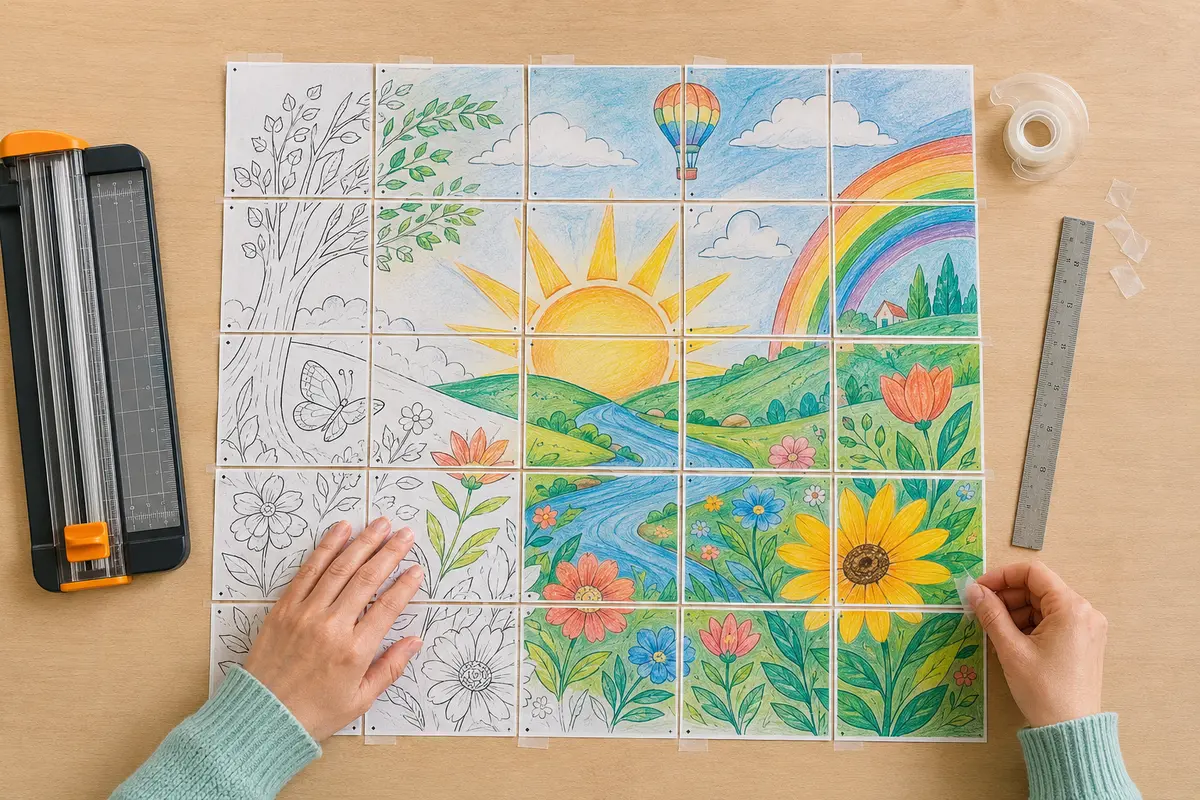
Keep page 1 as the assembly map. The listings instruct you to print PDF pages 2–26 single-sided at 100% / Actual size, without Fit to page. Print one test sheet before the set and keep the same paper size and settings for all 25 tiles.
Give each learner or pair a tile. Cut around the solid outer outlines while keeping the glue tabs. Arrange the labelled A1–E5 pieces in five rows of five, check the picture against the map, then glue tabs beneath neighboring pieces. Each picture tile is 7 × 7 inches; the completed picture is 35 × 35 inches. Offer adult support for cutting and assembly where needed.
You need a printer, paper, coloring materials, scissors and glue. No physical poster, editable template, additional discussion worksheet or reporting form is included. Use the product previews to check the file before choosing a design.
A flexible lesson sequence
- Choose one focus and model it with an imaginary classroom situation. Identify an available trusted adult before any help-seeking discussion.
- Explain the individual tile task and allow coloring across one lesson or several short sessions. Offer a role that fits each learner’s access needs.
- Sort the completed pieces by their coordinates and assemble the rows together. Use the map instead of guessing from a single page.
- Revisit the focus. Ask learners to name or draw one action they could practice, without sharing a personal incident in public.
- Display the mural with a short teacher-made caption and the school-approved way to seek help. Return to the routine after the event.
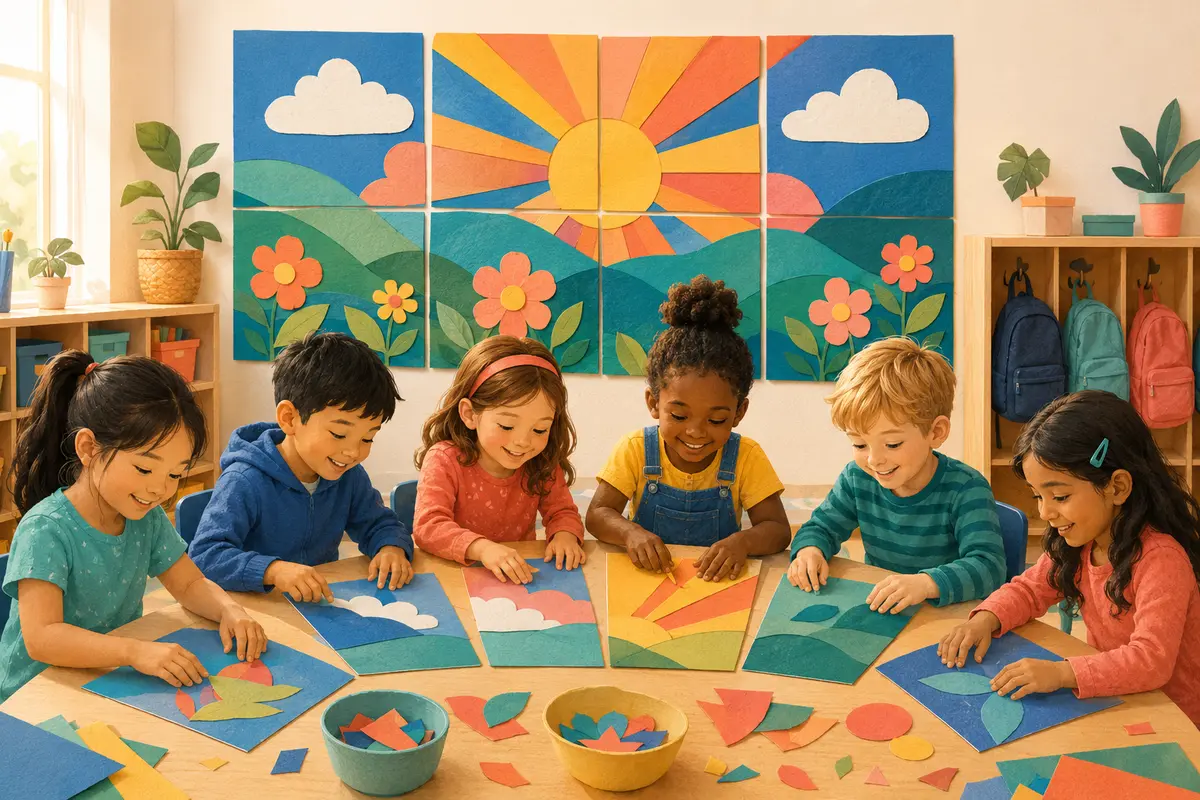
These are planning suggestions rather than a promised completion time. Choose more than one session if the detail, cutting or group discussion needs it. With fewer than 25 learners, offer volunteers an extra tile or have pairs share; with a larger group, divide roles or make a second poster. Participation can include coloring, checking coordinates, sorting, arranging or contributing a caption.
Choose the display that fits your classroom
For help-seeking, compare Let Support Carry Your Voice, You Can Ask for Help in Your Own Way and A Trusted Adult Can Help. For discussion routines, compare Practice Asking, Practice Listening, Listening Makes It Safer to Speak and Make Space for Every Voice. For playground inclusion, compare Make Every Game a Fair Game with Leave No Classmate Outside the Game.
The online-safety design adds a digital-citizenship focus. Respect Reaches Everyone, Respect Grows When We Include and A Safer Space Is Everyone’s Job connect the display with everyday classroom actions. Choose the message first, then preview its picture and printable pages.
Keep the classroom routines going
Continue the invitation and listening work with the World Kindness Day collection guide. For a new class routine, explore the Back to School guide. The printing and assembly guide provides more preparation help; for these 12 PDFs, follow their specific Actual Size instructions above.
Browse all 12 Anti-Bullying Week collaborative posters →
Live product membership, gallery previews and listed file specifications checked on November 4, 2026. Classroom extensions are original teaching suggestions. The independent sources linked above provide context; no affiliation or endorsement is implied.
Ready to create together?
Choose a printable, give every student a piece, and watch the big picture come to life.
Explore Anti-Bullying Week posters ↗Frequently asked questions
What do the Anti-Bullying Week downloads include?
The checked listings describe 26-page digital PDFs with black-and-white coloring tiles and an assembly map. Colored gallery artwork illustrates a possible finish. Read the selected listing before downloading.
How can I connect the art task to classroom routines?
Choose one action to teach, such as inviting a classmate, listening or finding a trusted adult. Model it with a fictional example, practice it during the shared task and return to it in a brief reflection.
Must students describe personal bullying experiences?
No. Use imaginary situations and let students pass or choose another communication route. Keep real concerns private and follow the school’s reporting and safeguarding procedures.
Are the role cards and help maps included in the printable?
No. These are optional teacher-prepared extensions from the guide. The product listing describes the coloring tiles and assembly materials included in the PDF.