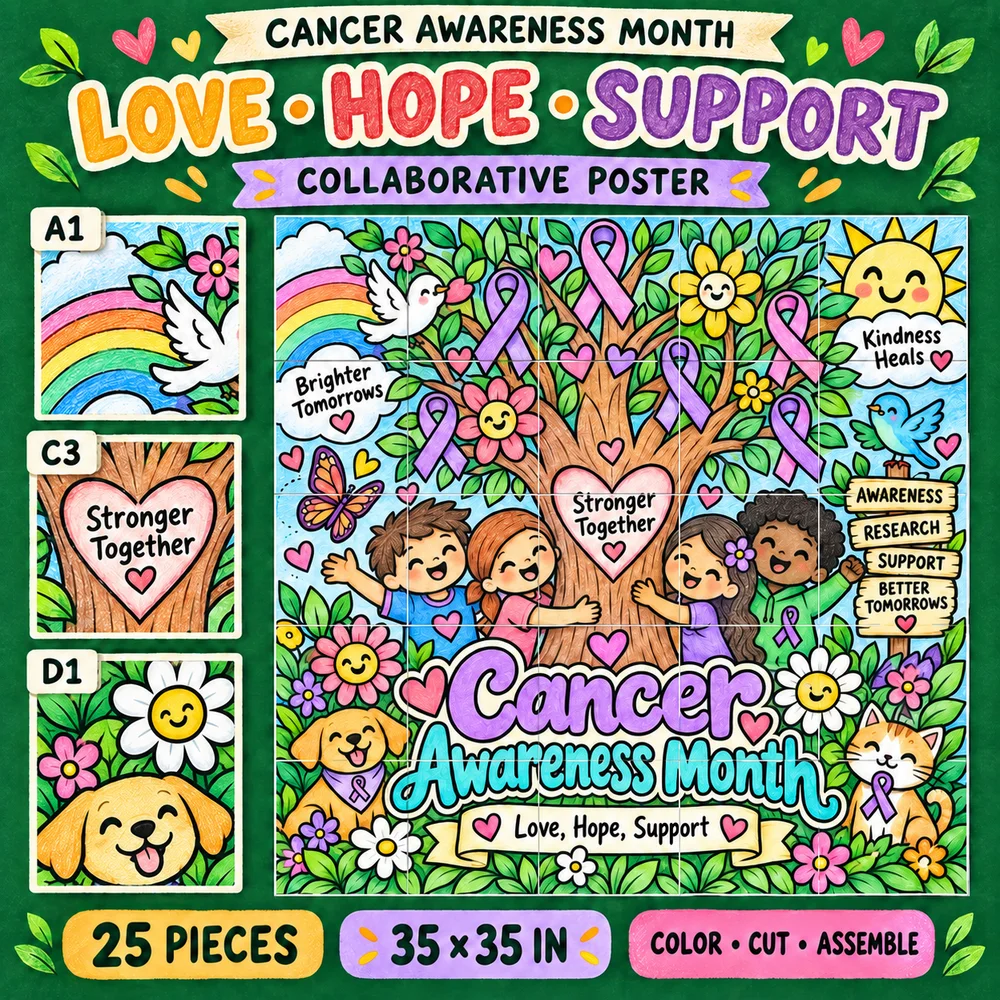
In this guide: all 6 posters
A cancer awareness classroom poster can give students a way to express kindness through shared art. Plan the activity around supportive words and considerate actions. Keep personal stories optional, and choose a design and conversation that fit your school community.
This guide covers all 6 products currently listed in the Cancer Awareness Month collection, with a separate description, classroom idea, two product images and direct link for every design. Compare the actual previews before choosing the activity that fits your group.
Browse the Cancer Awareness Month collection.
Looking for the printables? Browse the Cancer Awareness Month collection ↗ or use the classroom plan below.
Compare the designs in this collection
| Poster | Classroom use | Listing details | Product |
|---|---|---|---|
| Cancer Awareness Month — Multicolored Ribbon Collaborative Poster | A general community-support display | 25 poster pieces; 35 × 35-inch assembled poster | View product |
| Cancer Awareness Month Collaborative Poster — Love Hope Support Activity | A caring-actions reflection activity | 25 poster pieces; 35 × 35-inch assembled poster | View product |
| Cancer Awareness Month Collaborative Poster — Ribbon Art | A ribbon-themed group art display | 26-page PDF; 25 poster pieces | View product |
| Cancer Awareness Month Collaborative Poster — We Care Art Activity | A school counseling conversation about care | 26-page PDF; 25 poster pieces | View product |
| Cancer Awareness Month Collaborative Poster Activity — Bulletin Board Art | A general discussion of supportive adults | 25 poster pieces; 35 × 35-inch assembled poster | View product |
| Cancer Awareness Month Collaborative Poster Hope Care Kindness Art | A kindness-focused awareness bulletin board | 25 poster pieces; 35 × 35-inch assembled poster | View product |
1. Cancer Awareness Month — Multicolored Ribbon Collaborative Poster
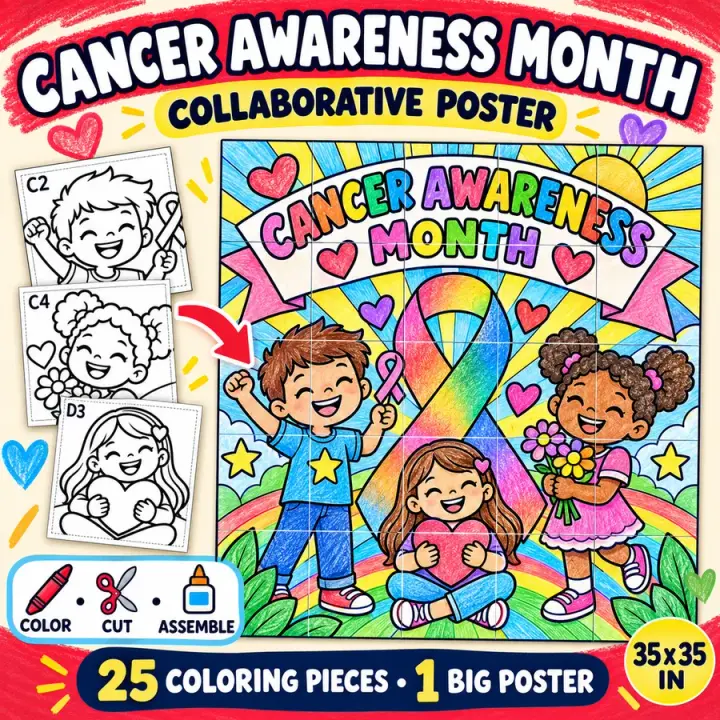
A large multicolored awareness ribbon, stars, hearts, and children accompany the words “Cancer Awareness Month” in this design. Its 25 sections form a 35-inch-square display when assembled. The month title gives the artwork a clear awareness focus, while the children and heart imagery can introduce a general discussion of community support. Pair the completed art with class-generated examples of consideration, using everyday school situations so children can participate without sharing private family experiences.
Classroom idea: Invite students to suggest considerate actions for someone having a difficult day, without naming individuals or sharing personal medical stories. Record their ideas on separate cards beside the finished awareness display.
Best for: A general community-support display
Details from the listing:
- 25 poster pieces
- 35 × 35-inch assembled poster
- Pre-K–grade 5
2. Cancer Awareness Month Collaborative Poster — Love Hope Support Activity
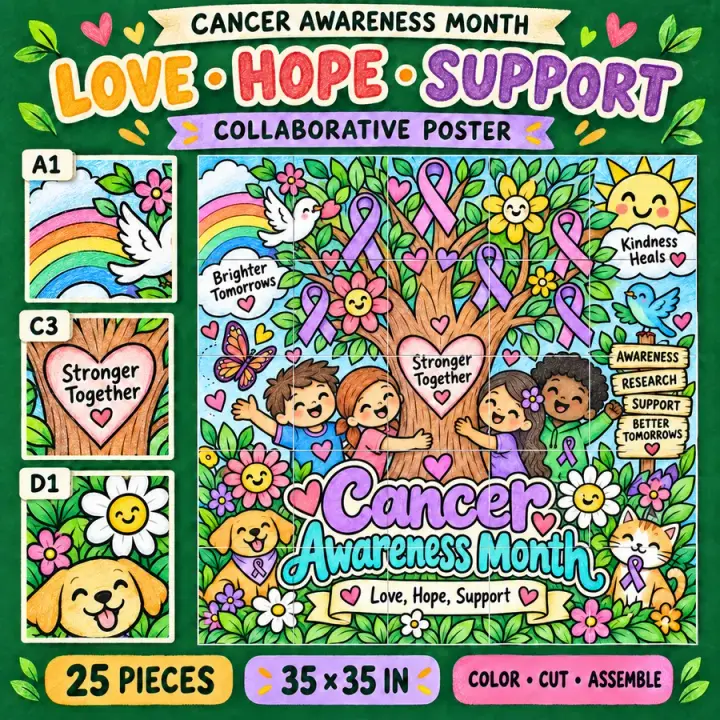
Children embracing a ribbon-decorated tree, friendly animals, and peace symbols distinguish this Cancer Awareness Month design. The listing names several messages within the artwork, including “Love, Hope, Support” and “Stronger Together.” Students join 25 coloring pieces into a 35-inch-square image. Use it as a visual prompt about caring actions and community support. Any discussion of the additional hopeful wording should stay focused on kindness and companionship, without suggesting that classroom actions change someone’s medical condition.
Classroom idea: Ask students to brainstorm practical ways a school community can be considerate, such as listening or including others. Add chosen actions on separate leaves around the assembled tree image, without requesting personal disclosures.
Best for: A caring-actions reflection activity
Details from the listing:
- 25 poster pieces
- 35 × 35-inch assembled poster
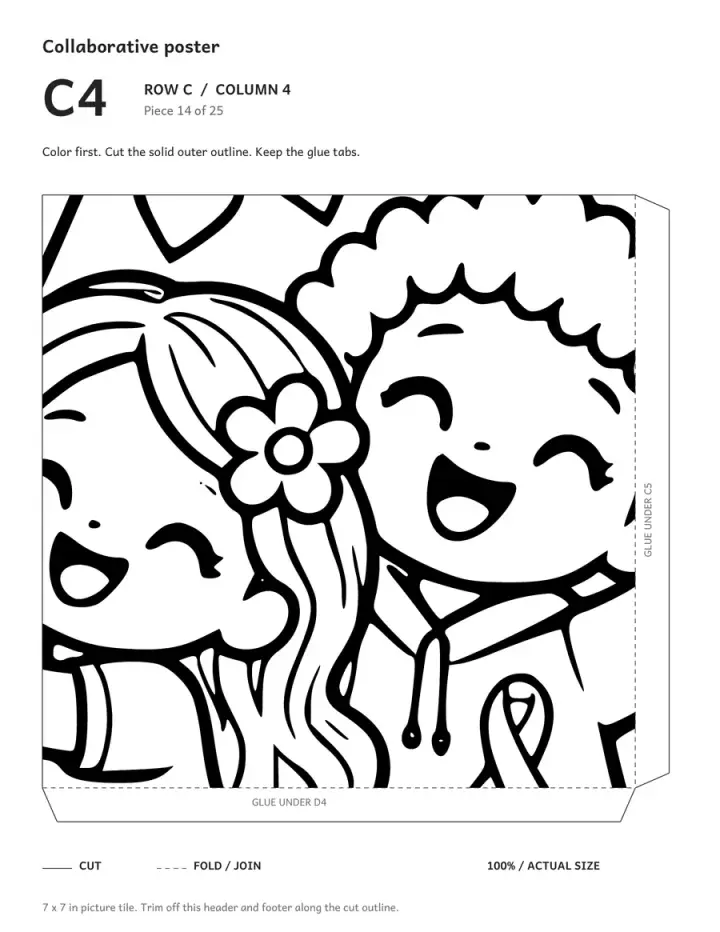
3. Cancer Awareness Month Collaborative Poster — Ribbon Art
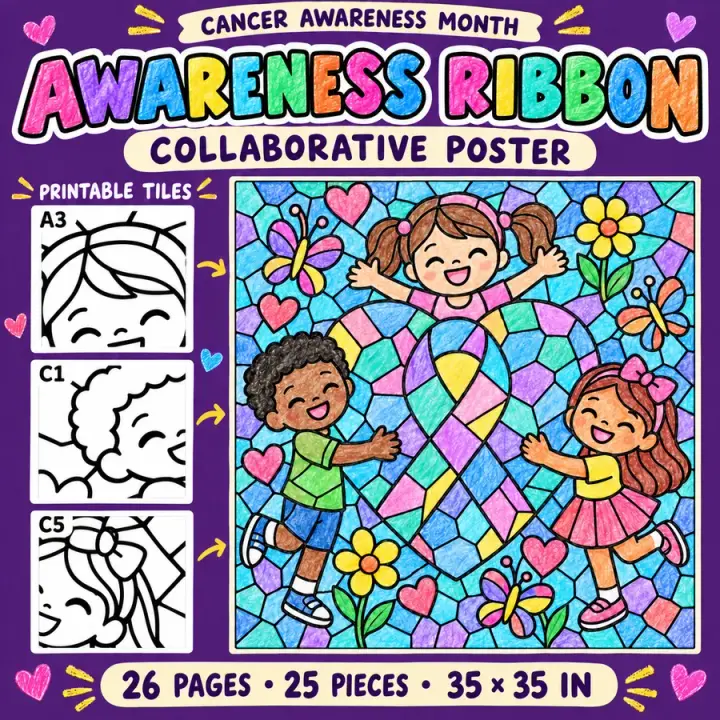
An awareness ribbon is the central motif of this mosaic-style poster, joined by children, hearts, flowers, and butterflies. The listing describes a 26-page PDF with 25 coloring tiles that assemble into a 35-inch-square picture. The tiles give students separate areas to color while contributing to the same ribbon image. Display the finished artwork with a class-generated explanation of support and consideration, keeping the emphasis on how people treat one another rather than on medical explanations or outcomes.
Classroom idea: Before coloring, ask the class to agree on a shared palette or allow individual choices. After assembly, discuss how different decisions contribute to the same image, then list considerate ways to work together.
Best for: A ribbon-themed group art display
Details from the listing:
- 26-page PDF
- 25 poster pieces
- 35 × 35-inch assembled poster
- Grades 1–6
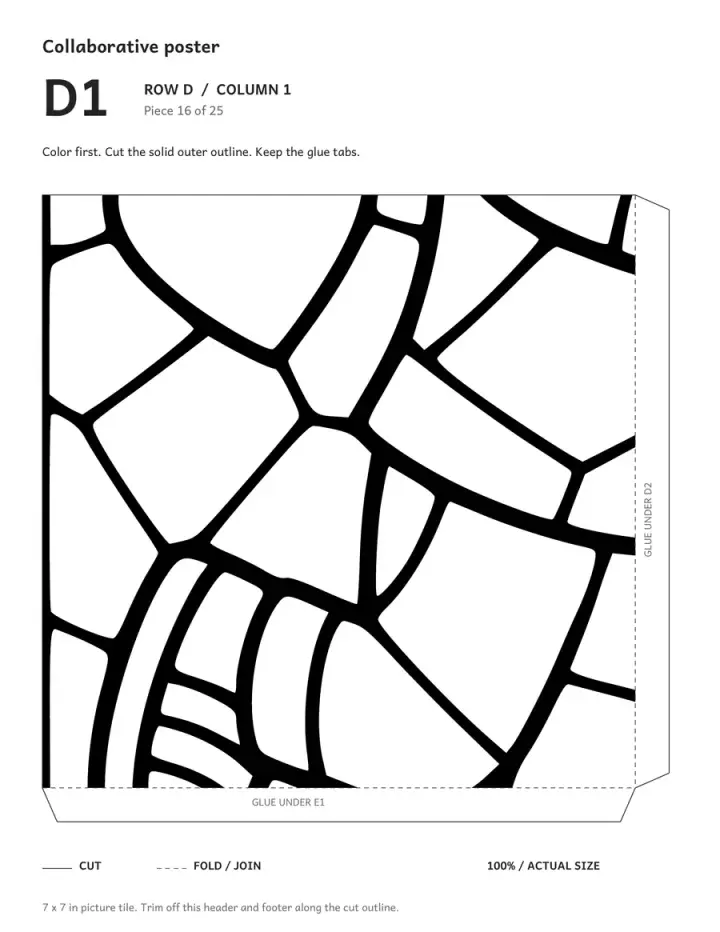
4. Cancer Awareness Month Collaborative Poster — We Care Art Activity
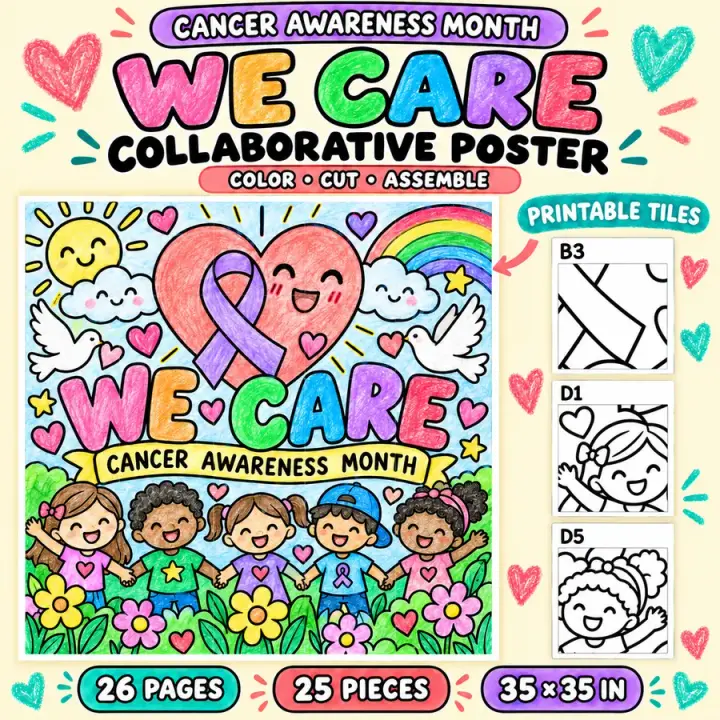
The words “We Care” sit within a design featuring children, an awareness ribbon, and symbols of hope. The listed 26-page PDF includes 25 coloring tiles, which join into a 35-inch-square poster. Its short message can anchor a conversation about what care looks like in everyday interactions. Pair the completed display with voluntary student suggestions about listening, including classmates, or offering practical help, while avoiding requests for personal health information or assumptions about families’ experiences.
Classroom idea: Invite students to finish “We can show care by…” on separate cards, using everyday school examples. Read the suggestions together and choose a few actions the class can practice during the week.
Best for: A school counseling conversation about care
Details from the listing:
- 26-page PDF
- 25 poster pieces
- 35 × 35-inch assembled poster
- Kindergarten–grade 5
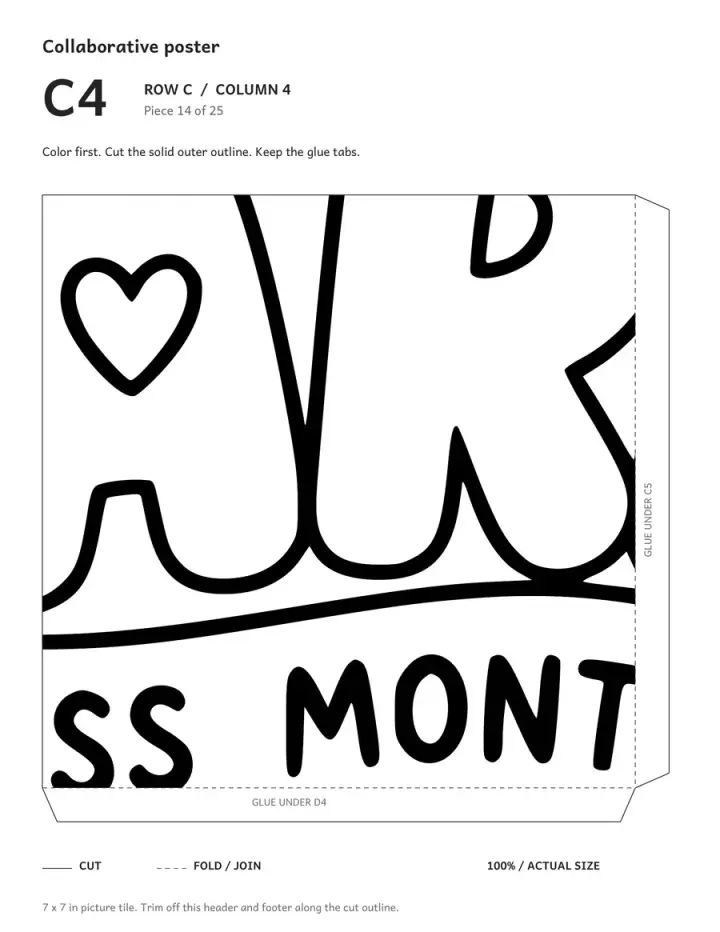
5. Cancer Awareness Month Collaborative Poster Activity — Bulletin Board Art
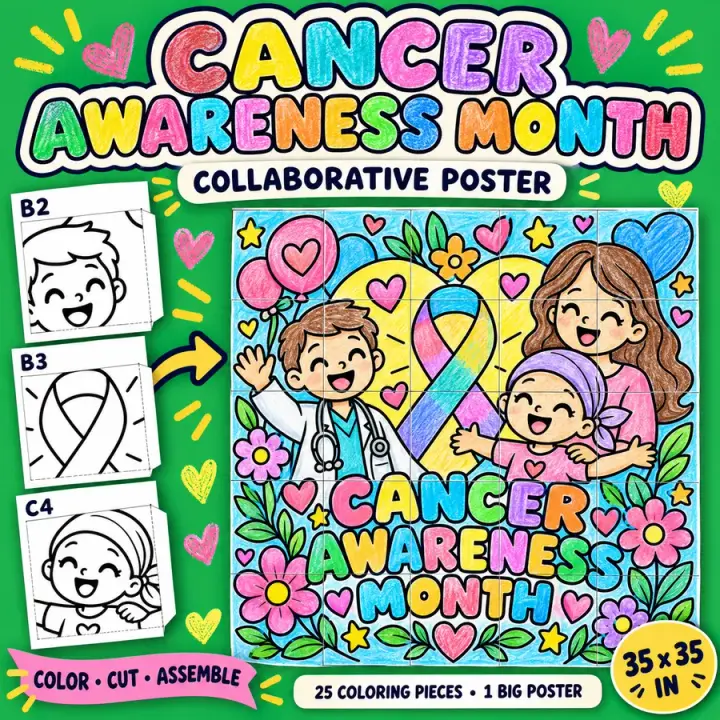
A family, a doctor, and an awareness ribbon form the identified imagery in this Cancer Awareness Month poster. Students color 25 individual pieces before assembling a 35-inch-square display. The presence of both family and a medical professional gives this version a different visual emphasis from the ribbon-only designs. Keep any accompanying classroom conversation general and factual, allowing the artwork to introduce consideration for others without asking children to describe illness or medical experiences in their own homes.
Classroom idea: Invite students to name supportive adults they can approach at school when they have questions or worries. Make a separate classroom help map beside the artwork, without asking anyone to discuss family medical situations.
Best for: A general discussion of supportive adults
Details from the listing:
- 25 poster pieces
- 35 × 35-inch assembled poster
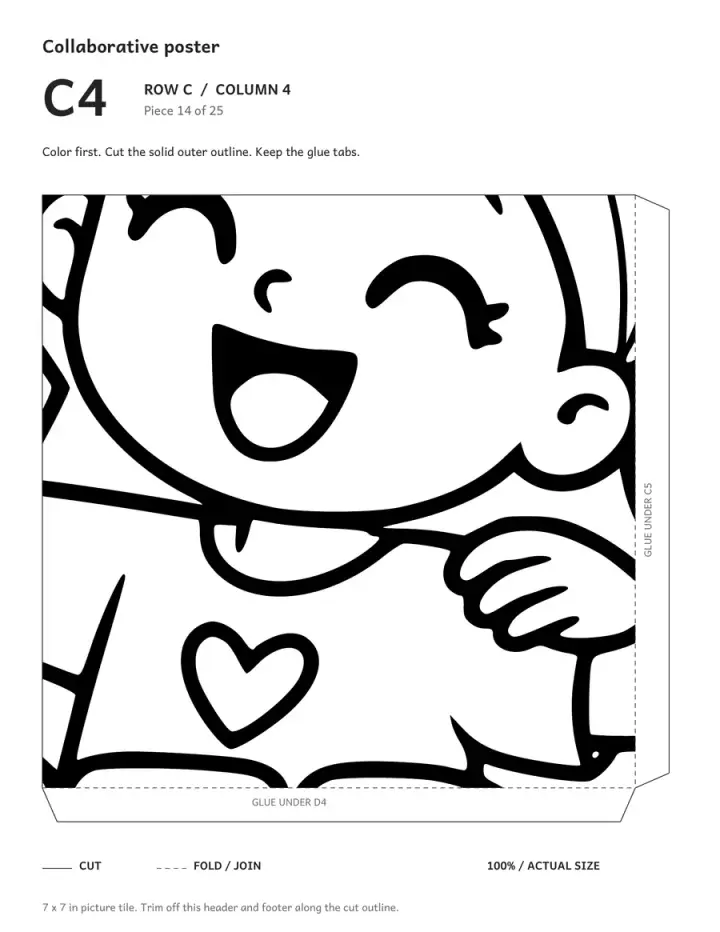
6. Cancer Awareness Month Collaborative Poster Hope Care Kindness Art
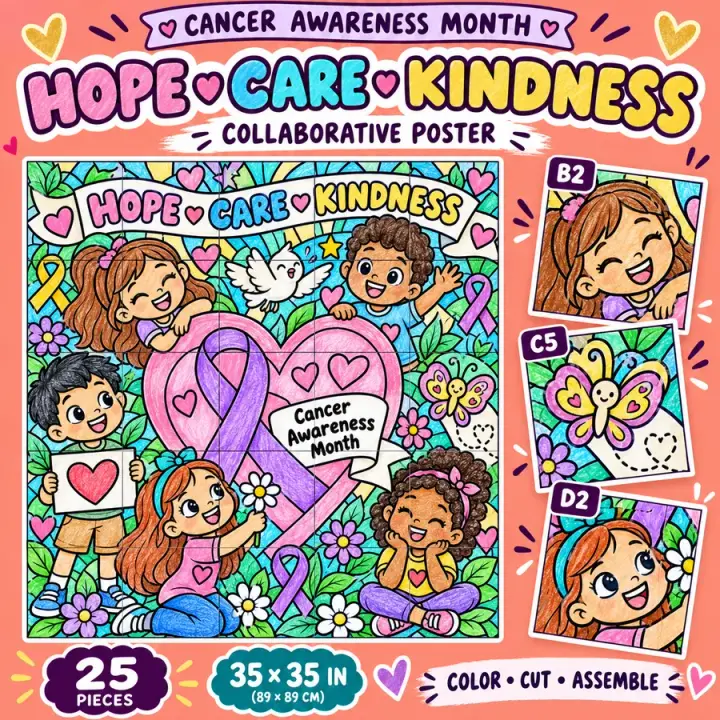
“Hope, Care, Kindness” is the stated message in this awareness design, alongside children, hearts, and awareness ribbons. Twenty-five pieces assemble into a 35-inch-square image, with grid coordinates listed to help place the pages. Its three-word message offers a manageable starting point for talking about considerate behavior. Teachers can invite children to suggest ordinary examples of care and kindness, keeping the finished display focused on community actions and allowing discussion without personal accounts of illness or treatment.
Classroom idea: Choose one of the three message words and invite students to draw an everyday example on separate paper. Share only what students volunteer, then group the drawings around the completed poster by word.
Best for: A kindness-focused awareness bulletin board
Details from the listing:
- 25 poster pieces
- 35 × 35-inch assembled poster
Plan your class project
Choose a clear, gentle classroom goal
Start with what the class will do: create a shared display about care, hope or support. Preview the words and imagery before choosing a resource. The collection includes Love Hope Support and ribbon-themed art, giving you different ways to frame the display.
A poster is a classroom art resource, so keep the lesson focused on communication and kindness. If the school plans a health-information component, use materials selected by the appropriate school staff. Do not infer a diagnosis, treatment claim or health outcome from a poster's words or ribbon color.
Prepare participation choices in advance
Tell students they may color, help assemble or write a general message of care. No one needs to identify someone who has cancer or explain a family situation. Give a quiet alternative the same status as the group project, particularly when the topic may be close to a student's life.
Useful prompts include What can a kind classmate do? and What words help someone feel included? Keep questions about actions children can choose, such as listening, sharing materials or respecting another person's request for space.
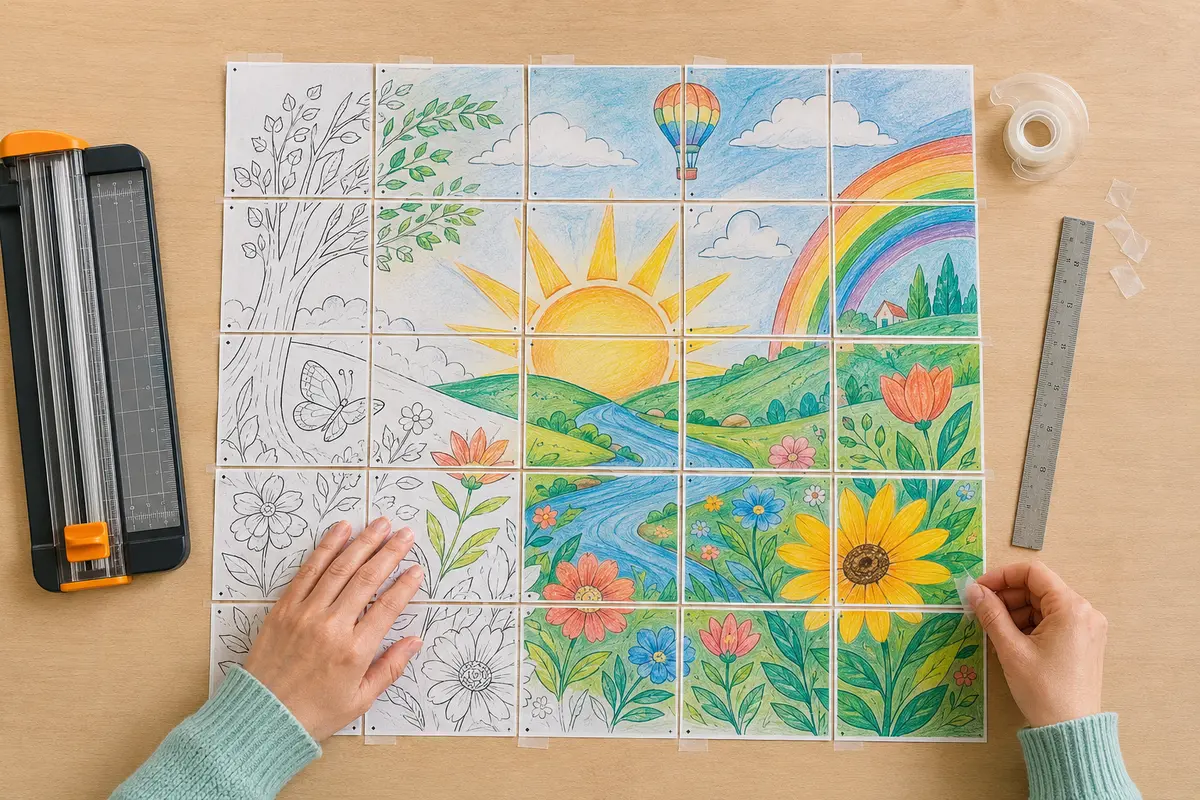
Print, color and assemble
- Open your chosen product listing and check its included files, page count and paper size. Specifications vary between resources.
- Download the file and read its printing and assembly instructions. Keep the guide separate from the student sheets.
- Print a test page using the scale specified in the file. Use consistent settings for every piece.
- Assign every tile and keep a checklist. For a smaller group, share extra pieces; for a larger group, use partners or assembly roles.
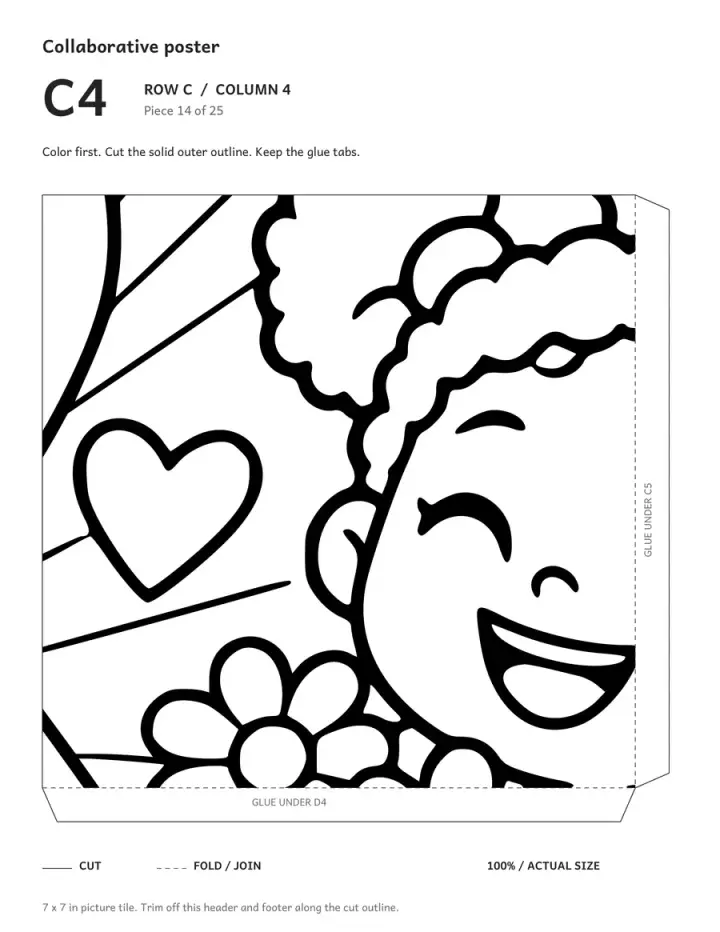
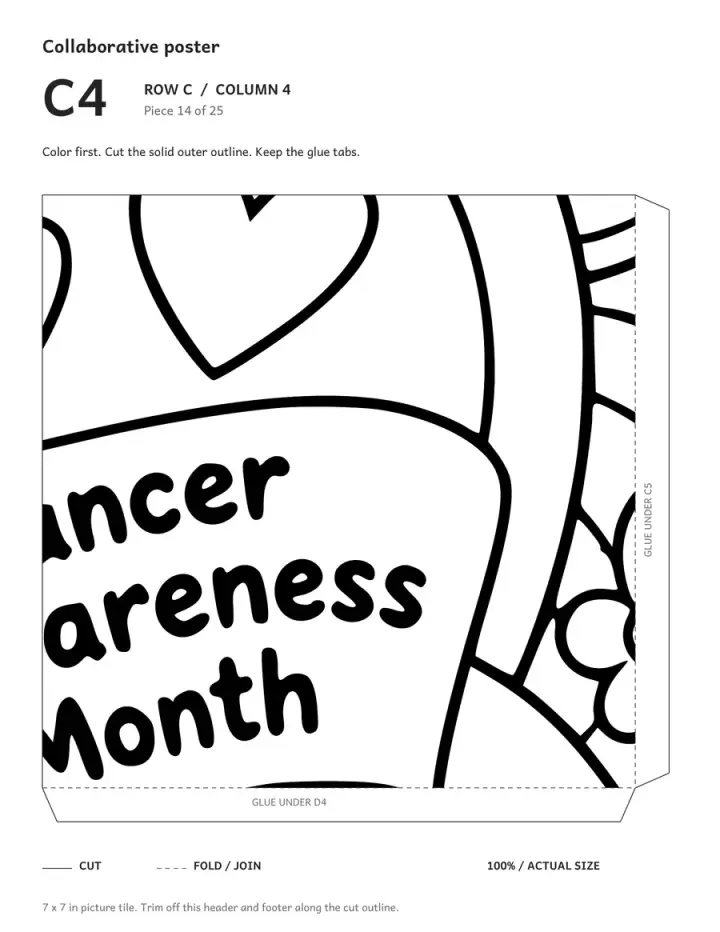
- Arrange the completed pages against the guide before attaching them. Follow any printed trim lines and glue-tab instructions.
Choose your next Cancer Awareness Month project
Use the images and individual product links above to compare the designs, then choose the resource that fits your lesson and available display space.
Browse the complete Cancer Awareness Month collection →
Product membership, descriptions and gallery previews checked against the public shop on October 20, 2026. Classroom ideas are suggested extensions. Product images use optimized copies of the shop previews. Refer to the current product listing for purchase and download details.
Ready to create together?
Choose a printable, give every student a piece, and watch the big picture come to life.
Explore Cancer Awareness Month posters ↗Frequently asked questions
What learning focus suits a cancer awareness art activity?
Keep the classroom task centered on supportive words and considerate actions. A poster can prompt a discussion about listening, including others or respecting a request for space. Any health-information component needs separate school-selected material.
Do students have to explain a family health situation?
No. Offer general messages, quiet coloring and assembly roles without personal disclosure. Give an alternative task equal status when the subject may be close to a learner’s life.
Can I infer medical information from the poster symbols?
The decorative ribbon or message does not establish a diagnosis, treatment claim or health outcome. Use the artwork for the stated class purpose and rely on appropriate school-selected sources for health information.
How can I choose a suitable awareness design?
Preview the words and imagery, including the Love Hope Support and ribbon themes. Choose a design that fits your school community and check its own printing and download details.