In this guide
Pair the tree-planting artwork with a small, achievable classroom care project. Students can explore the message through observation and planning while keeping their Veterans Day facts grounded in a separate class source.
This guide focuses on one specific printable: Still Serving, Still Making a Difference. It includes real shop previews, a suggested teaching sequence and the checked file specifications. The lesson ideas are optional teacher-created extensions, not additional worksheets included with the product.
View the Still Serving, Still Making a Difference poster in the shop.
Look closely at this design
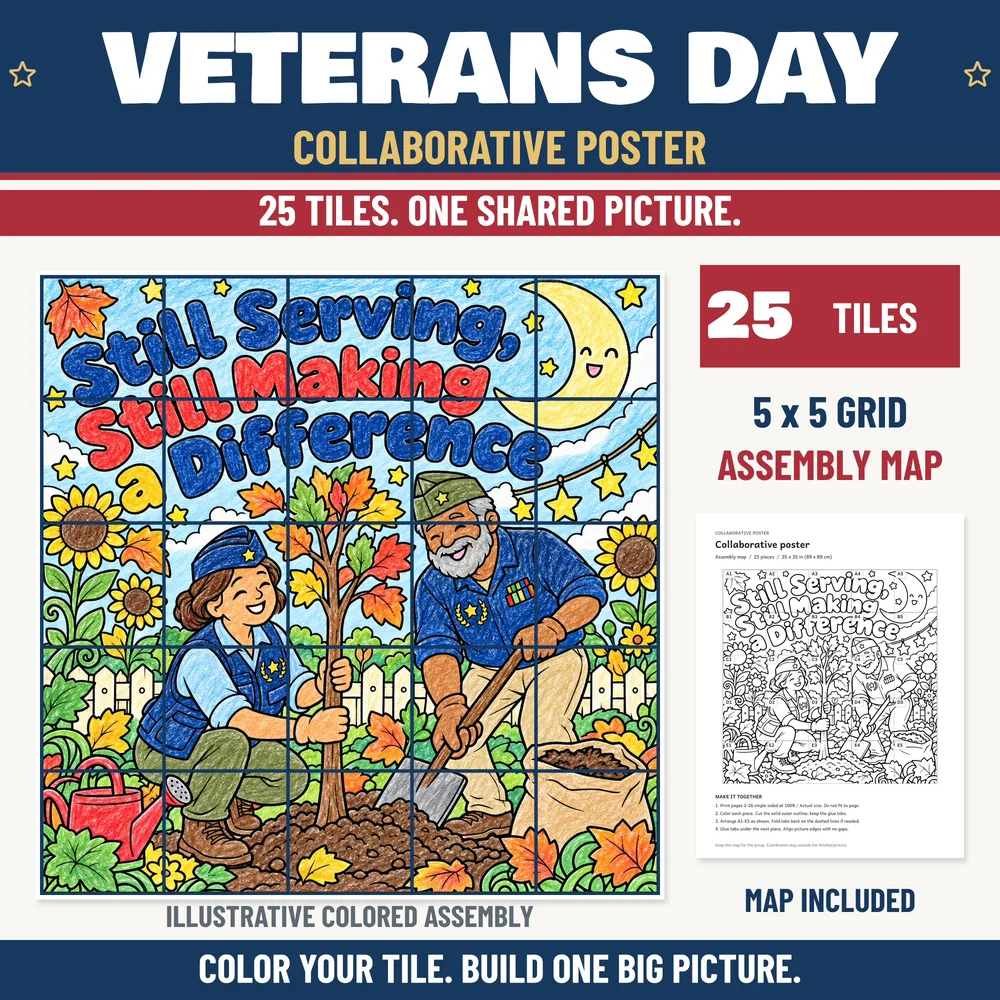
Veterans plant a young tree in a garden filled with sunflowers and autumn details. The artwork connects its message with a visible act of caring for a shared place. The many leaves, flowers and connected outlines also make the assembled mural a good starting point for careful observation and descriptive language.
Lesson focus: Stewardship, care and action planning.
Guiding question: Which small action can our class repeat to care for a shared place?
Teach the lesson in three stages
Introduce and model
Show the preview and ask students to name visible actions and objects. Explain that planting is the illustrator’s chosen scene. If you discuss a real veteran’s contribution, use a verified account rather than treating the artwork as evidence.
Let students practice
Choose one classroom care task with a realistic schedule, such as checking a plant or resetting a reading corner. List the steps, materials and roles on a teacher-made chart. Agree how students will know the task is complete.
Assemble and reflect
Create the mural, then begin the care routine over the following week. Display a few observations alongside the finished picture: what the class did, what changed and which step needs adjusting.
What to prepare and print
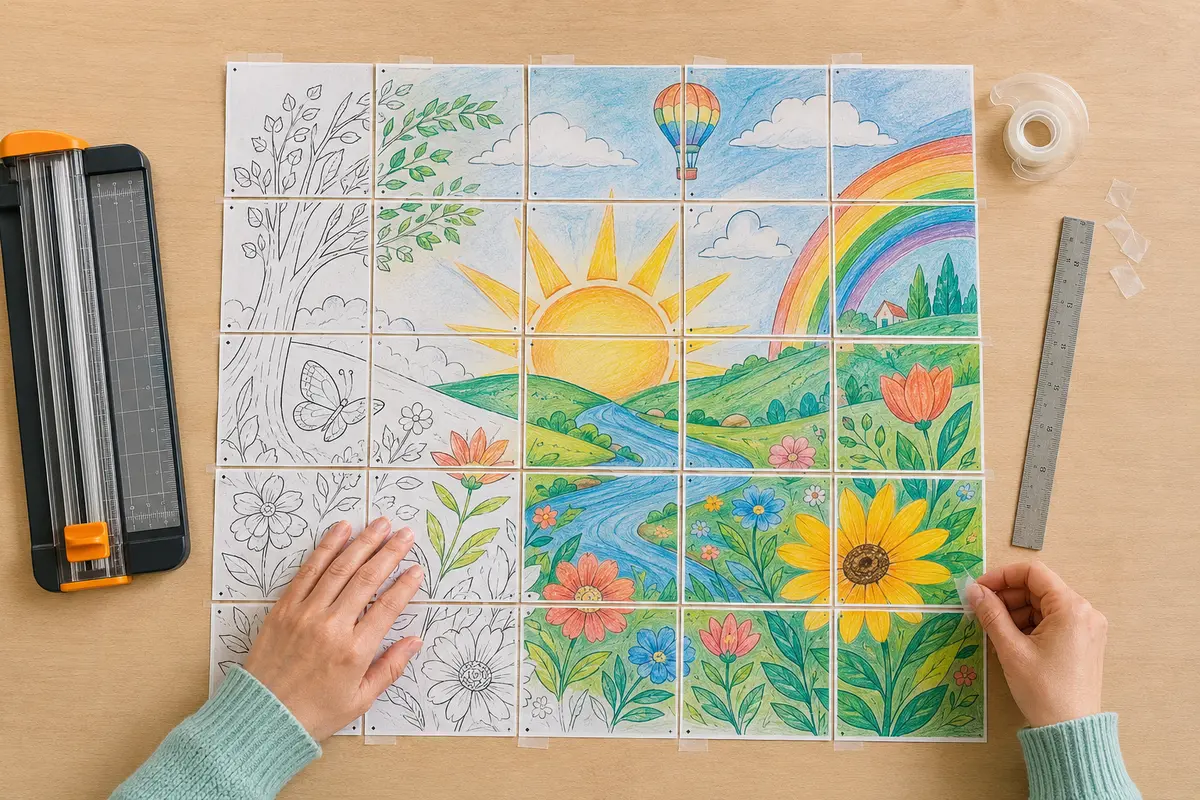
The checked listing and gallery describe a digital PDF with 25 black-and-white picture tiles and one assembly map with directions, making 26 PDF pages in total. The artwork forms a five-by-five grid with a 35 × 35-inch finished picture at the specified scale. Each picture tile is 7 × 7 inches. No physical poster is shipped.
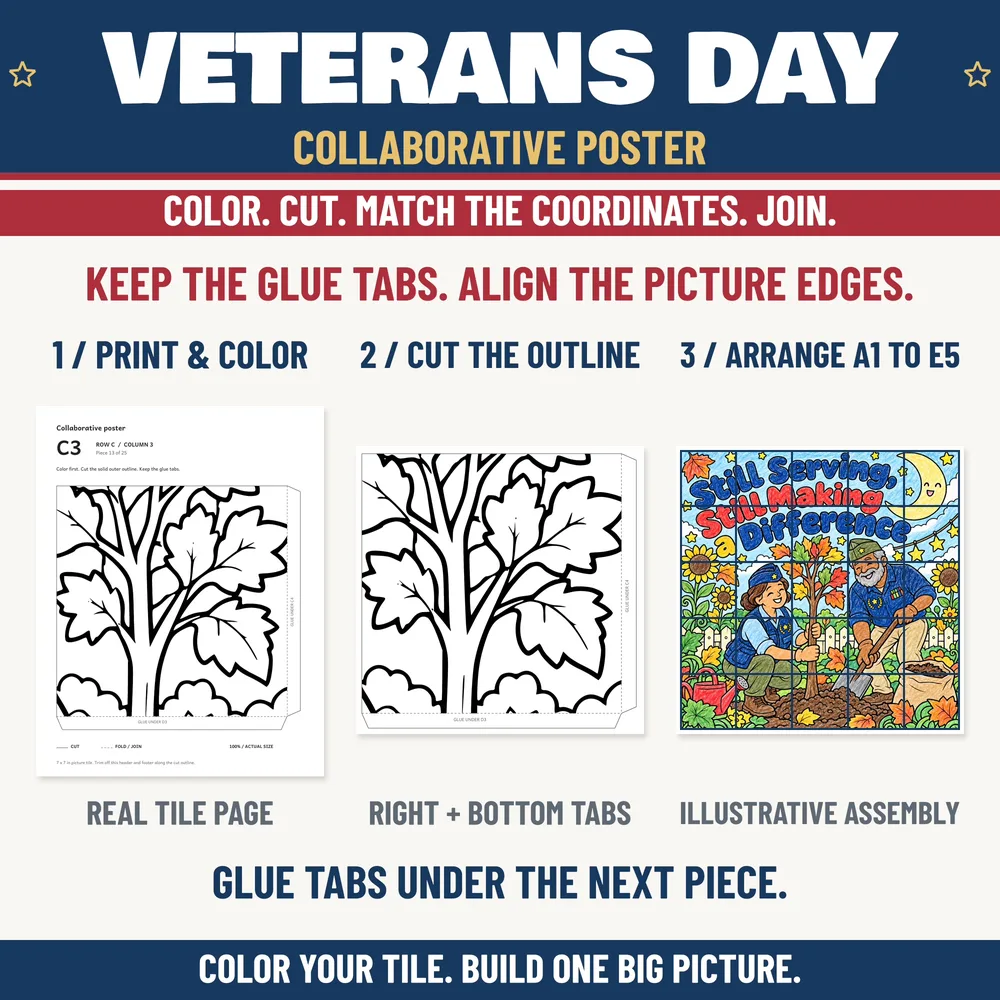
Print a test tile first, single-sided at 100% or Actual Size using the paper specified in your downloaded file. Keep the same settings for all pages. Color before cutting, preserve the joining tabs and check the A1–E5 coordinates against the map before gluing. Leave extra space around the 35-inch square for backing and readable captions.
For fewer than 25 students, share extra pieces among volunteers or groups. For more than 25, use partners and meaningful checking or assembly jobs. Read the full printing and assembly guide if this is your first tiled mural.
Adapt participation for your learners
Use simple pictures for routine steps and let students share roles. Older learners can keep a brief observation log. A garden, tree planting or off-site service visit is not required for this lesson.
Keep military-family stories optional. Students can respond to the class source, the artwork or the group process. Preview the discussion and provide an equally valued quiet art or sorting role where appropriate.
Check the learning, then display it
Check whether students can explain the link between their chosen action and the shared place it supports. Separate evidence from hopes: We watered the plant is observable; the plant will always grow is a prediction.
Use a small number of readable, student-approved captions around the mural. Explain what the class practiced and identify any source used for factual statements. Keep private names, contact details and personal histories off a public hallway board.
Keep the Veterans Day context accurate
Veterans Day is observed on November 11 in the United States and honors those who served in the military. Memorial Day has a different commemorative purpose. Use the Department of Veterans Affairs background to prepare your introduction and select further reading appropriate to your class.
The people pictured in this poster are illustrated characters. Do not identify them as real individuals or infer their experiences without a separate reliable source. The project can support gratitude and learning without requiring a visitor, personal disclosure or a ceremony.
Is this the right Veterans Day poster for your class?
Choose this design when your main purpose is stewardship, care and action planning. Compare the colored example and printable details before buying. The preview colors are suggestions; your students can use their own palette.
To compare every message and all nine current products, return to the complete Veterans Day collection guide. It links to each design and its individual teaching guide.
View Still Serving, Still Making a Difference and the current download details →
Product and gallery checked October 29, 2026. Teaching suggestions are original extensions; the shop listing supplies the purchased PDF.
Ready to create together?
Choose a printable, give every student a piece, and watch the big picture come to life.
View Still Serving, Still Making a Difference poster ↗Frequently asked questions
What is included in this Veterans Day poster PDF?
The checked listing describes 26 PDF pages comprising 25 black-and-white picture tiles and one assembly map with directions. The colored gallery example illustrates a possible finished result. No physical poster is shipped.
What classroom extension fits the tree-planting scene?
Choose a small care task such as checking a plant or resetting a reading corner. Make a chart of steps, materials and roles, then record what the class actually did and what changed.
How large is the assembled picture?
At the specified scale, 25 picture tiles measuring 7 × 7 inches form a five-by-five picture measuring 35 × 35 inches. Follow the downloaded directions and leave additional space for backing and captions.
Does the artwork document a real veteran’s project?
The planting scene is the illustrator’s chosen example. Use a verified reading if you discuss a real veteran’s contribution and label classroom observations as your group’s own work.