In this guide
Use the Map the Montgomery Boycott collaborative poster to ask this question: How does a map help us understand the boycott? Prepare a short source reading before students color their tiles.
View this poster and its PDF details.
Look closely at the design
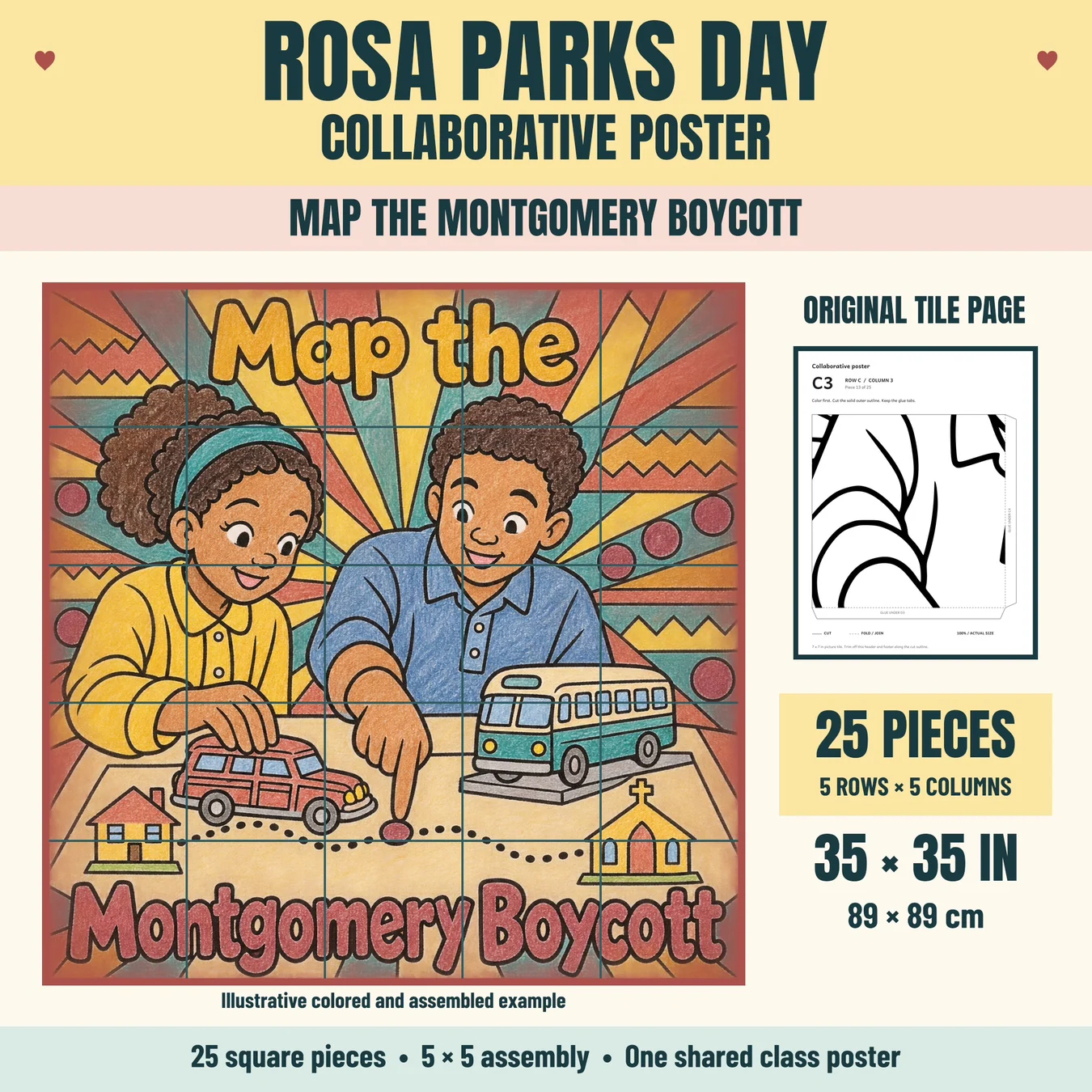
Two students look at a map with a model bus and buildings. Invite students to describe an image detail before they explain what the historical reading tells them.
Try the classroom activity
Give groups a blank outline with Montgomery marked. Add places from teacher-selected sources, then use a different line style for a classroom model route. Write a legend to show which locations are documented.
Example response: A good map can distinguish a documented place from a route made up for the lesson, so visitors do not mistake an illustration for a record.
Read Bus boycott exhibition items, Library of Congress for the historical context. Ask students to label any model, imagined example or illustration as such on the display.
Print and assemble the poster
The listing includes one 26-page digital PDF: 25 numbered black-and-white coloring tiles and one assembly map. At the intended print scale the five-by-five mural measures 35 × 35 inches (about 89 × 89 cm). The color cover is a preview.
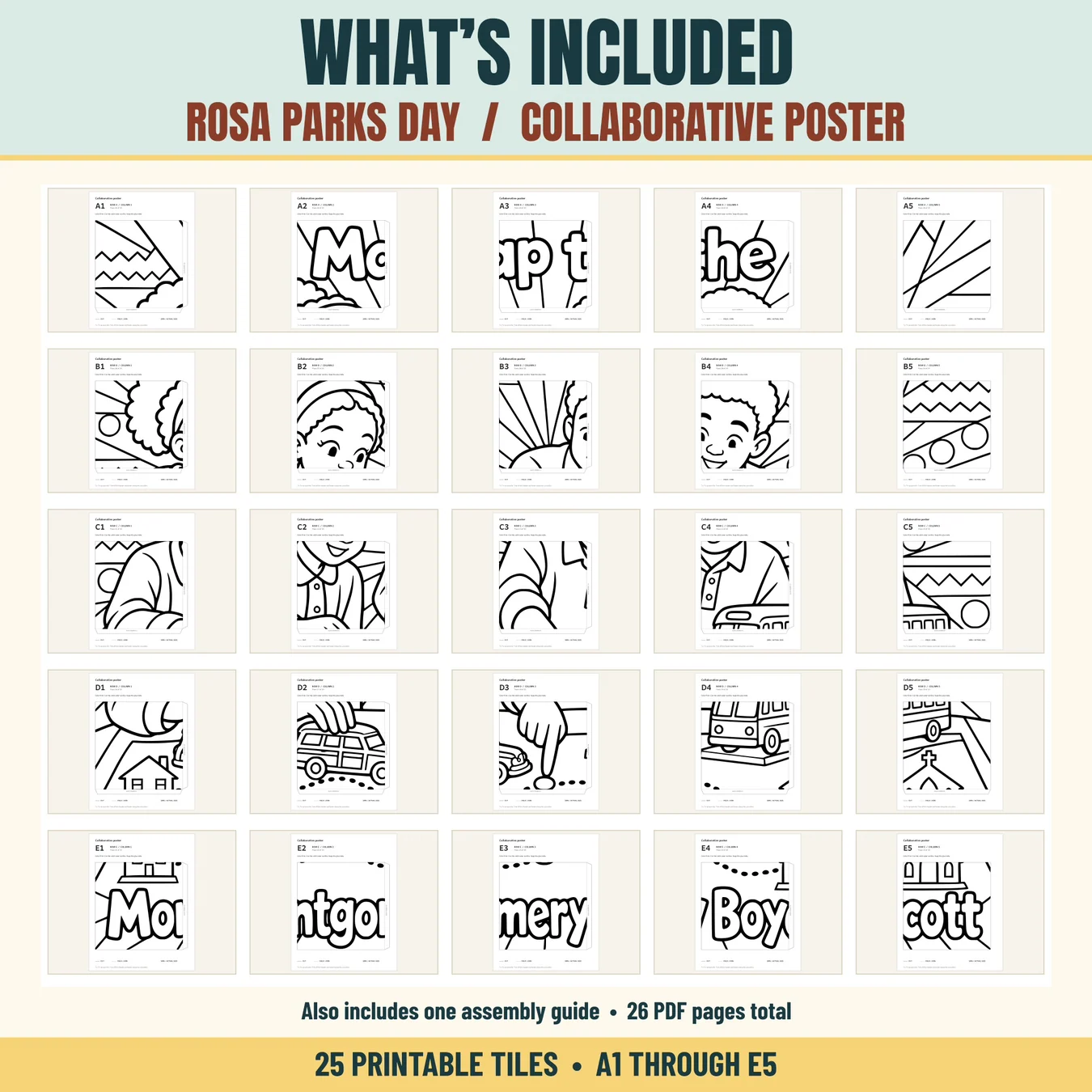
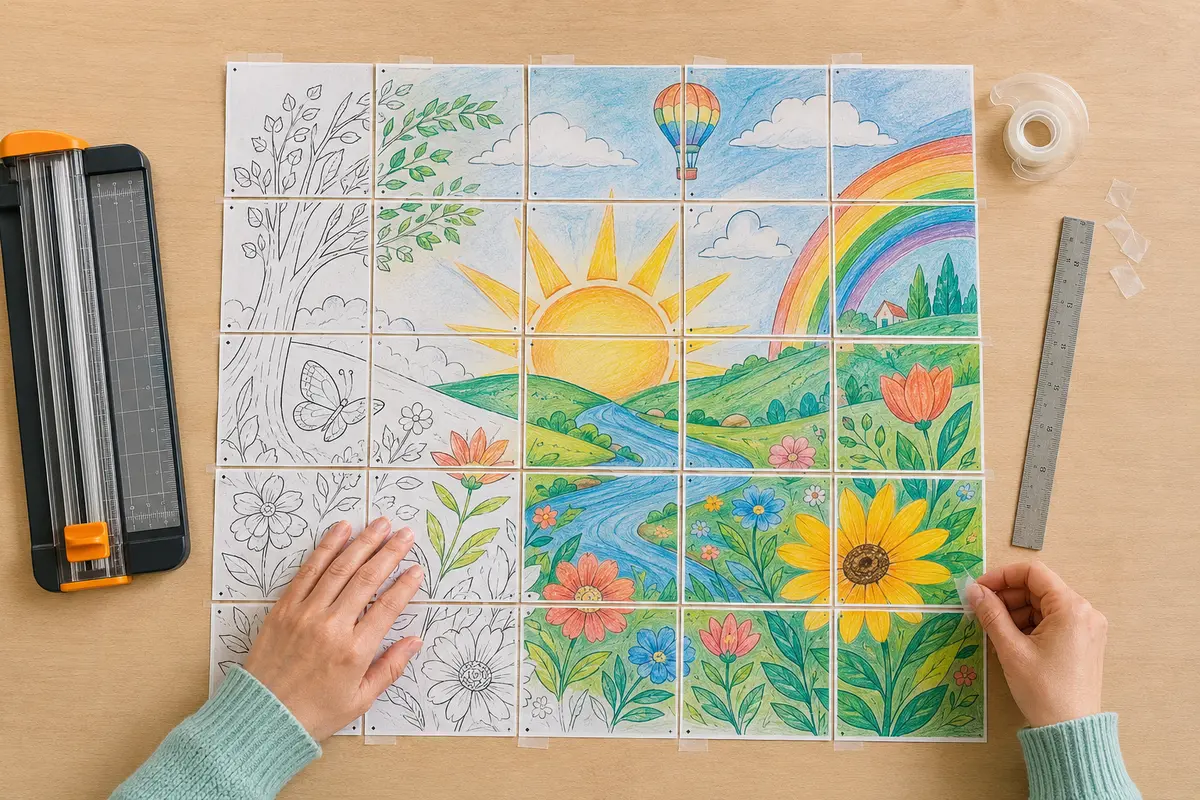
Print one test tile at the scale specified in the downloaded file. Keep the map at the teacher table and give learners a numbered tile. Sort the completed pieces into five rows, check their edges against the map, and join the rows from the back. Provide sorting and assembly roles when your group has more than 25 learners.
Ready to create together?
Choose a printable, give every student a piece, and watch the big picture come to life.
View Map the Montgomery Boycott poster ↗Frequently asked questions
What is included in the Map the Montgomery Boycott download?
The checked listing describes one 26-page digital PDF with 25 numbered black-and-white coloring tiles and one assembly map. The color cover is a preview of a possible finished result.
How can students make a map without inventing historical routes?
Mark places documented in teacher-selected sources and use a different line style for any classroom model route. A clear legend should tell the reader which details are recorded and which were created for the activity.
How large is the finished Rosa Parks Day picture?
The 25 tiles form a five-by-five picture measuring 35 × 35 inches at the intended print scale. Follow the downloaded directions, test one tile and keep the same settings for every page.
Which source should I prepare for this lesson?
Use a teacher-selected item or passage from the Library of Congress bus boycott exhibition. Keep documented details separate from the illustration and label any fictional model used in the extension. The teaching activity is an extension to the coloring PDF.