In this guide: all 30 posters
Choose a Rosa Parks Day mural by the question you want students to investigate. These 30 collaborative posters have different artwork and messages. Each design has its own lesson below, with two real previews and a link to the printable PDF.
On December 1, 1955, Rosa Parks was arrested in Montgomery, Alabama, after refusing to give up her seat on a segregated bus. The community organized a boycott, and people kept it going through coordinated work. Begin with a short reading about Parks and local organizers so students have evidence to go with the art.
Browse the complete Rosa Parks Day collection.
Looking for the printables? Browse the Rosa Parks Day collection ↗ or use the classroom plan below.
Choose a design for your lesson
Start with Rosa Parks Kept Her Seat or Rosa Worked for Justice for biography and source reading. Compare Claudette Colvin Showed Courage with Follow Montgomery’s Story for timelines. Pick one of the carpool, walking or communication designs to help students understand the work that sustained the boycott.
Give students opportunities to study records and explain ideas in their own words. Avoid reenacting segregated seating or assigning students to act out discrimination. The posters are illustrations. Use the archive materials for claims about real events and people.
Find all 30 posters
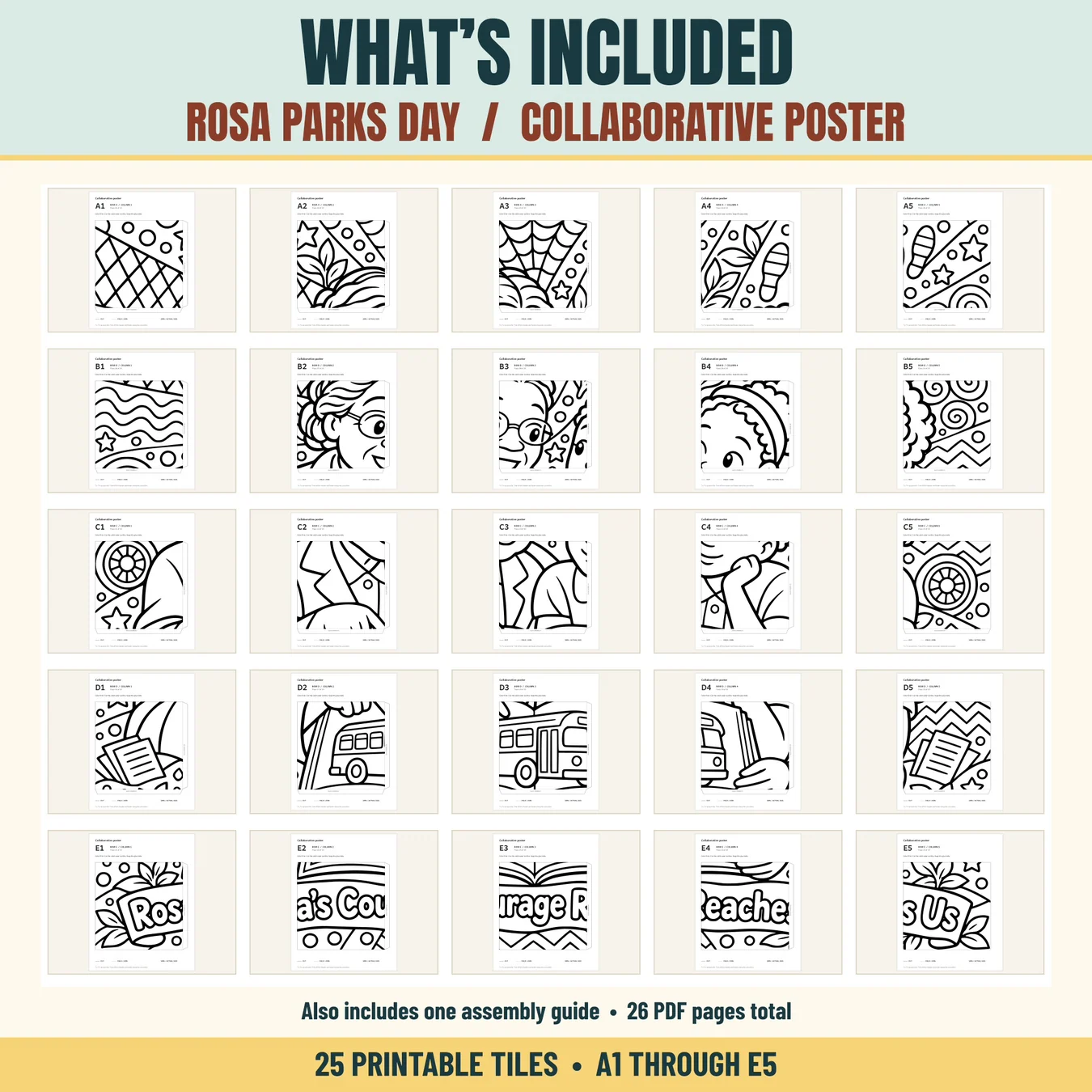
1. Rosa's Courage Reaches Us Collaborative Poster
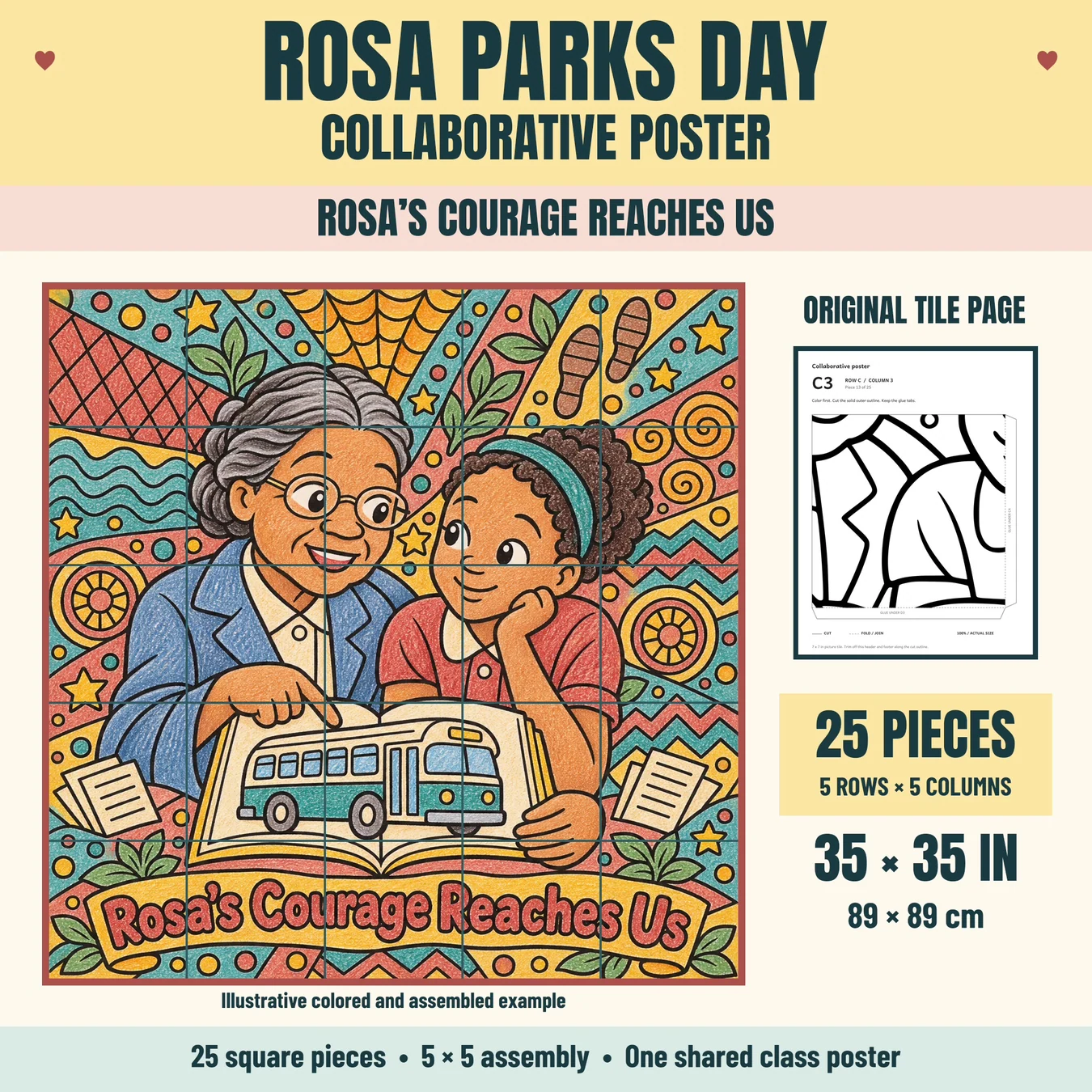
Best for: Connect past and present with care.
Two figures share a table beside a bus model.
Classroom idea: How can we use a historical lesson to ask a better question today?
After a biography reading, invite pairs to write a two-sentence card. The first sentence should make a supported statement about the past. The second should ask a question about fair access to a shared space today.
Open the individual Rosa's Courage Reaches Us teaching guide.
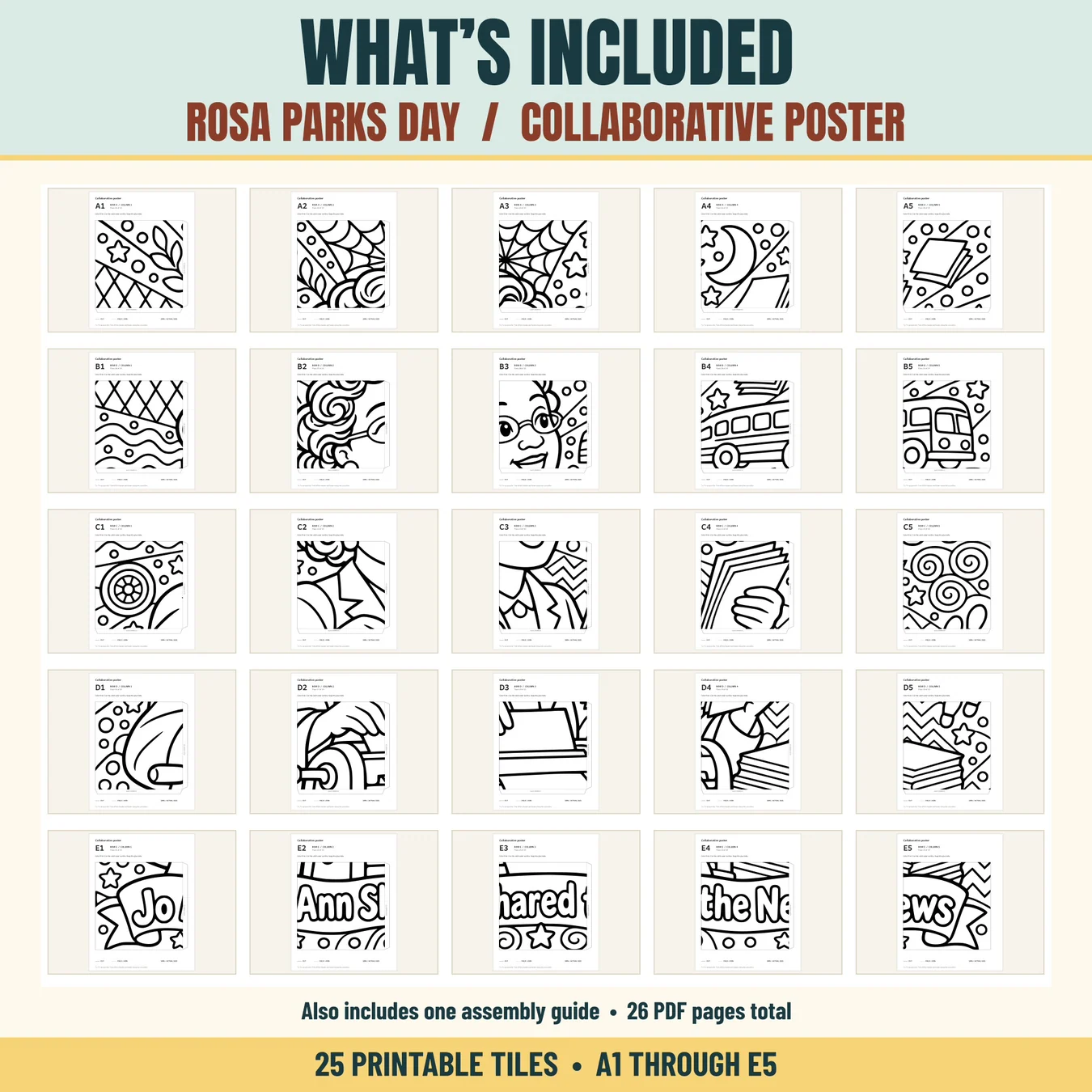
2. Jo Ann Shared the News Collaborative Poster
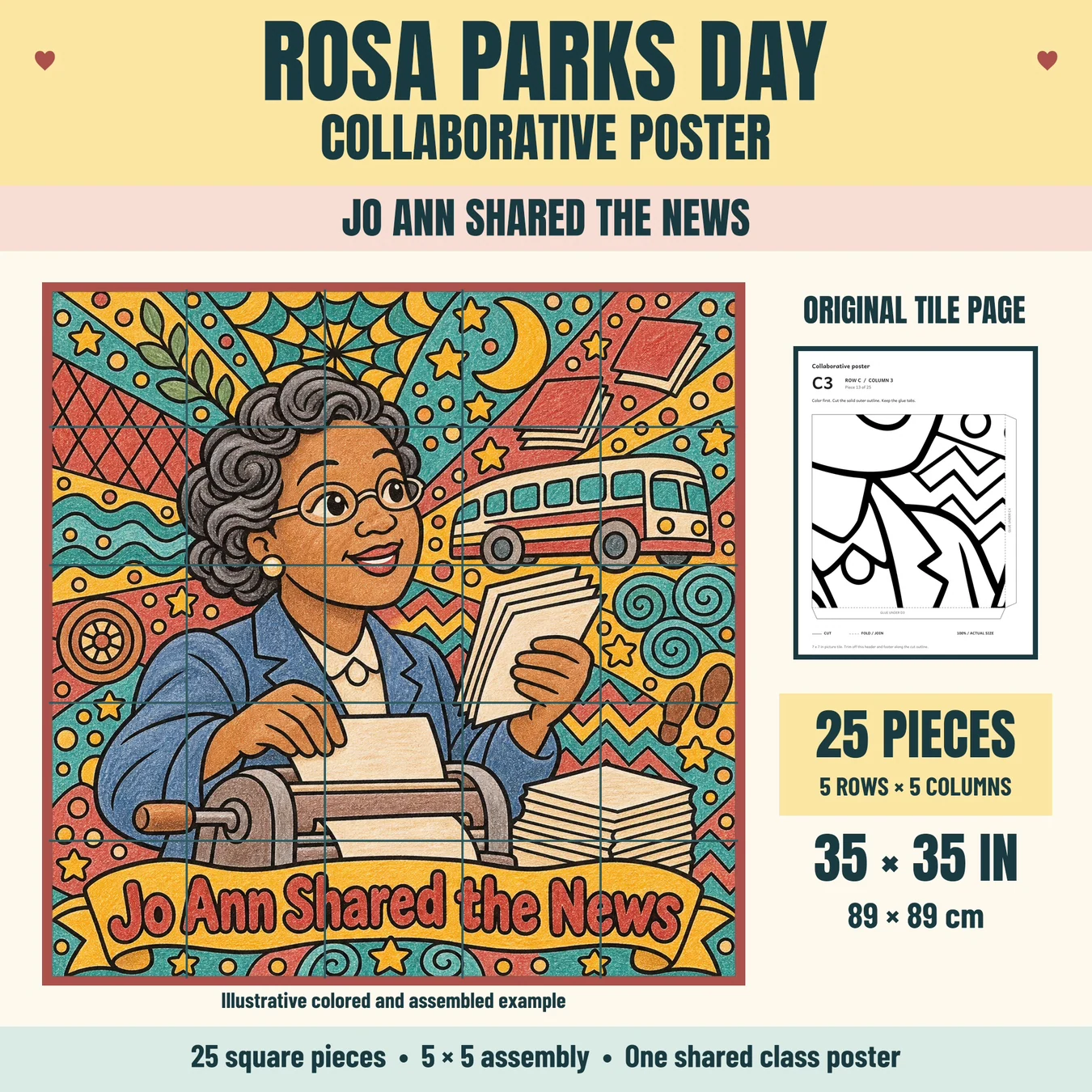
Best for: Choose a channel for a message.
A woman holds papers at a desk, with a bus in the background.
Classroom idea: How can one message reach people who are in different places?
Assign groups a fictional community message and let them compare a leaflet, a phone chain and a public announcement. Ask them to explain who each channel could reach, then connect that thinking to an account of Jo Ann Robinson’s work.
Open the individual Jo Ann Shared the News teaching guide.
3. Carpools Kept Montgomery Moving Collaborative Poster
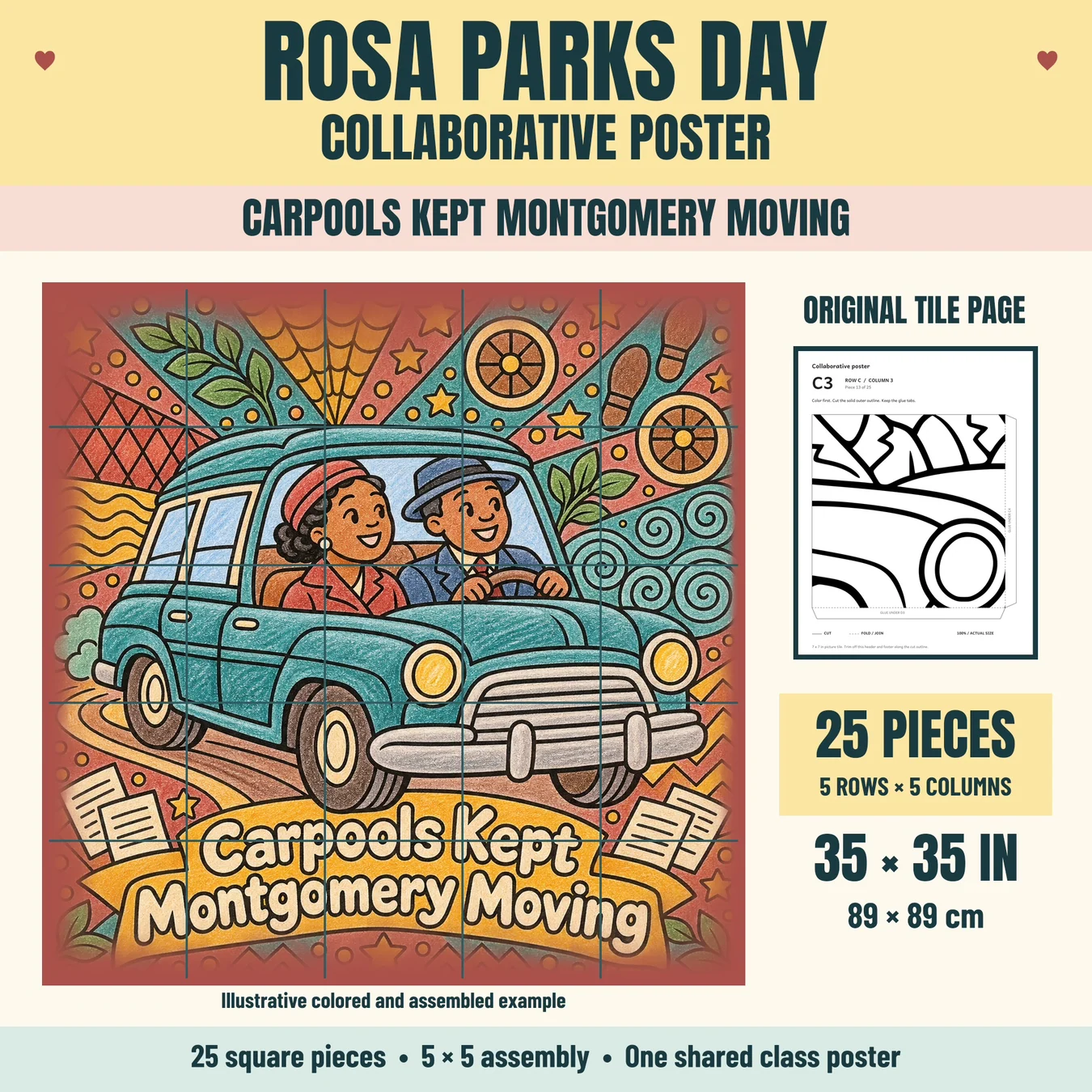
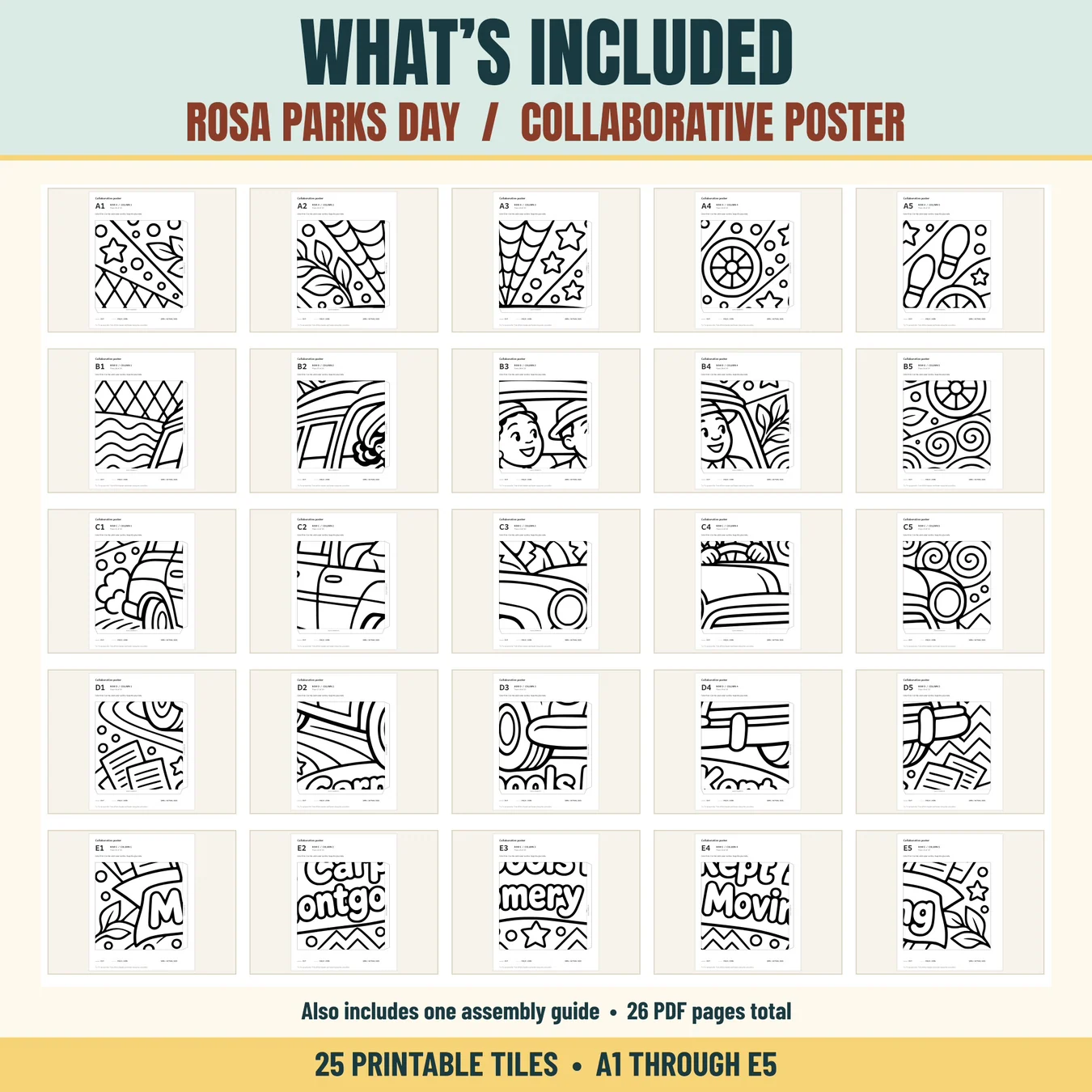
Best for: Read the carpool instructions.
Passengers ride together in a blue car.
Classroom idea: What problems were the organizers trying to prevent?
Give small groups a teacher-selected excerpt from the historical driver and passenger instructions. Ask them to paraphrase a rule, predict what might go wrong without it and label the source on their work.
Open the individual Carpools Kept Montgomery Moving teaching guide.
4. Montgomery Walked for Change Collaborative Poster
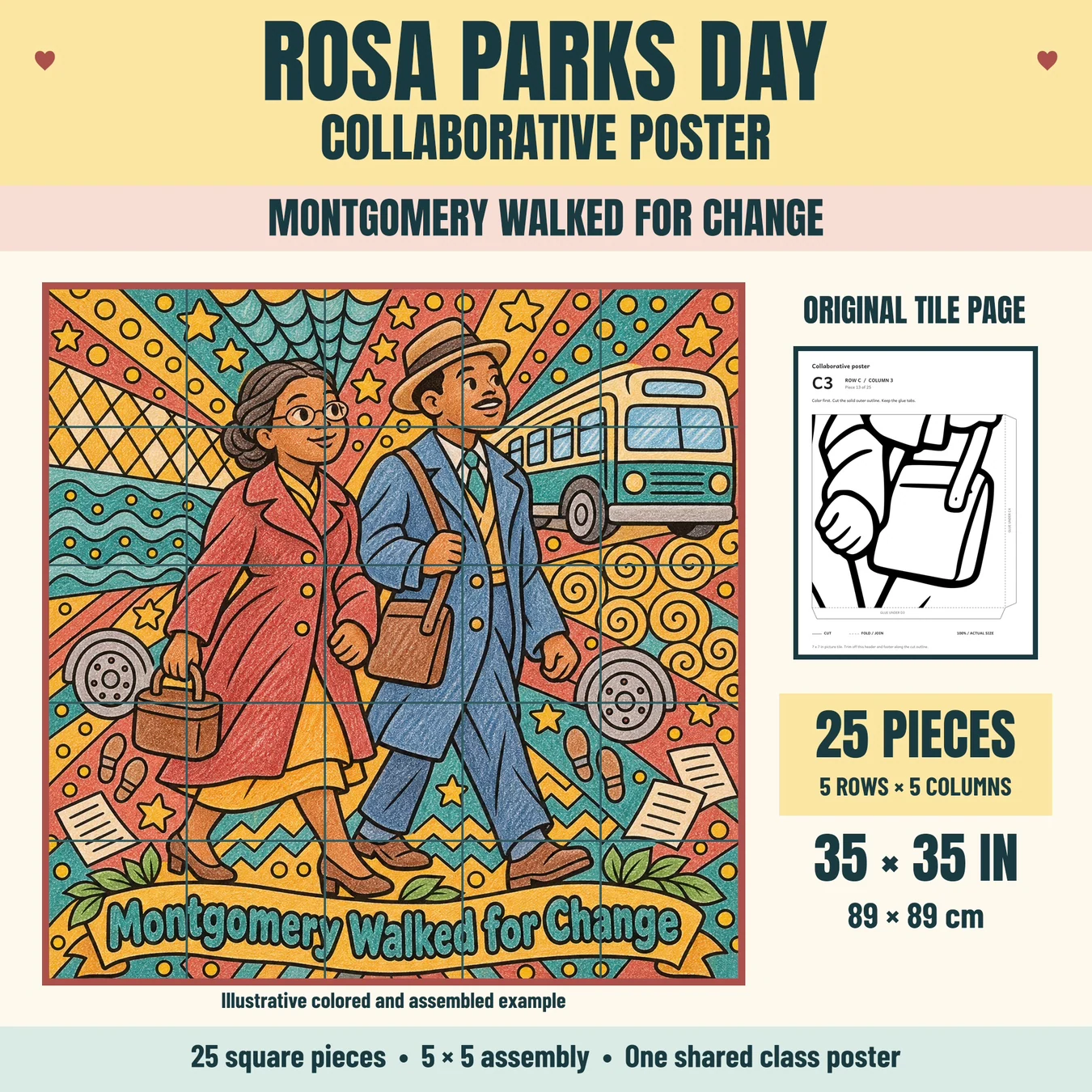
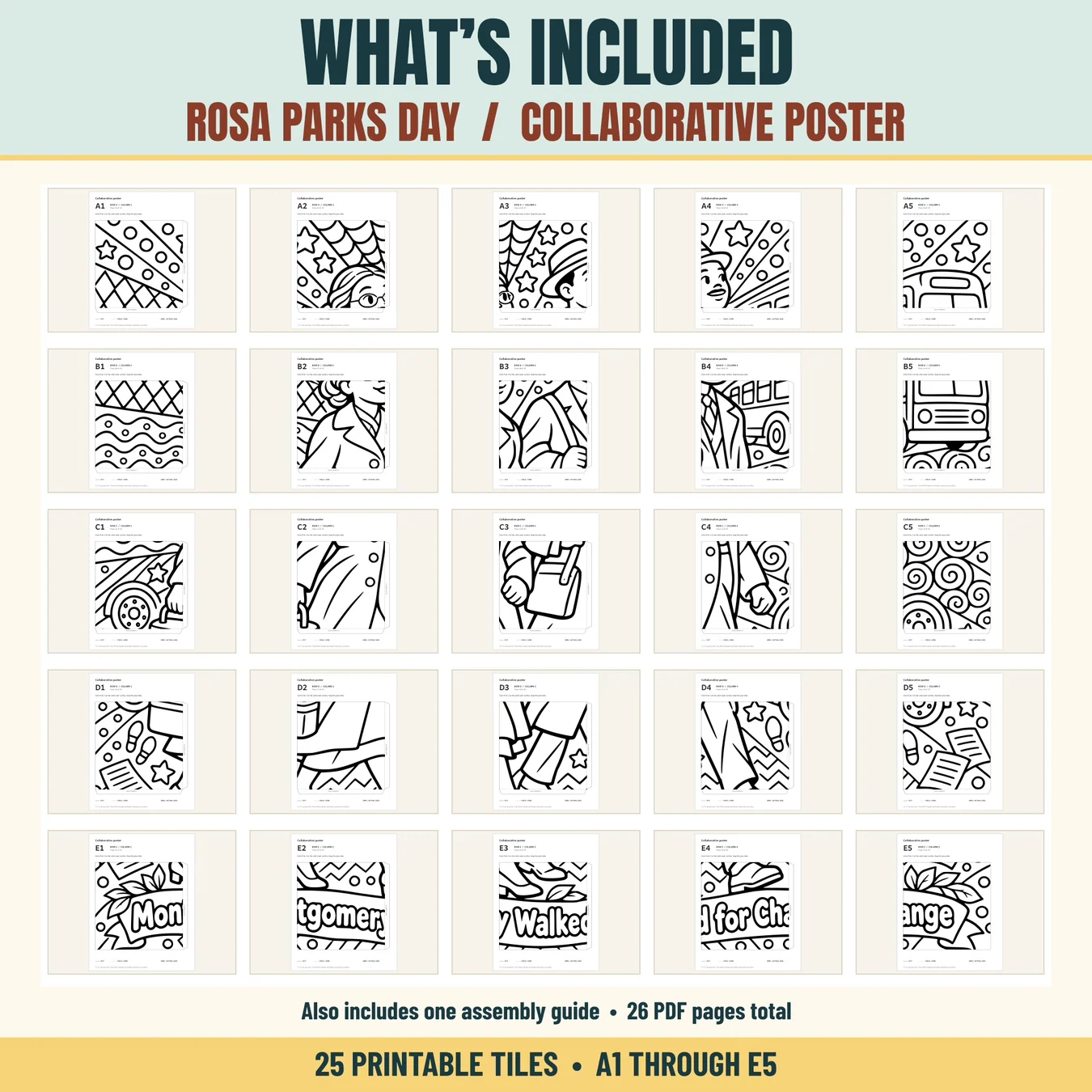
Best for: Think through the time cost of walking.
Two people walk with a bus in the background.
Classroom idea: What does changing how you travel demand of your day?
Give groups fictional travel times for a walk and a bus ride. Have them calculate the difference over a school week, then discuss how time, distance and accessibility could change a person’s choices.
Open the individual Montgomery Walked for Change teaching guide.
5. Rosa Sat With Courage Collaborative Poster
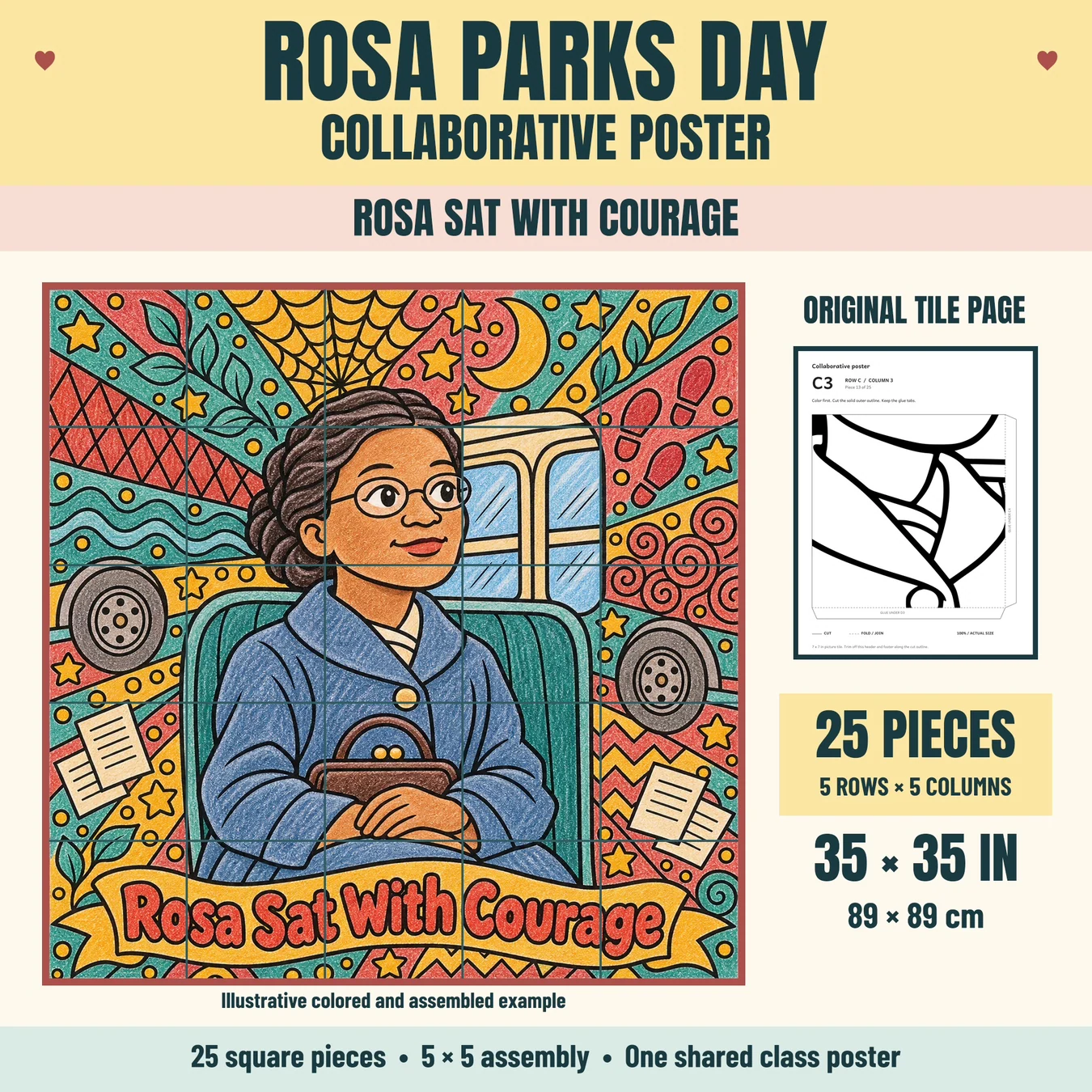
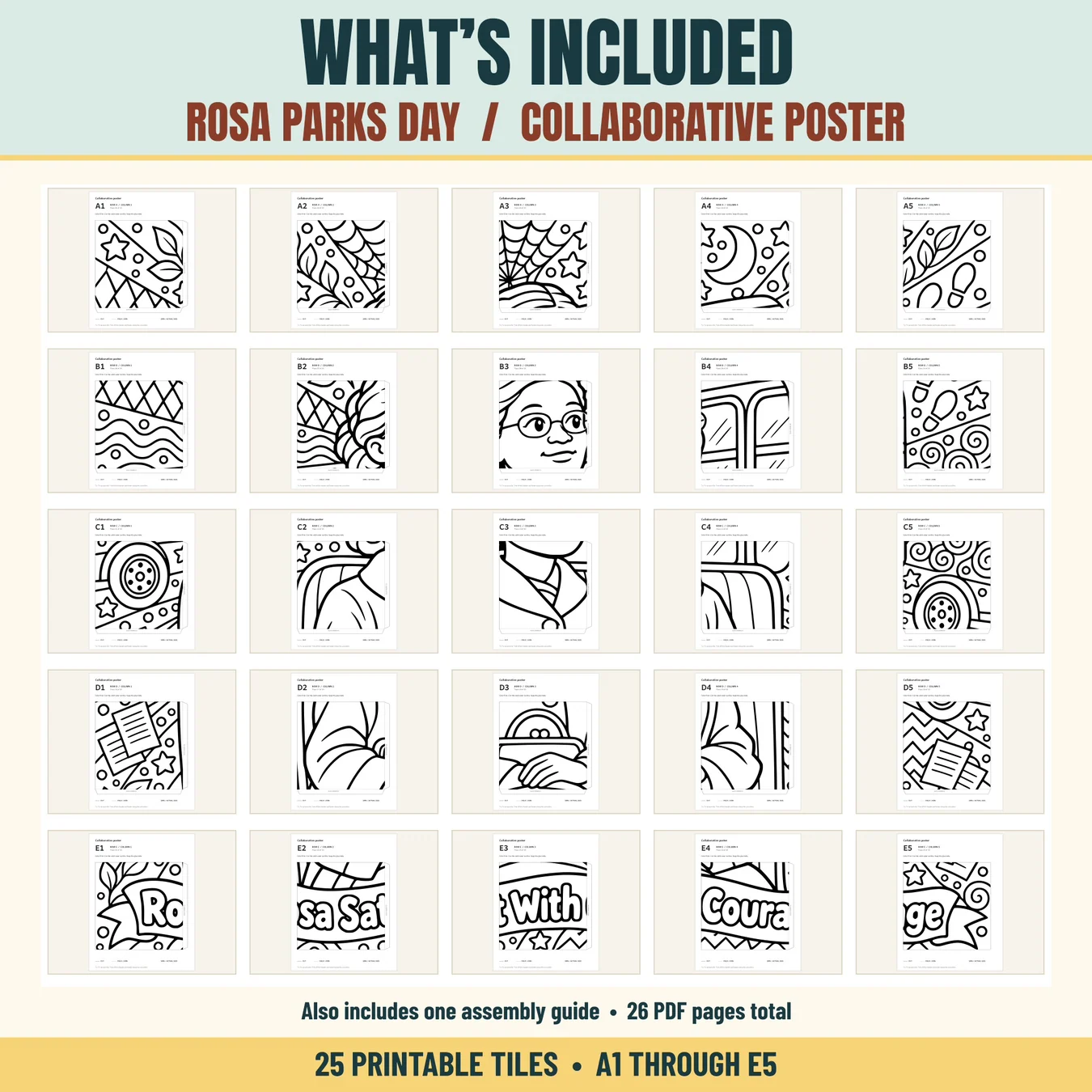
Best for: Read a picture with historical care.
A woman sits inside a bus with patterned windows.
Classroom idea: Which details belong to the artwork, and which belong to the historical record?
Have learners make a two-column list of what they see and what a source confirms. After coloring, ask them to pick one detail from each column for a comparison label.
Open the individual Rosa Sat With Courage teaching guide.
6. A Door Opened for Equal Rides Collaborative Poster
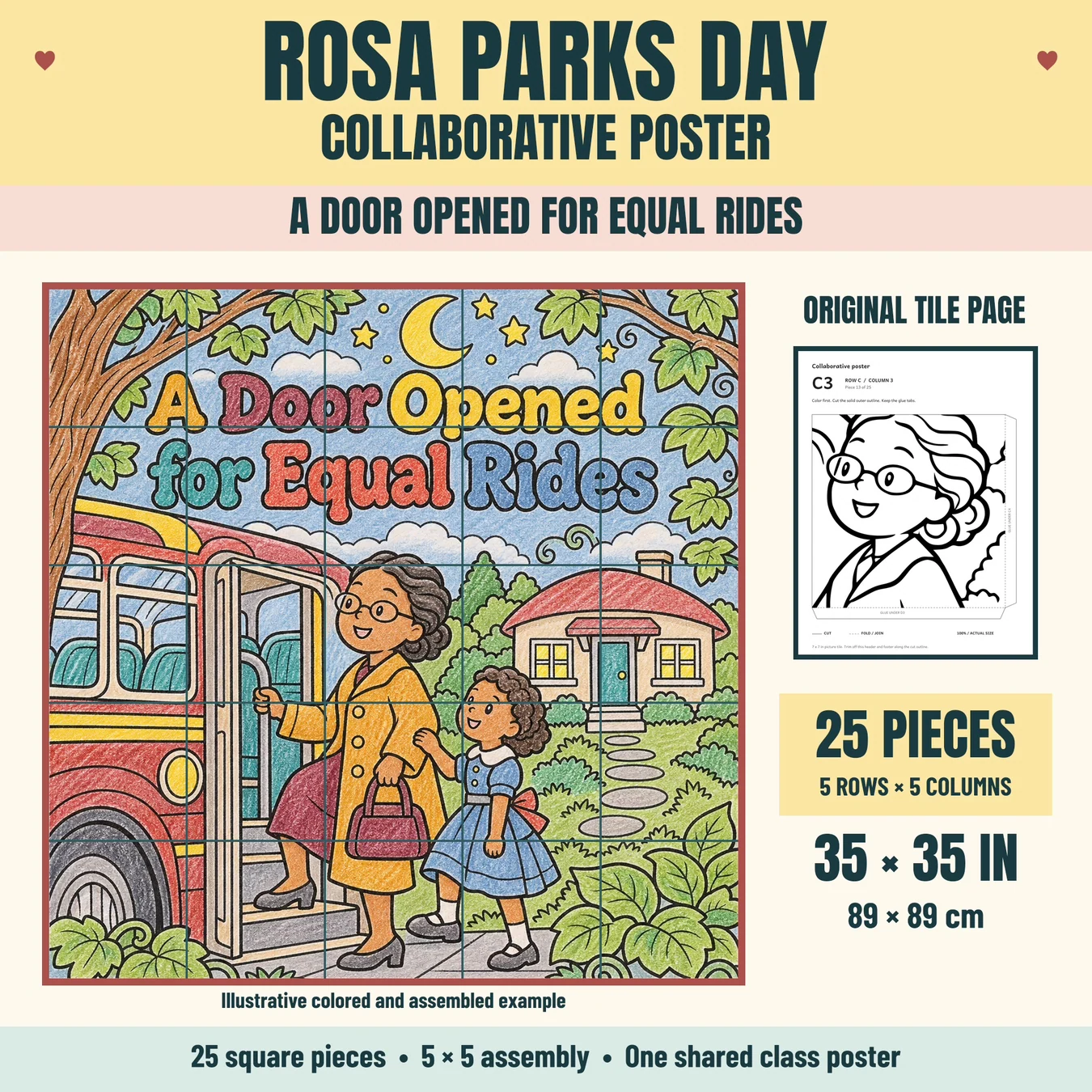
Best for: Make a before-and-after comparison.
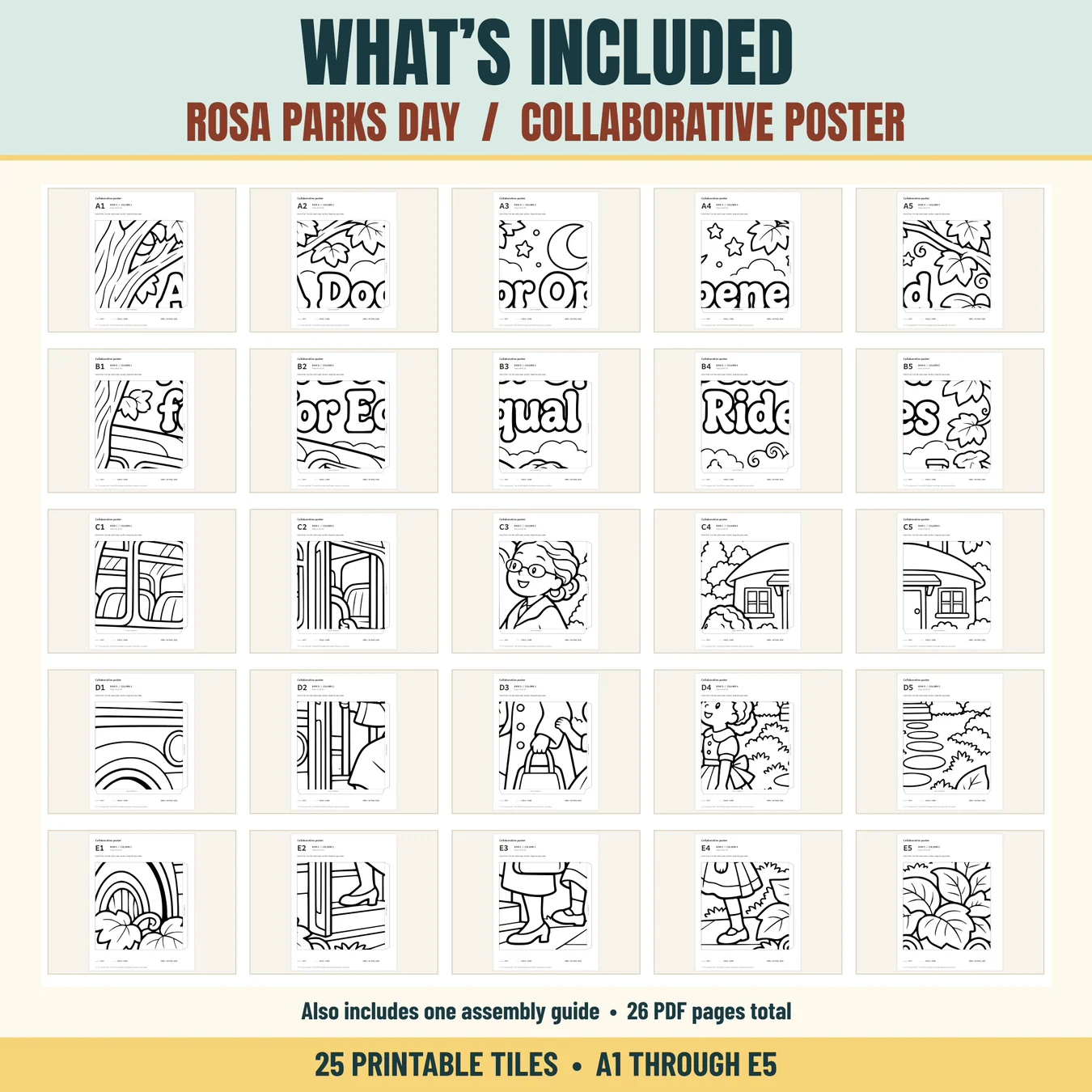
A rider approaches an open bus door.
Classroom idea: What changed in city bus access when legal segregation ended?
Have pairs read a brief account of the court decision and mark one supported detail on each side of a comparison chart. Ask them to distinguish a legal change from longer-term questions of fair treatment.
Open the individual A Door Opened for Equal Rides teaching guide.
7. Montgomery's Neighbors Made History Collaborative Poster
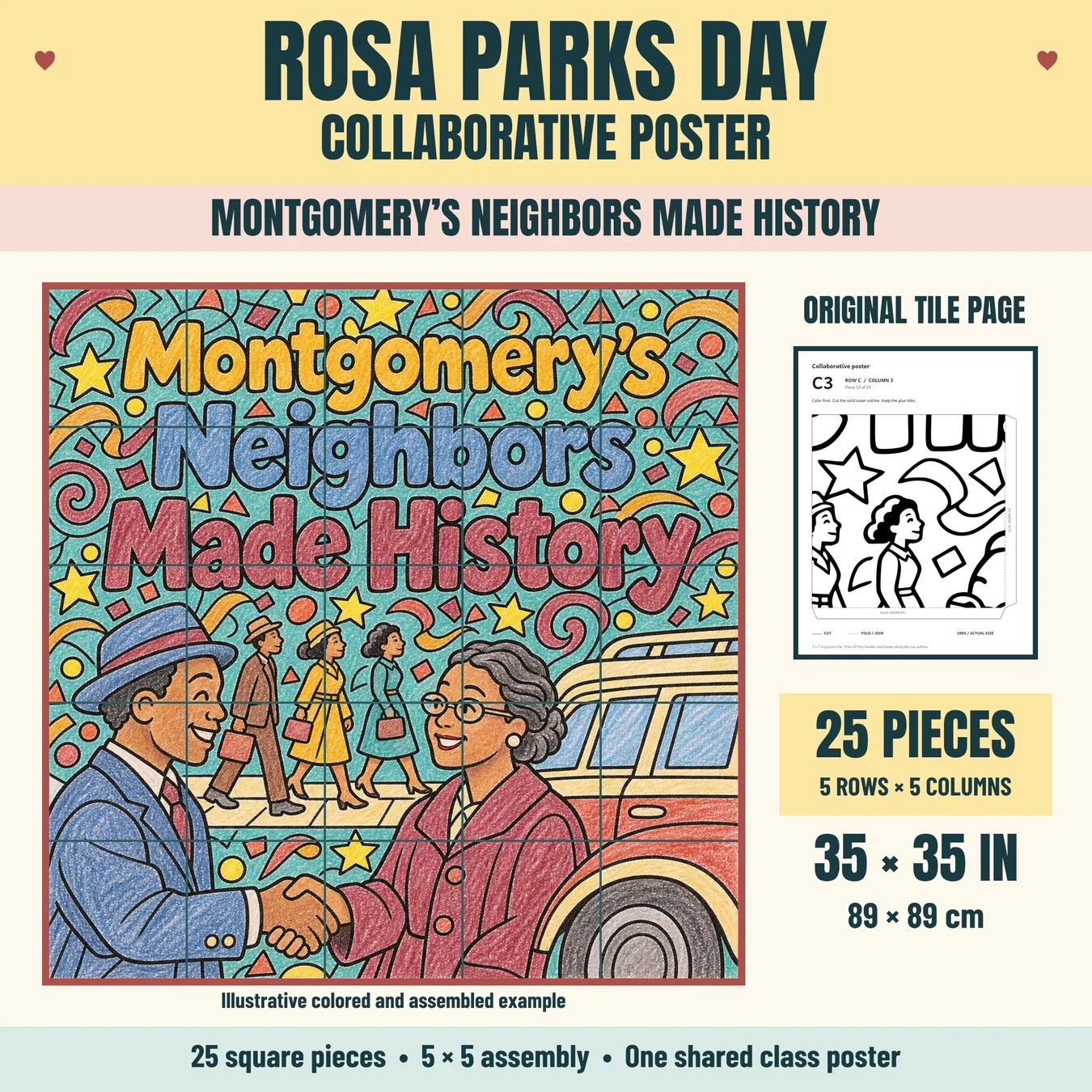
Best for: Collect small contributions.
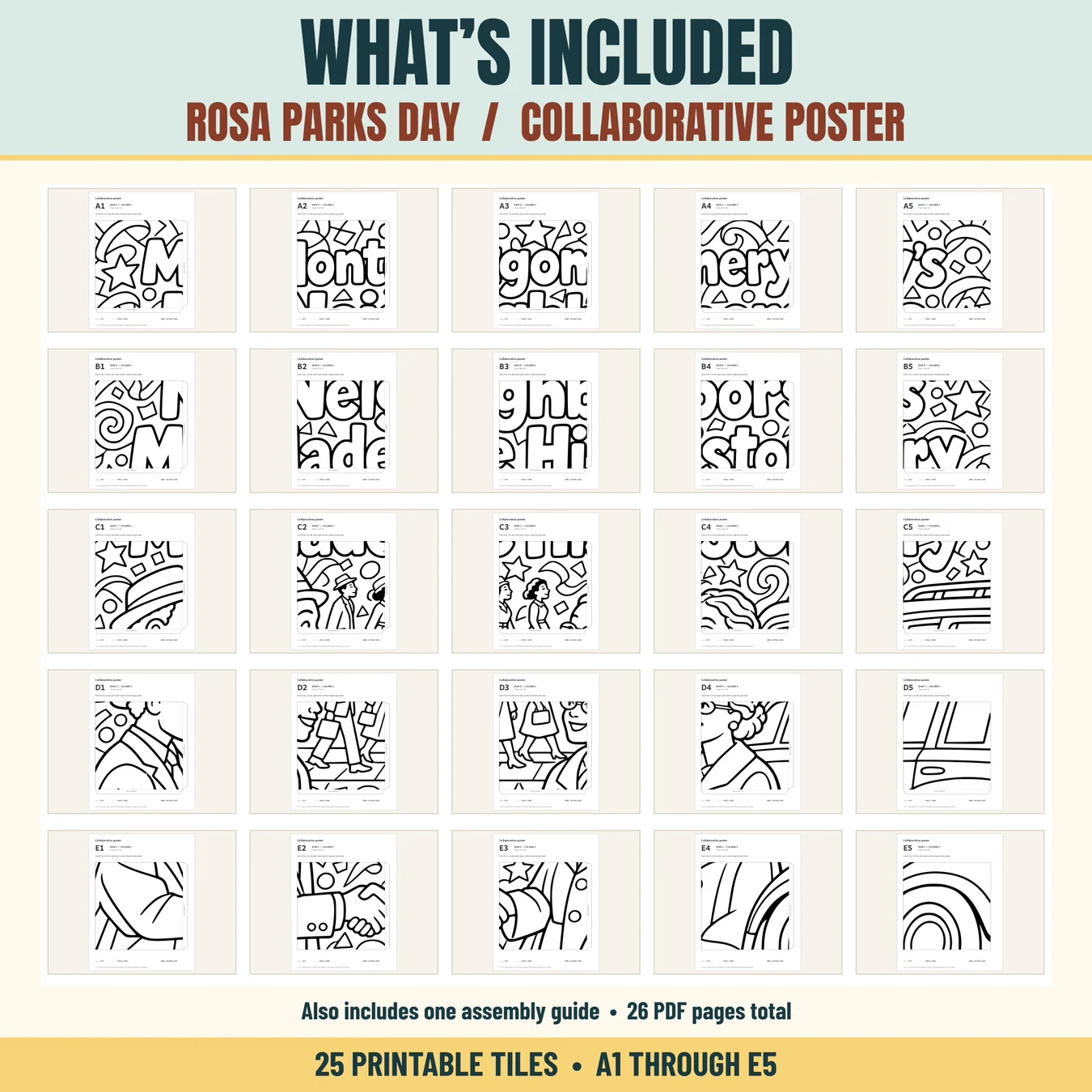
Neighbors talk beside a car under a starry sky.
Classroom idea: Which roles kept neighbors connected during a long protest?
Have each group build a three-card profile for one role with an action, a resource and a challenge. Arrange the profiles around the poster so a reader can follow how the roles supported one another.
Open the individual Montgomery's Neighbors Made History teaching guide.
8. Map the Montgomery Boycott Collaborative Poster
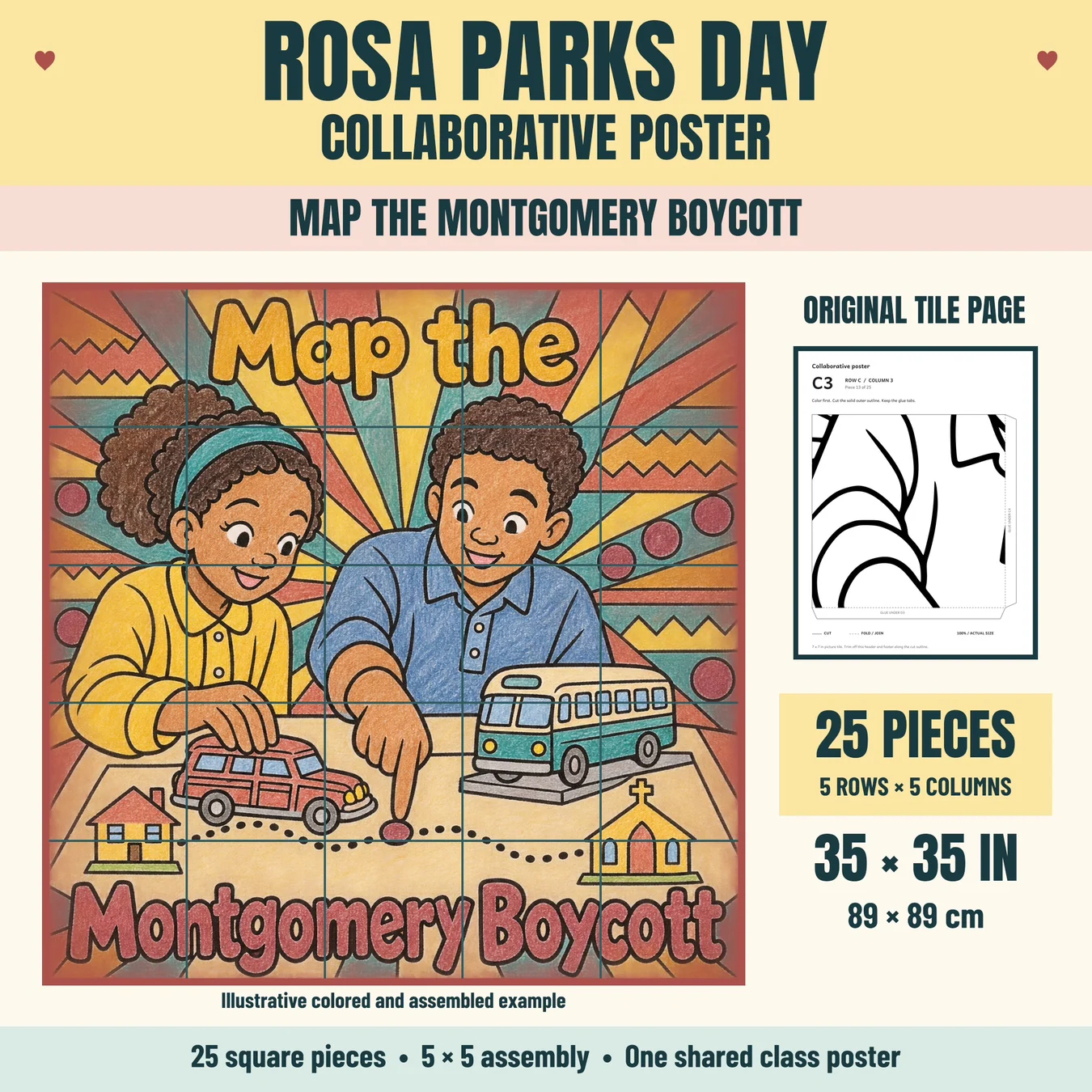
Best for: Map places, routes and questions.
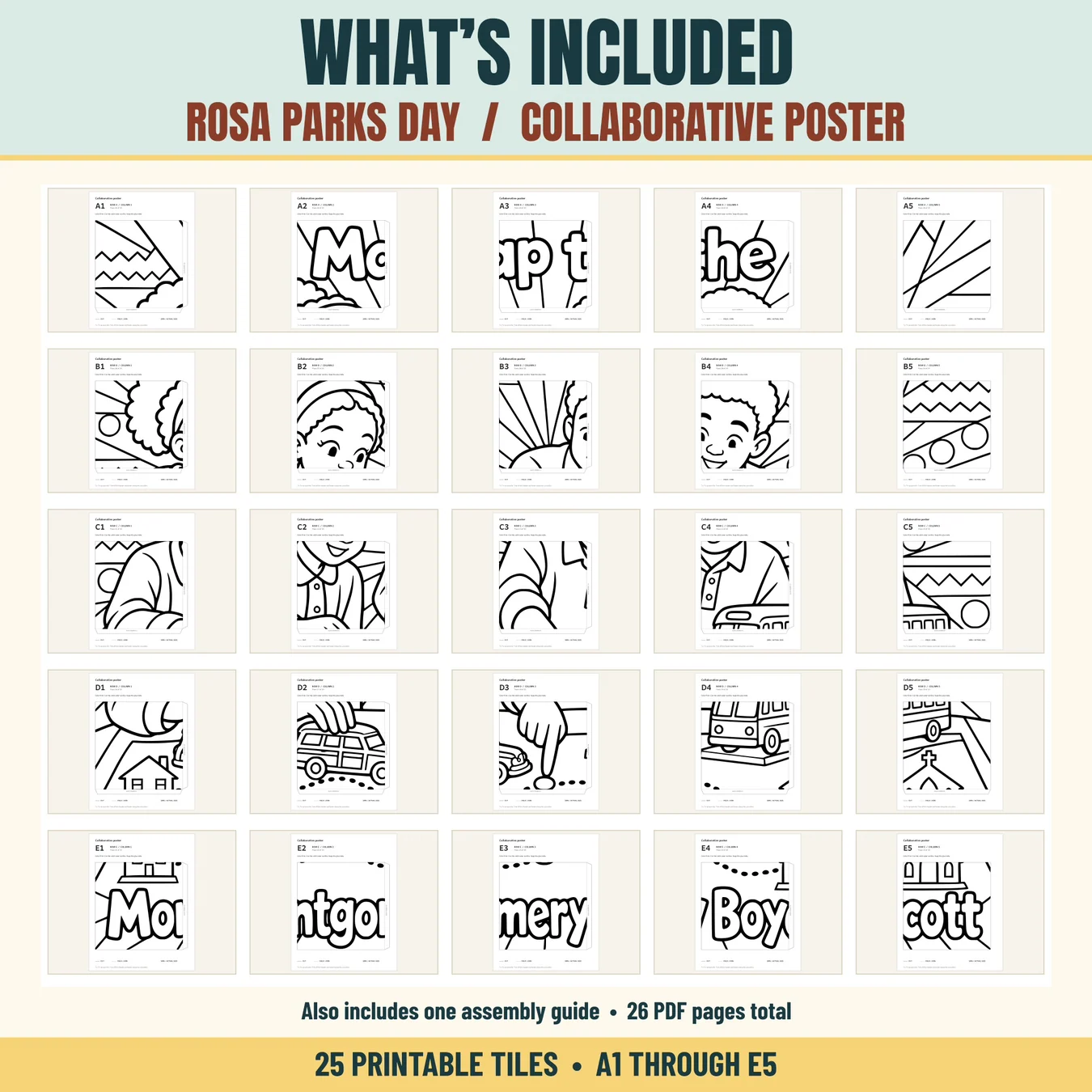
Two students look at a map with a model bus and buildings.
Classroom idea: How does a map help us understand the boycott?
Give groups a blank outline with Montgomery marked. Add places from teacher-selected sources, then use a different line style for a classroom model route. Write a legend to show which locations are documented.
Open the individual Map the Montgomery Boycott teaching guide.
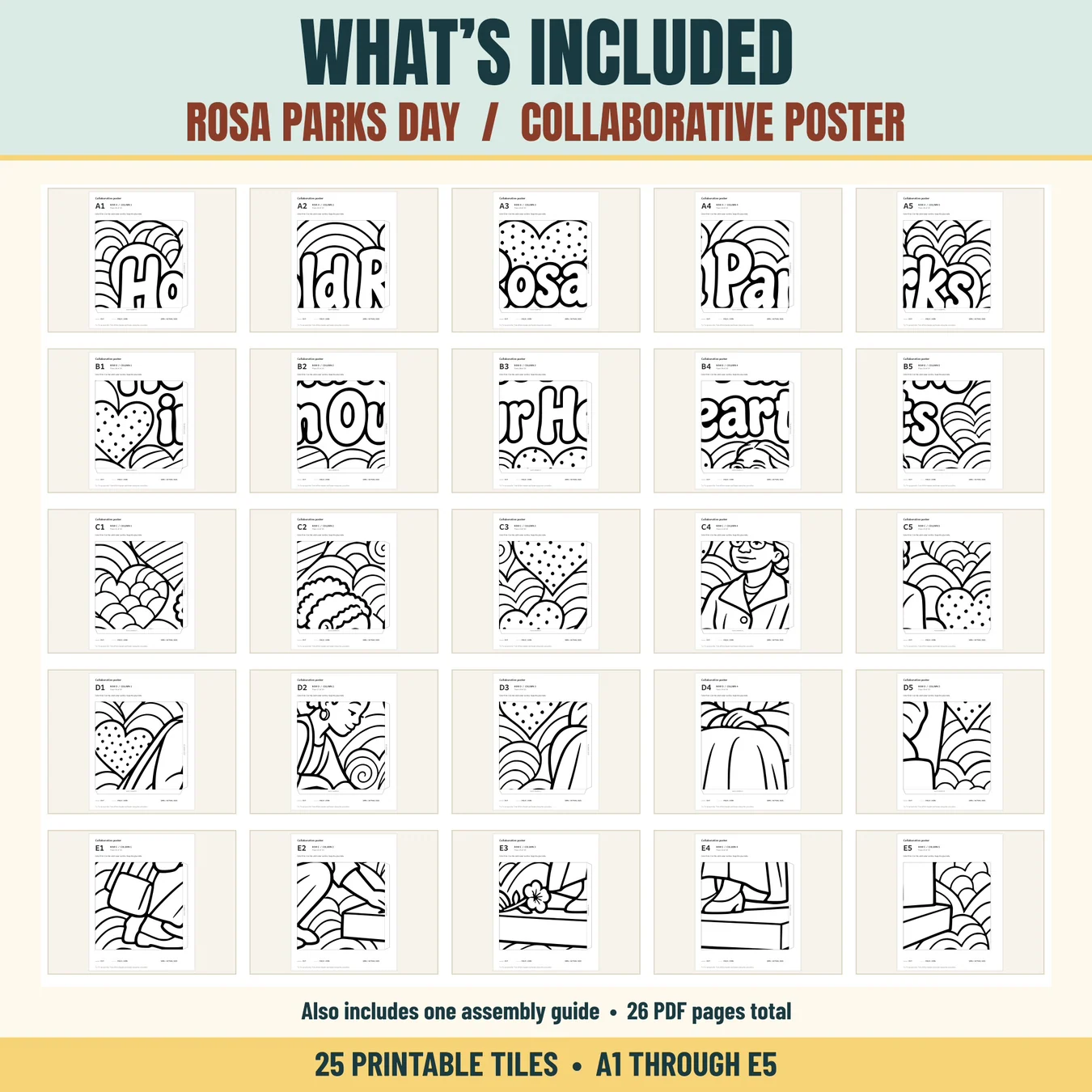
9. Hold Rosa Parks in Our Hearts Collaborative Poster
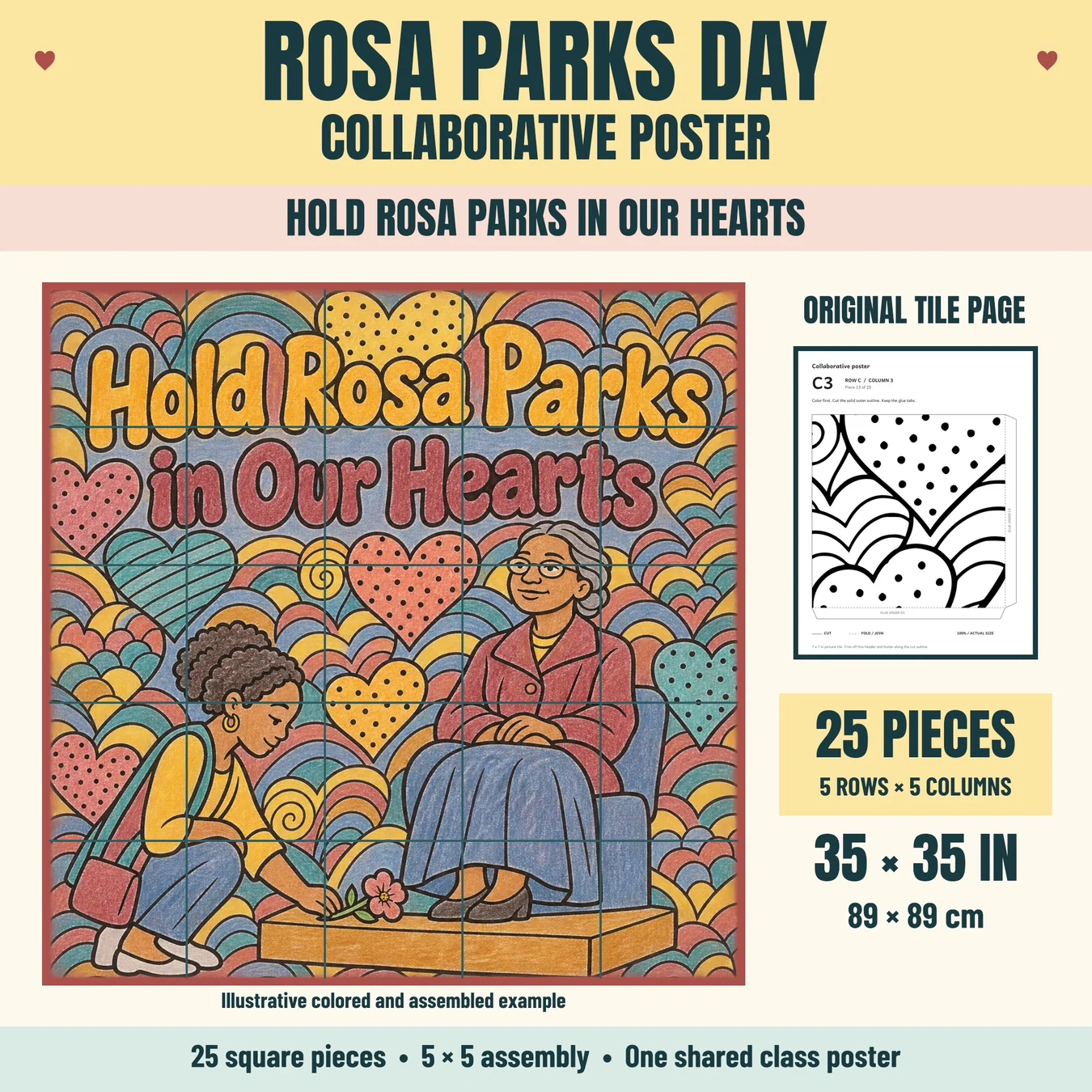
Best for: Make a reflection with evidence.
An older woman sits beside a child surrounded by bright hearts.
Classroom idea: What detail from the lesson would you want a visitor to remember?
Offer students a private draft, a drawing or a dictated response. Ask them to pair a remembered fact with a reason they chose it. Invite volunteers to share only the work they want displayed.
Open the individual Hold Rosa Parks in Our Hearts teaching guide.
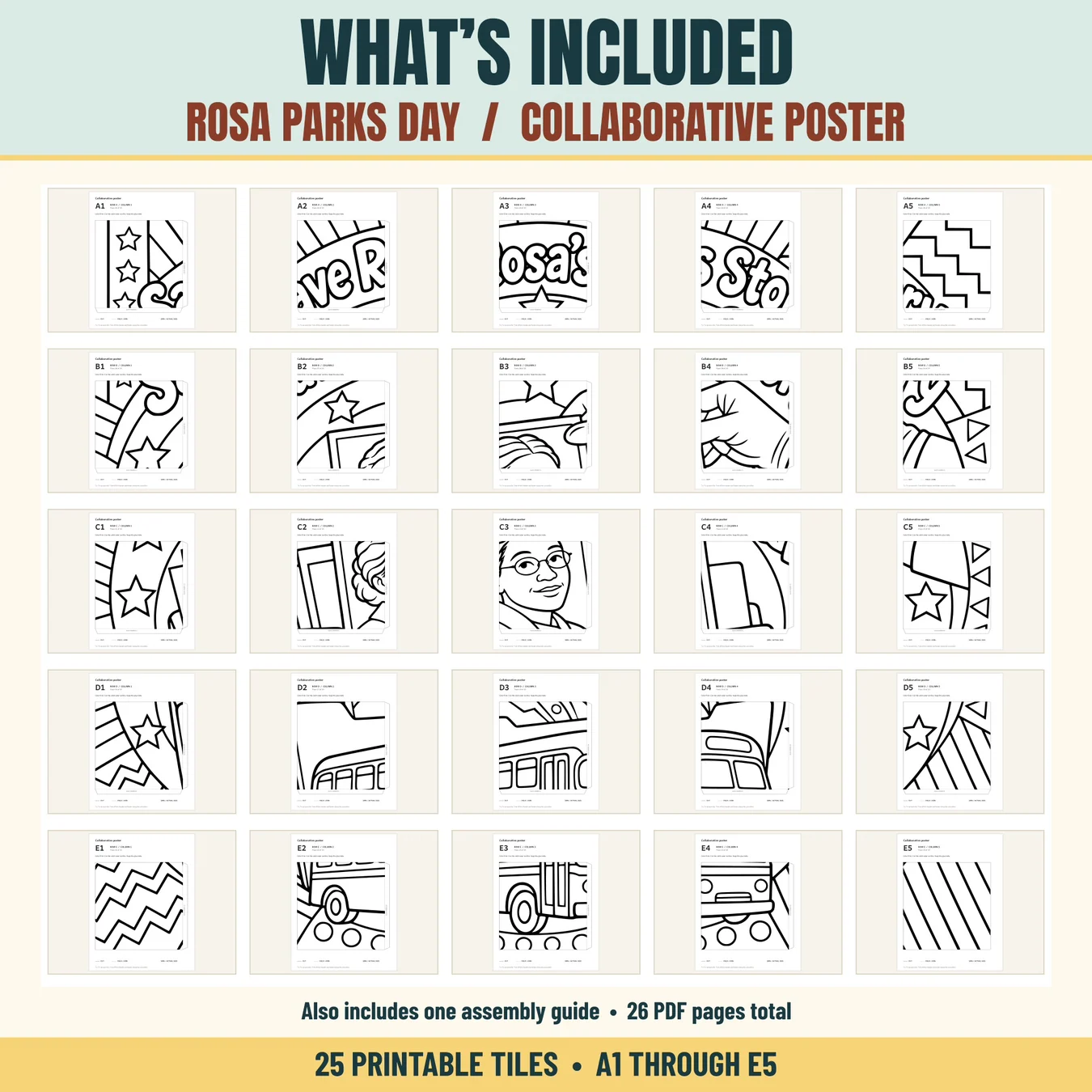
10. Save Rosa's Story Collaborative Poster
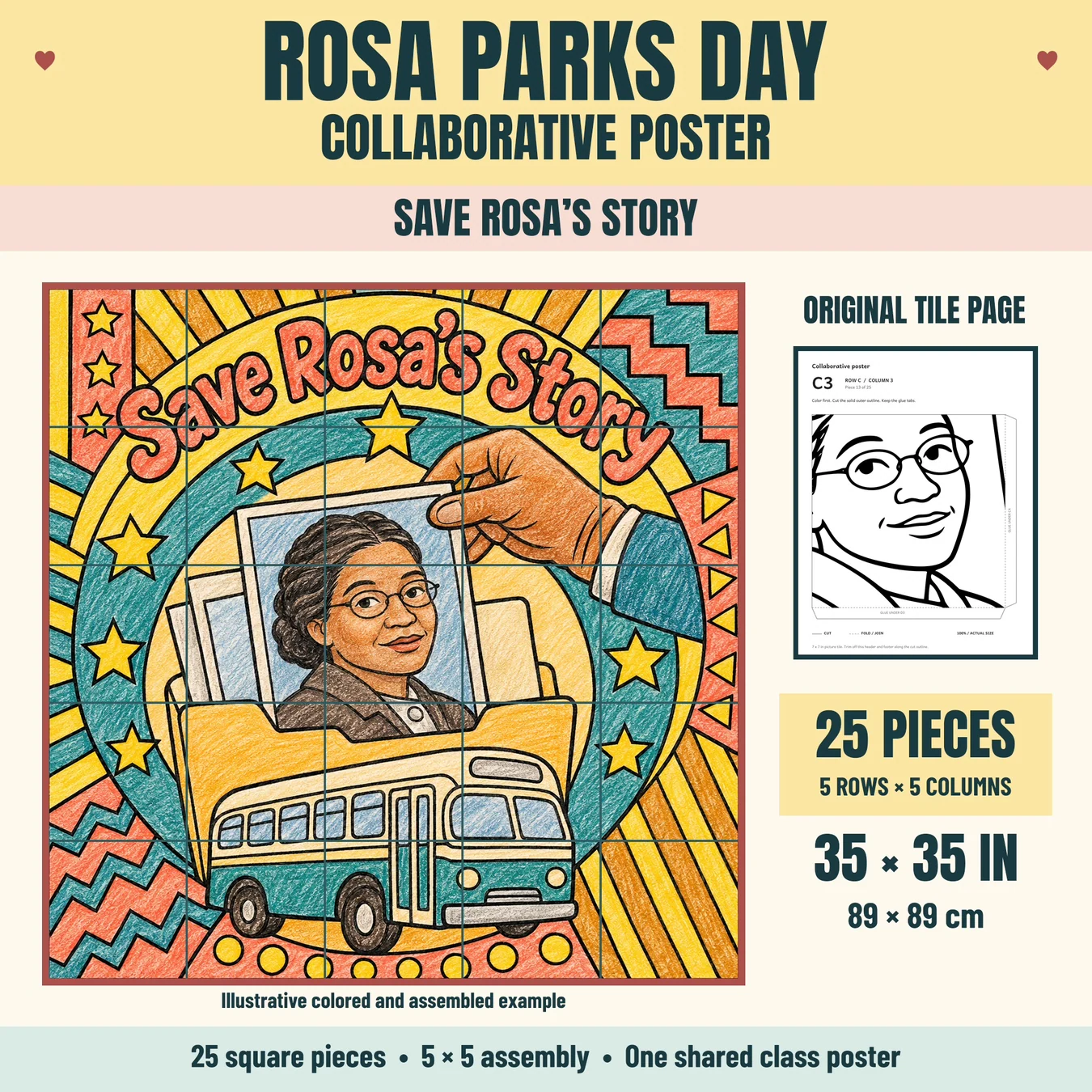
Best for: Create a source record.
A hand holds a framed portrait above a city bus.
Classroom idea: How can we help future readers verify an account?
Ask pairs to choose one public archive item. Have them make a record with title, creator if known, date and a plain-language description of what it shows. Include a question the item cannot answer on its own.
Open the individual Save Rosa's Story teaching guide.
11. Every Rider Deserves Dignity Collaborative Poster
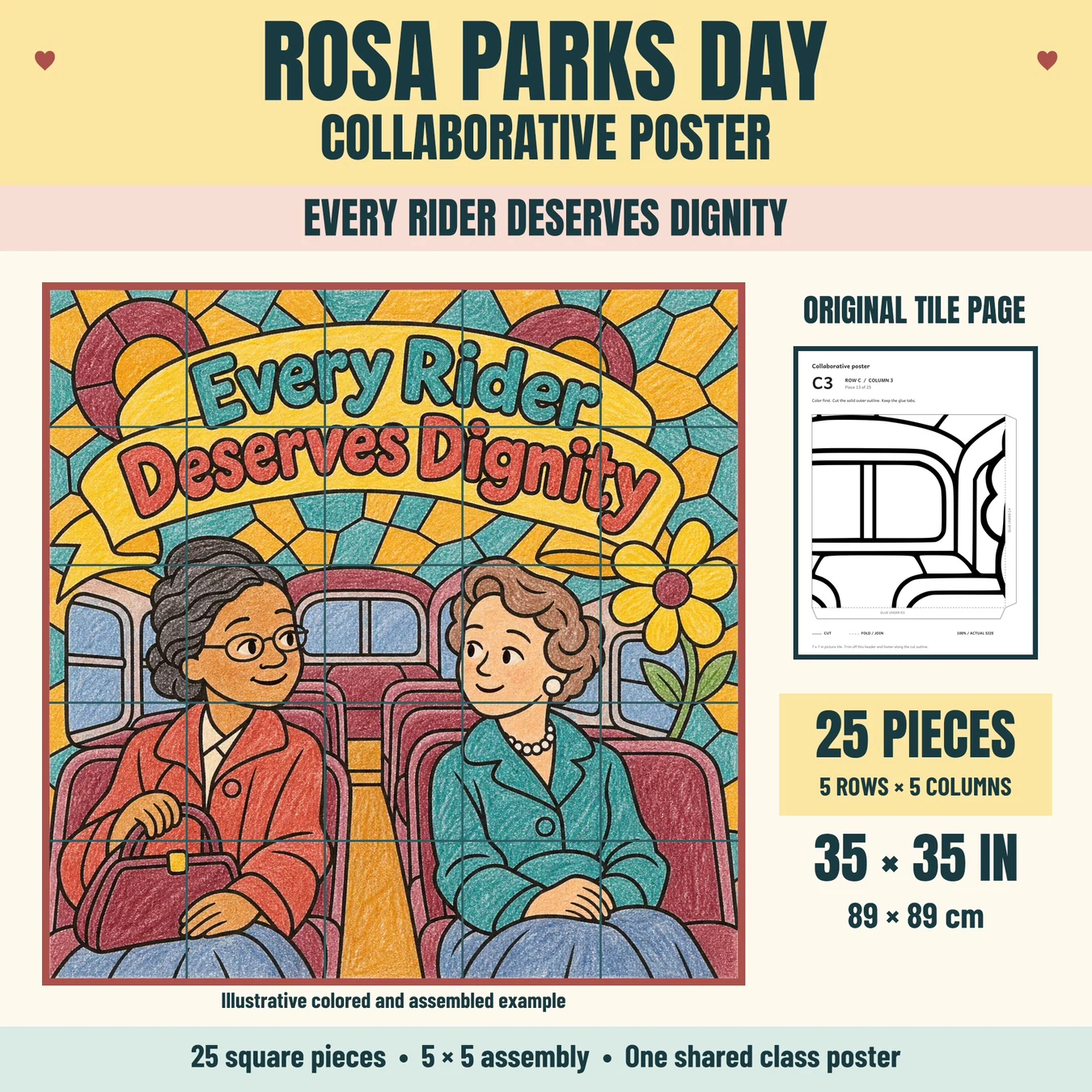
Best for: Write an accessible transport policy.
Two passengers sit on a bus beneath the poster’s message.
Classroom idea: What would a fair policy for a public service need to say clearly?
After reading about bus segregation, give groups a fictional transit setting. Ask each group to draft one short rule about equal treatment and test it against two ordinary rider scenarios.
Open the individual Every Rider Deserves Dignity teaching guide.
12. Jo Ann Robinson Spread the Word Collaborative Poster
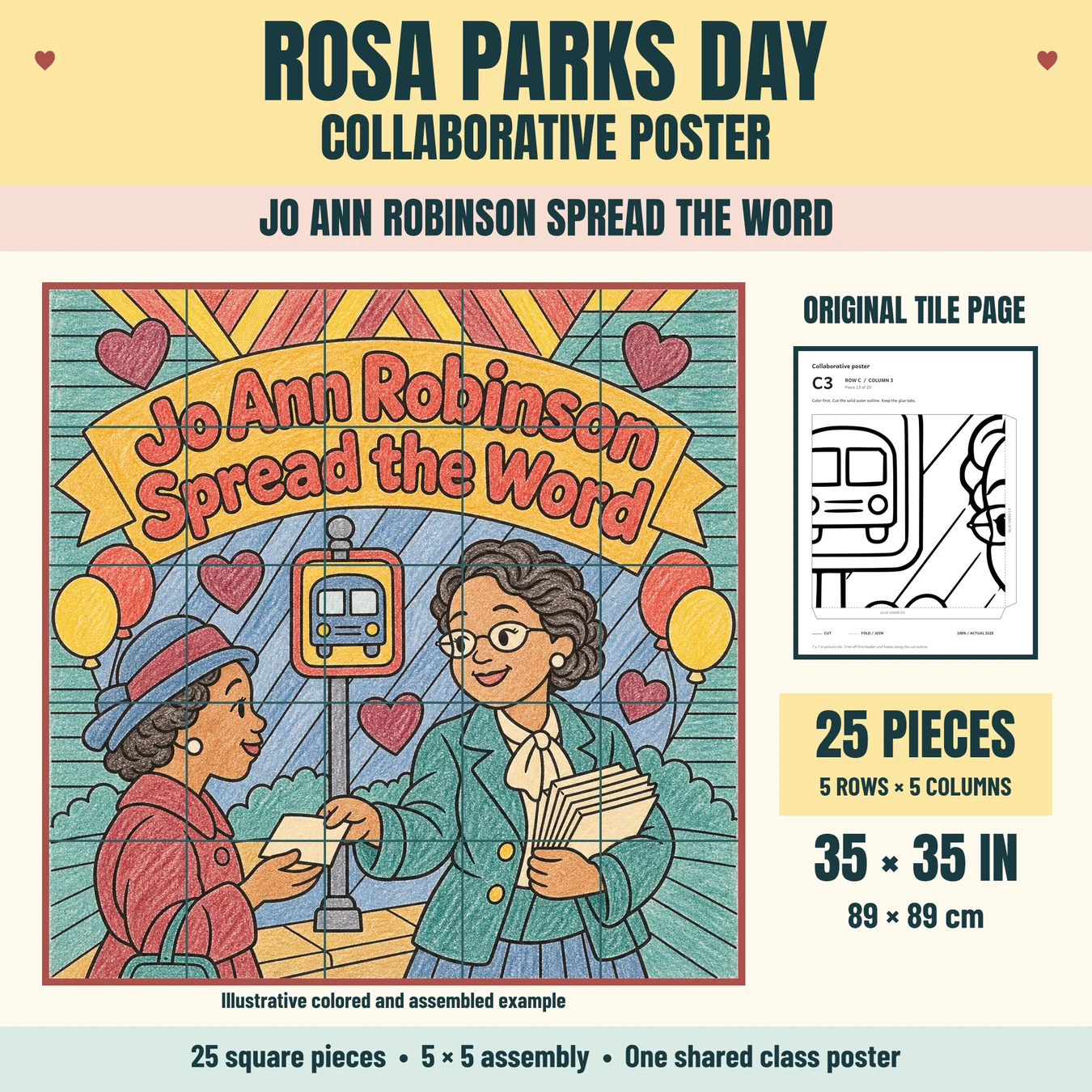
Best for: Analyze Jo Ann Robinson’s communication.
Two women pass papers beside a city bus.
Classroom idea: How did a written notice help residents coordinate?
Use a historical account of Robinson and the Women’s Political Council. Ask students to find the audience, action and timing in the account. Invite them to draft a fictional school notice with the same information structure and label it as a classroom example.
Open the individual Jo Ann Robinson Spread the Word teaching guide.
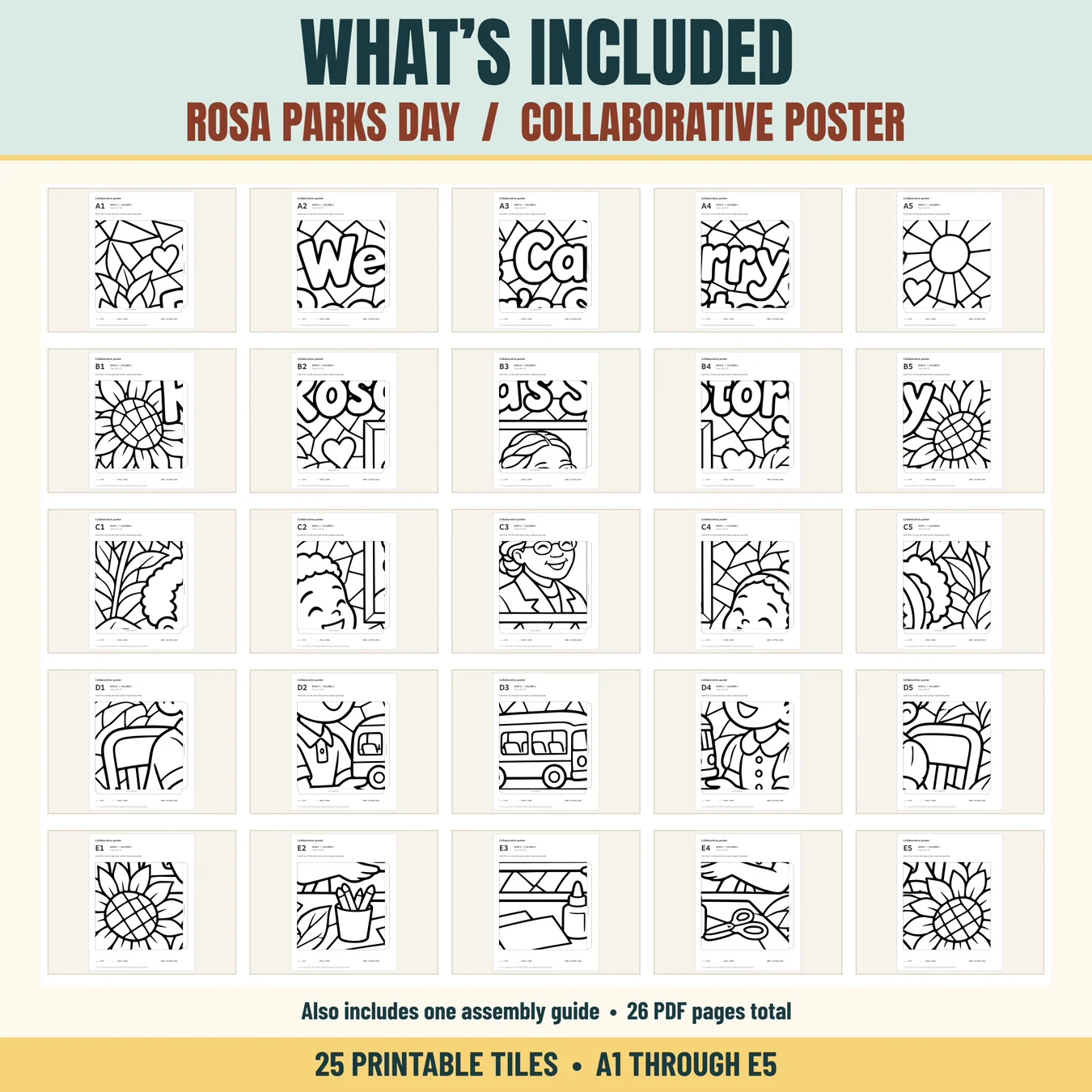
13. We Carry Rosa's Story Collaborative Poster
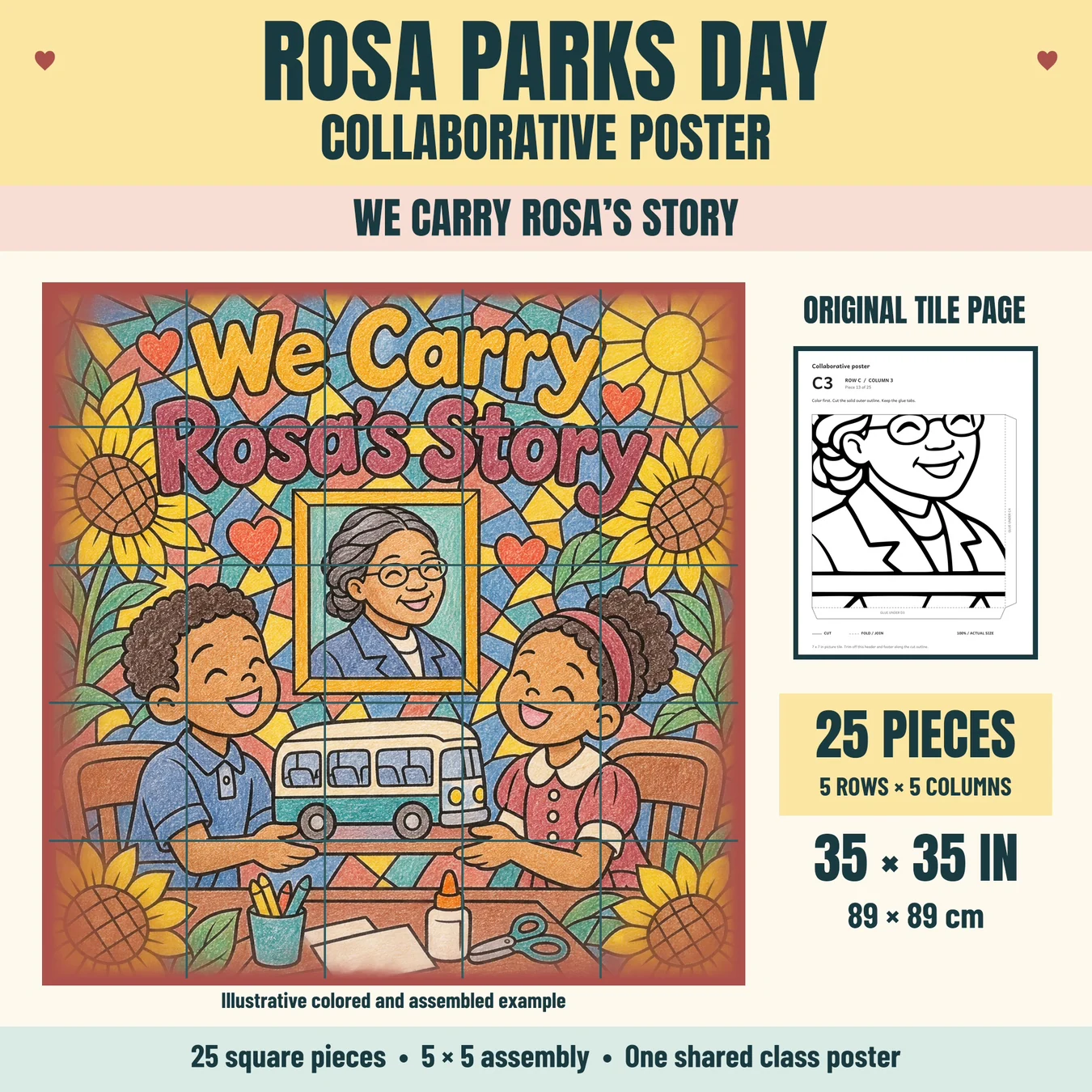
Best for: Write a sourced retelling.
Two young people examine a bus model below a framed portrait.
Classroom idea: How can we carry a story forward accurately?
Give trios a short source and three index cards marked person, action and response. Students produce a short retelling, exchange it with another trio and underline the details they can trace back to the source.
Open the individual We Carry Rosa's Story teaching guide.
14. The Boycott Changed Montgomery Collaborative Poster
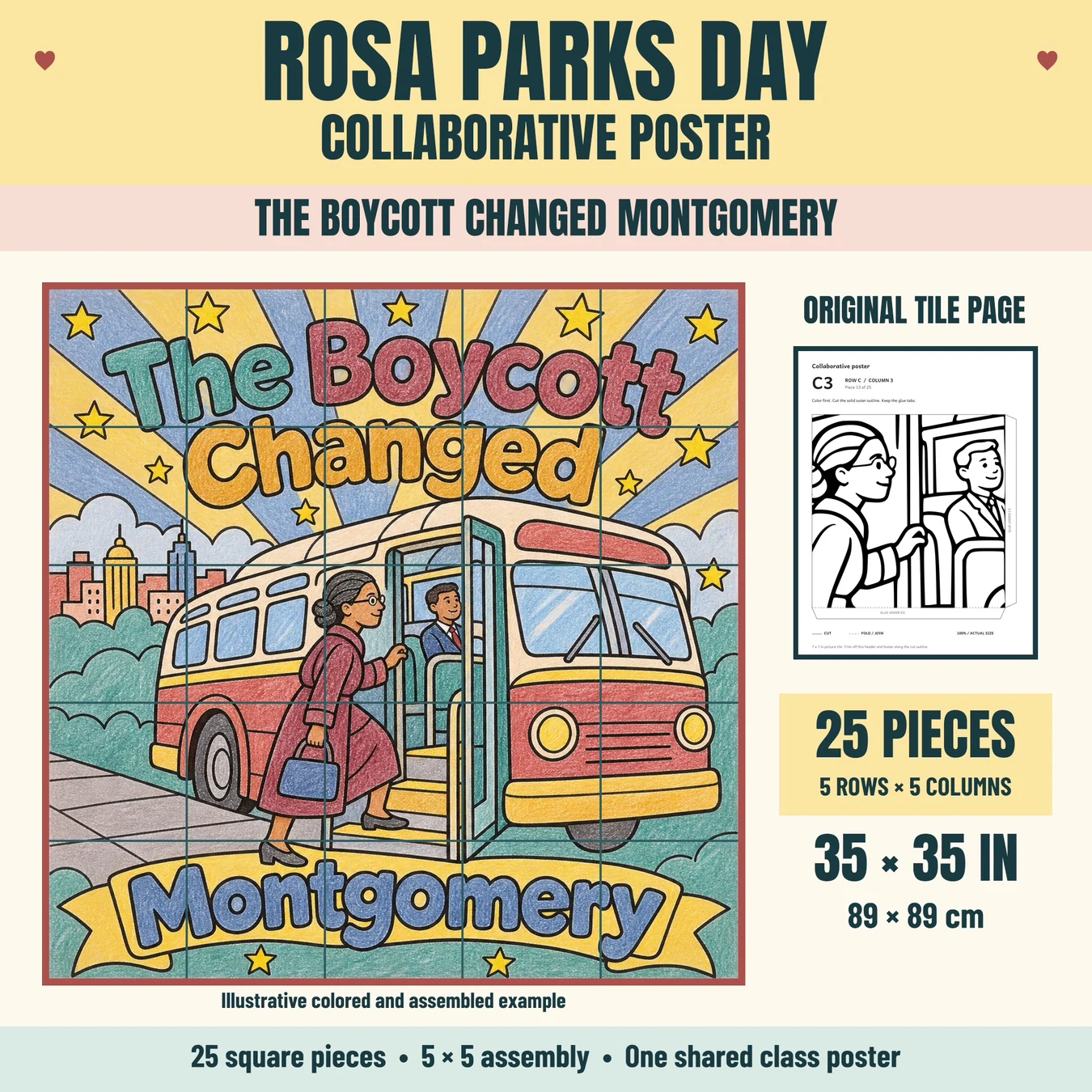
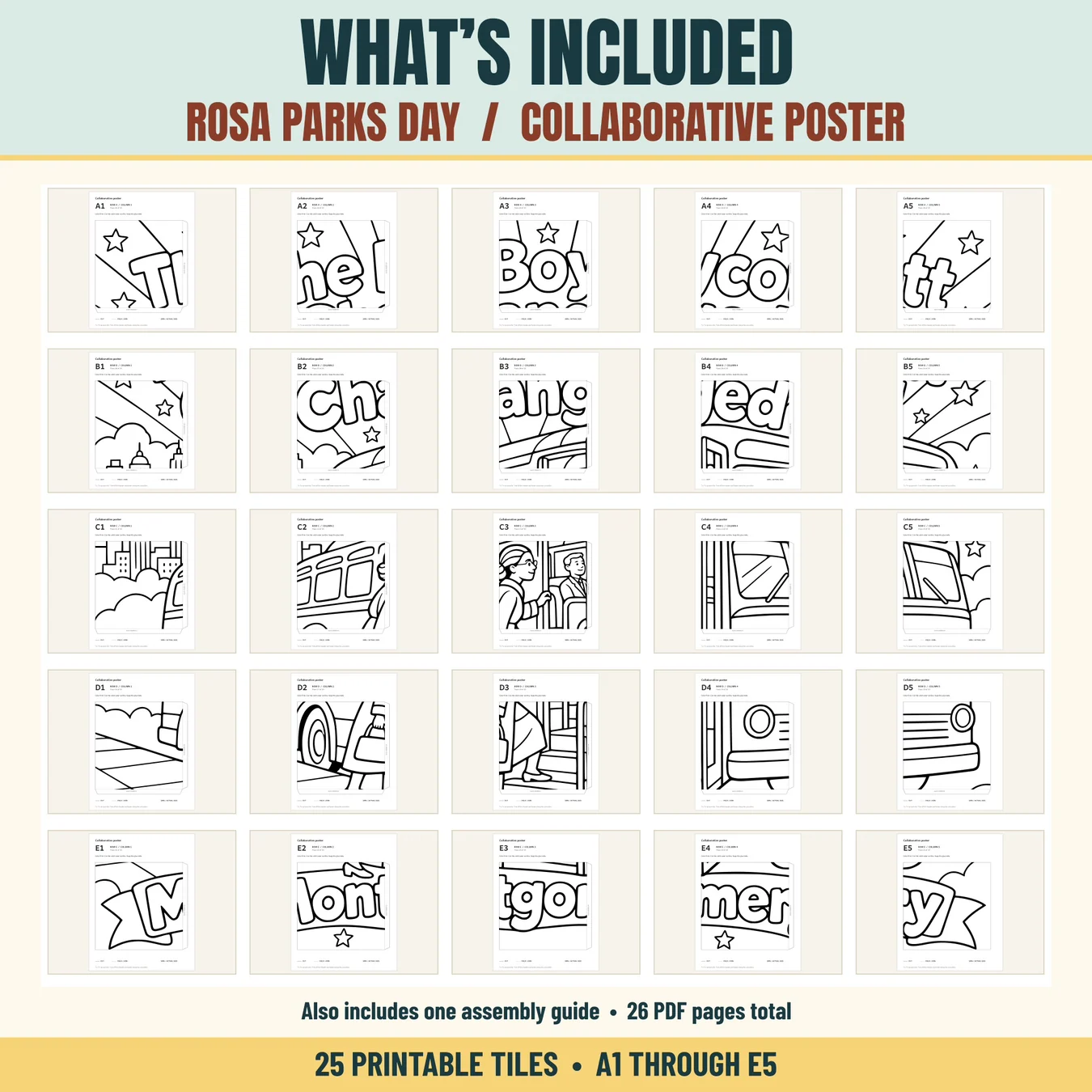
Best for: Build a cause-and-change diagram.
A rider stands by the doorway of a city bus.
Classroom idea: What changed in Montgomery, and what helped bring about that change?
Draw separate paths for organizing and legal action. Add one supported event to each path, then invite learners to show where the paths meet in the story without treating them as identical.
Open the individual The Boycott Changed Montgomery teaching guide.
15. Equal Rights Belong to All Collaborative Poster
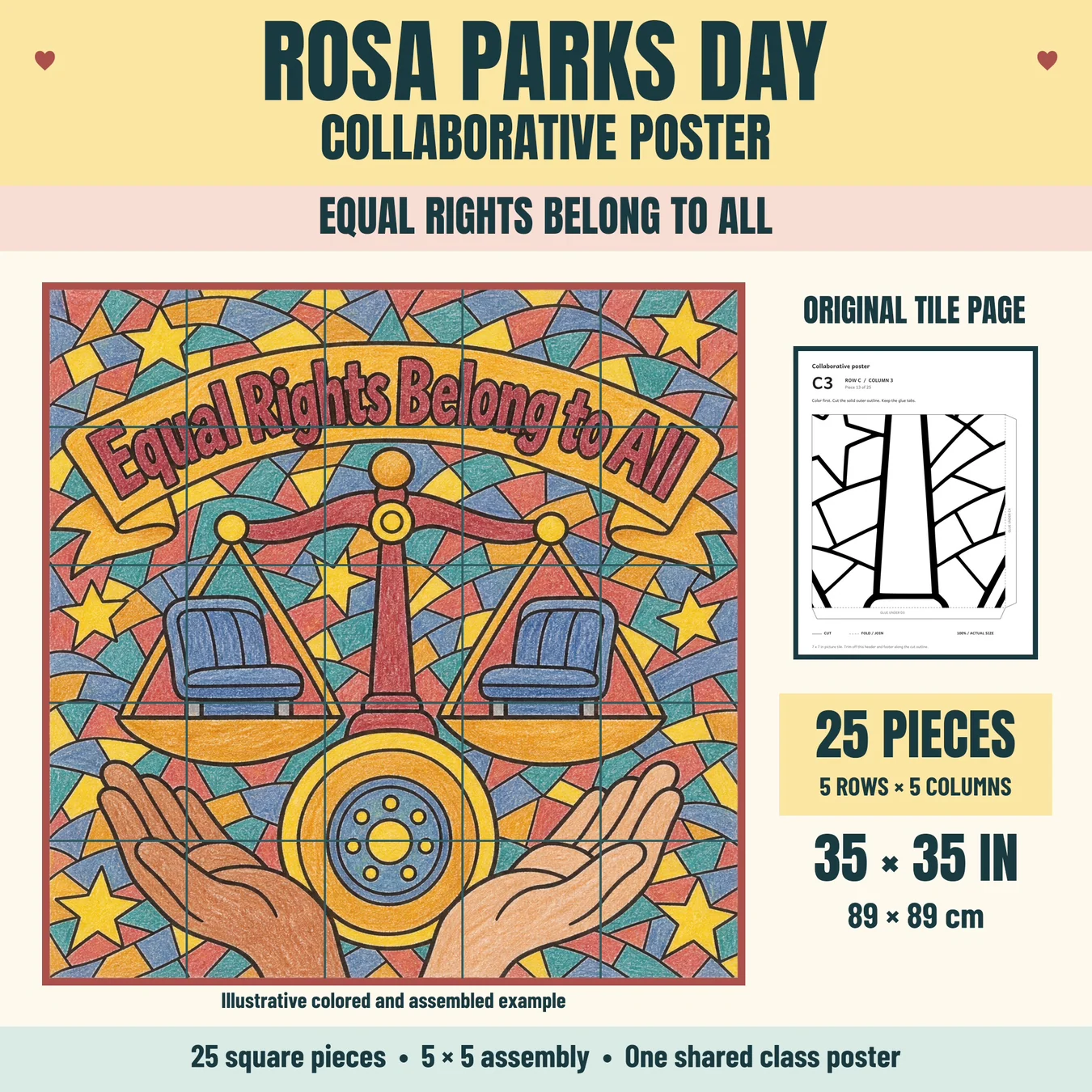
Best for: Read a right alongside a rule.
Balanced scales stand in the center of the artwork.
Classroom idea: How can a rule deny equal treatment?
Create a simple chart with columns for the rule, who it affected and the consequence. Use a short historical description of bus segregation to complete the chart together. Then have students put the consequence into a sentence visitors can understand.
Open the individual Equal Rights Belong to All teaching guide.
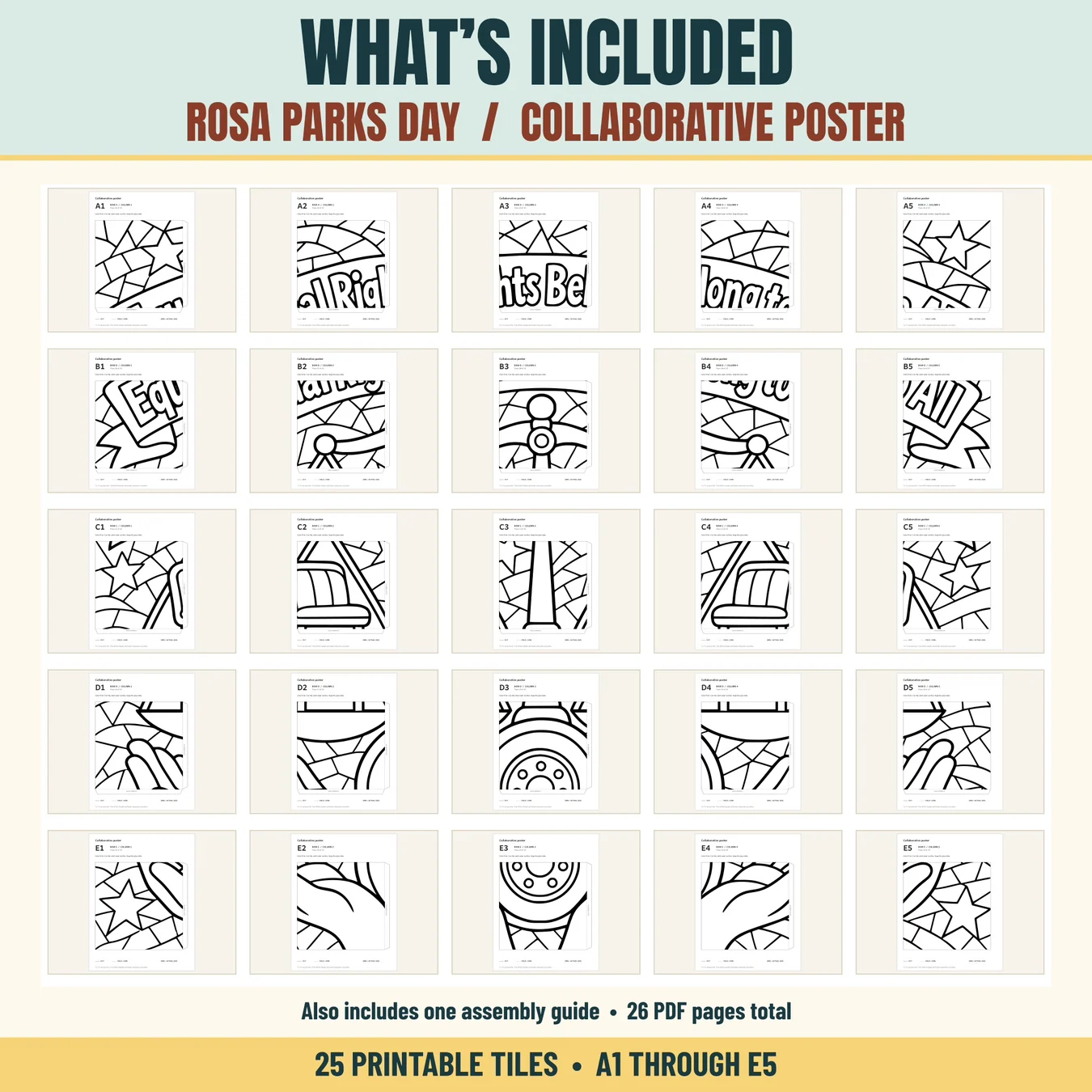
16. Courage in Everyday Work Collaborative Poster
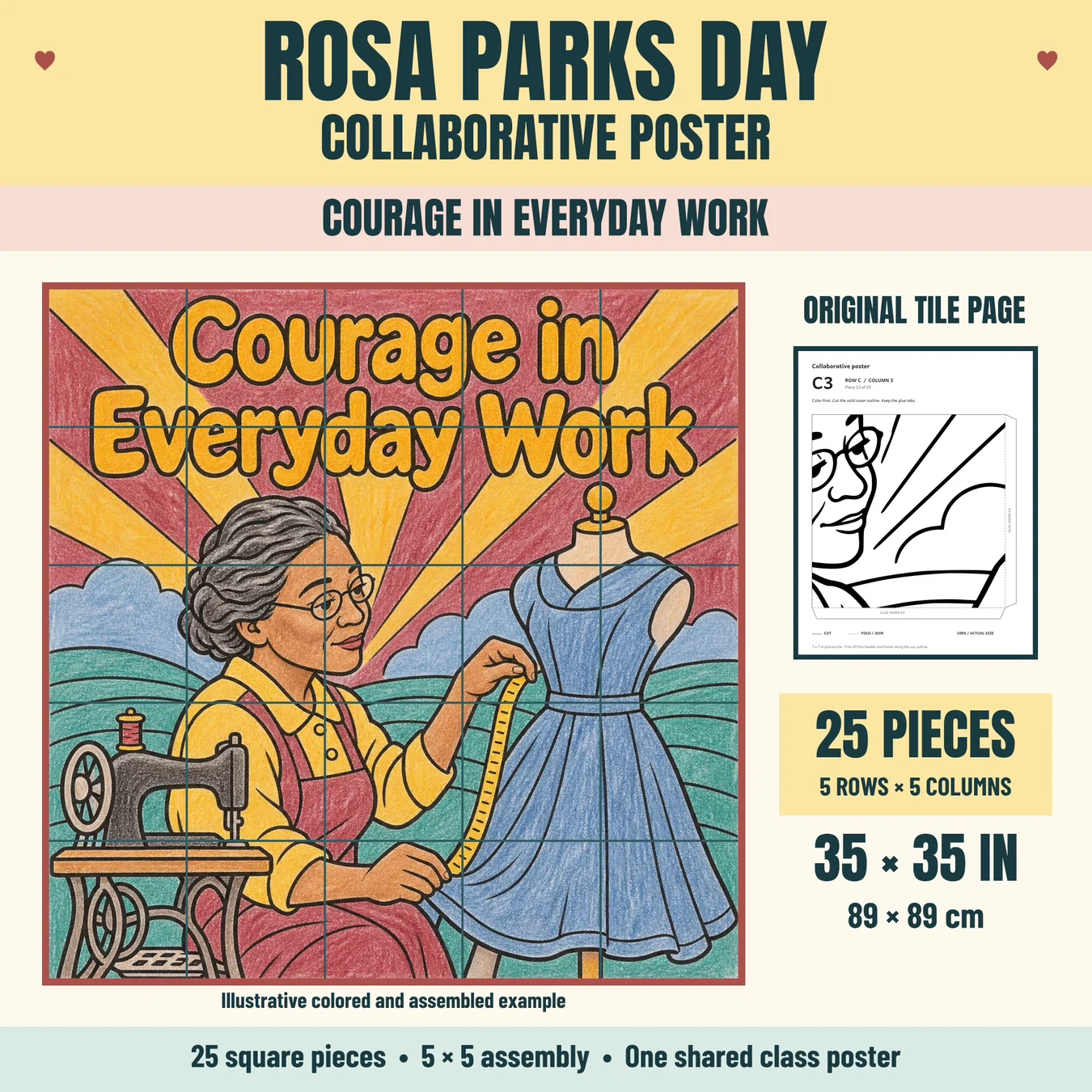
Best for: Notice the work people did.
A dress form and sewing machine frame an illustration of Parks at work.
Classroom idea: What responsibilities can be easy to miss in a story about social change?
Assign short reading excerpts about meetings, transport and communication. Ask each group to draw a small object representing the work and write an evidence sentence to go with it.
Open the individual Courage in Everyday Work teaching guide.
17. Rosa Parks Taught Courage Collaborative Poster
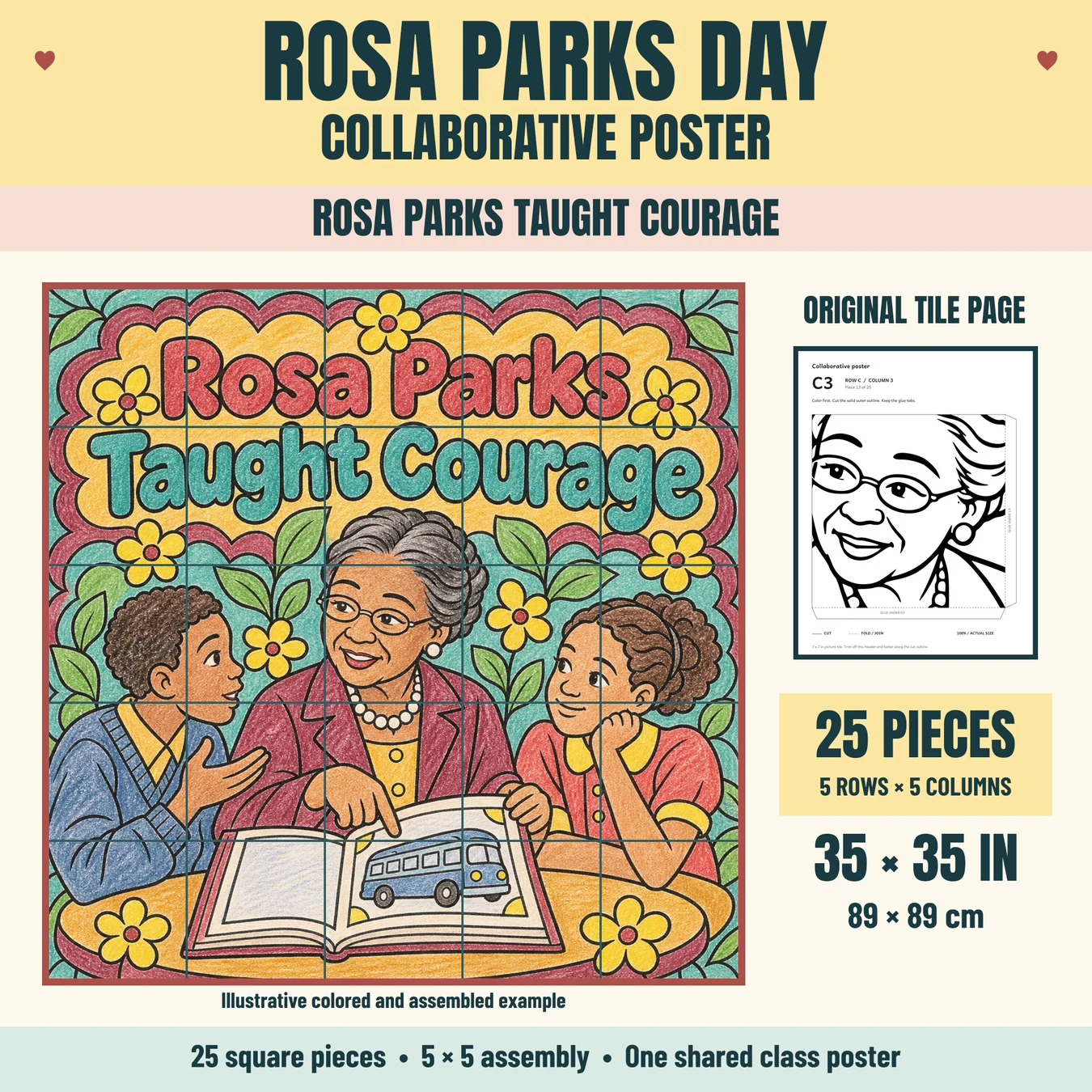
Best for: Write a question for a museum guide.
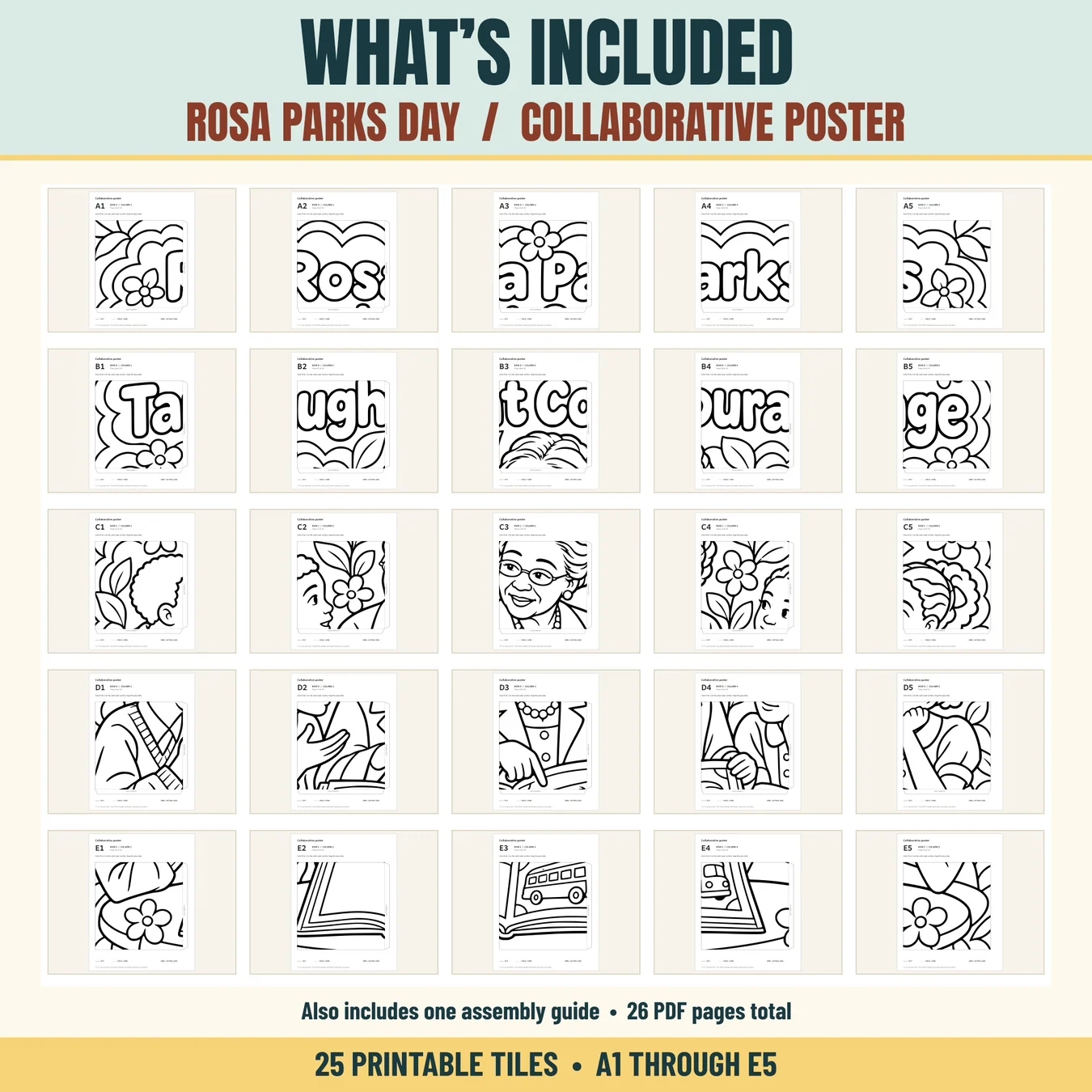
Young readers share a book with an illustrated Rosa Parks.
Classroom idea: What questions help us learn about courage in this history?
Ask groups to turn broad prompts such as “Was she brave?” into evidence questions. Pair each improved question with a source students could use to answer it. Leave one question open for a later lesson.
Open the individual Rosa Parks Taught Courage teaching guide.
18. Rosa Parks Spoke Up Collaborative Poster
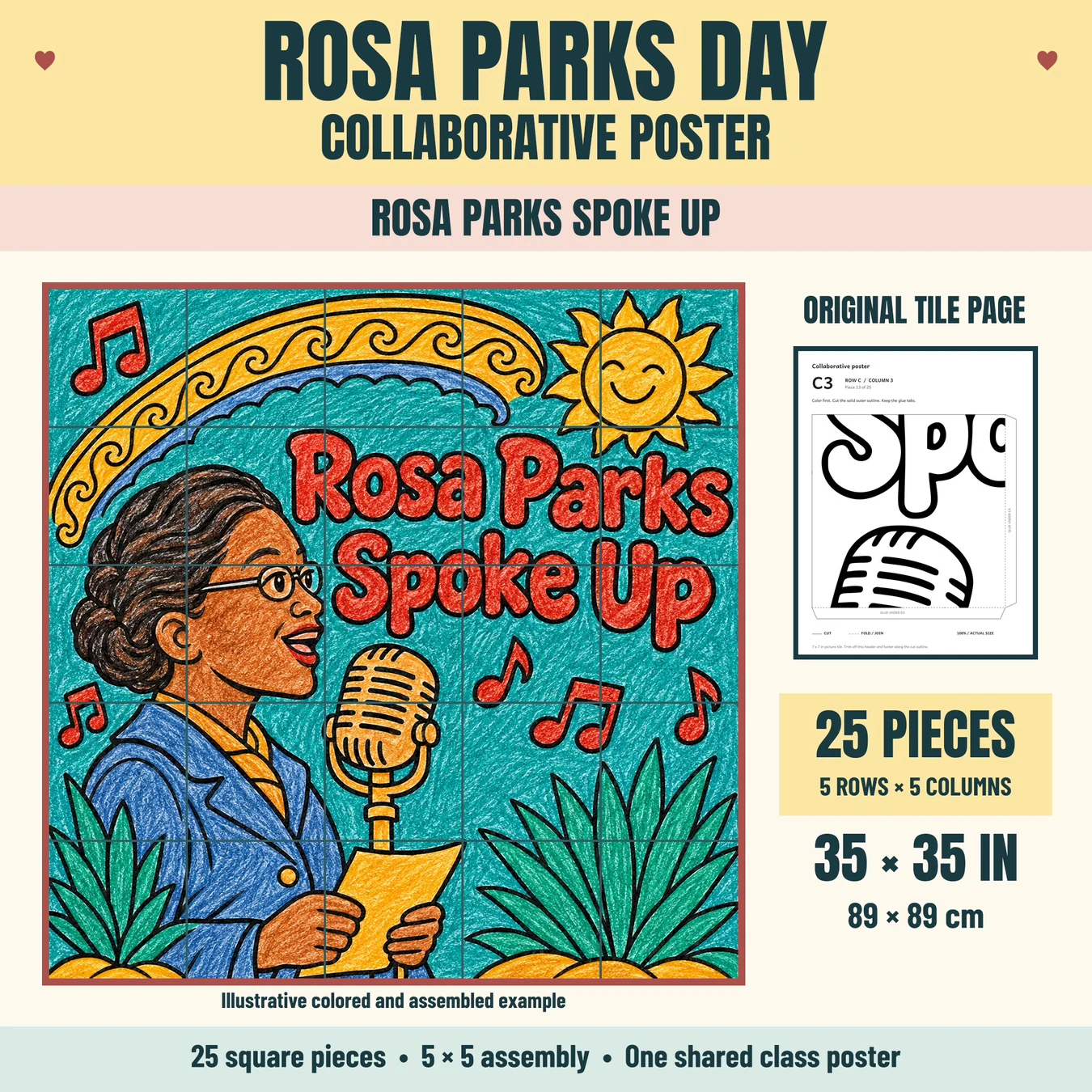
Best for: Listen to Parks’s own account.
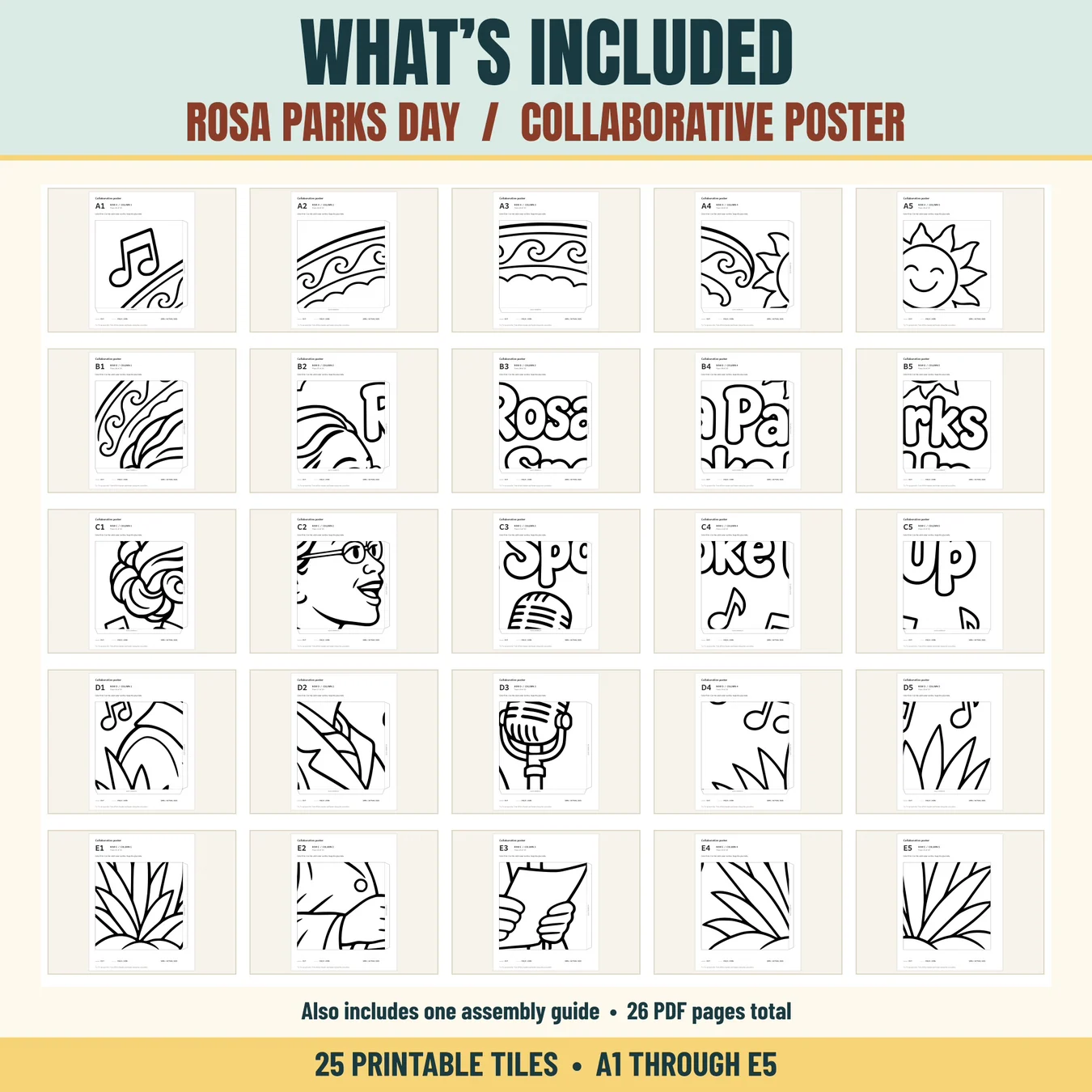
A woman speaks into a microphone.
Classroom idea: What can Parks’s own writing add to a short retelling?
Read aloud a teacher-selected passage from the Parks papers. Have learners mark an idea they understand and one word that needs context. Invite them to paraphrase the idea and attach a source label beside the artwork.
Open the individual Rosa Parks Spoke Up teaching guide.
19. Claudette Colvin Showed Courage Collaborative Poster
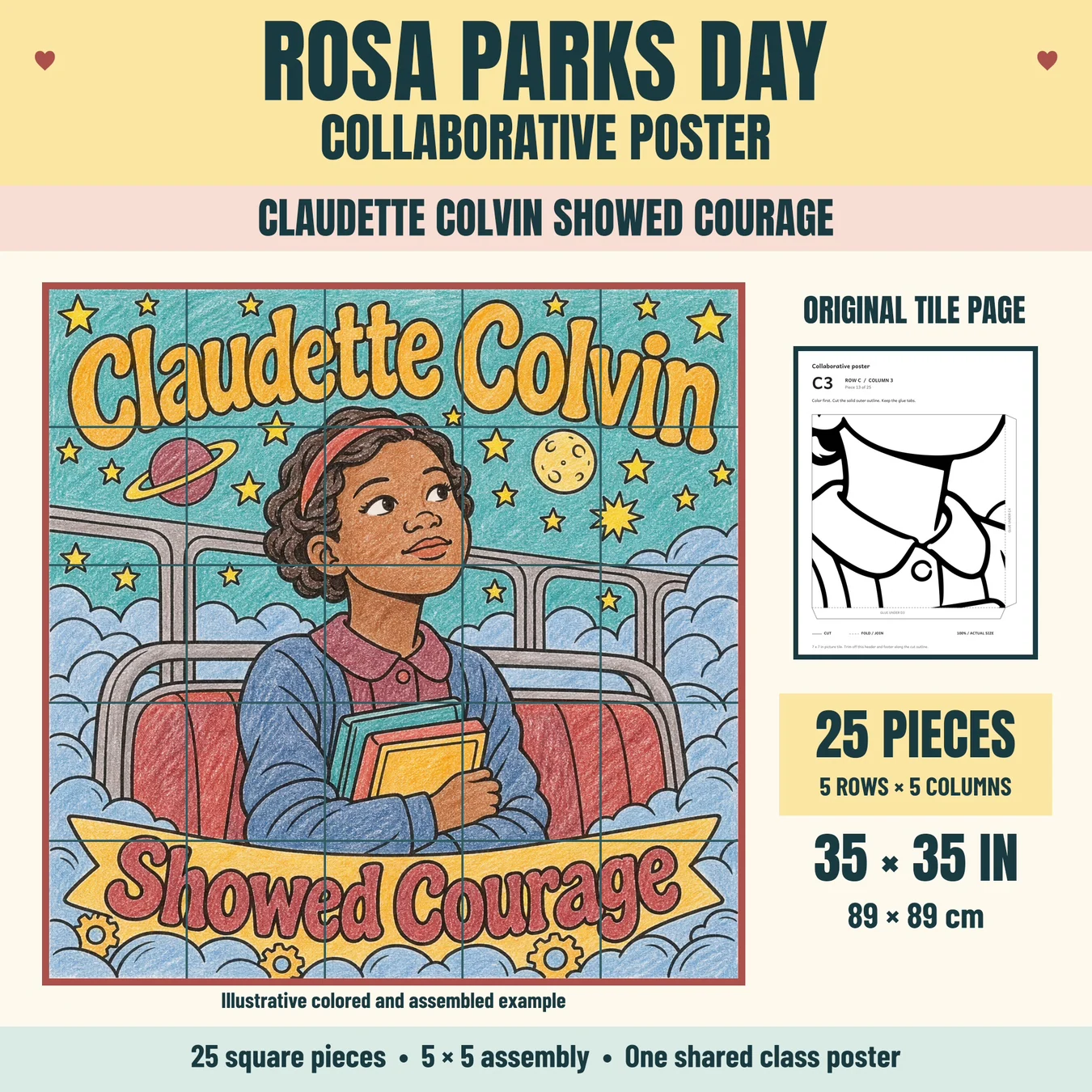
Best for: Compare Claudette Colvin and Rosa Parks.
An illustrated Claudette Colvin sits holding books.
Classroom idea: What do two documented bus protests have in common, and where do their timelines differ?
Give students a short, sourced account for each person. Have pairs place the accounts in date order and record one documented similarity and one difference. Keep the two biographies clearly labeled on the display.
Open the individual Claudette Colvin Showed Courage teaching guide.
20. Courage Has a History Collaborative Poster
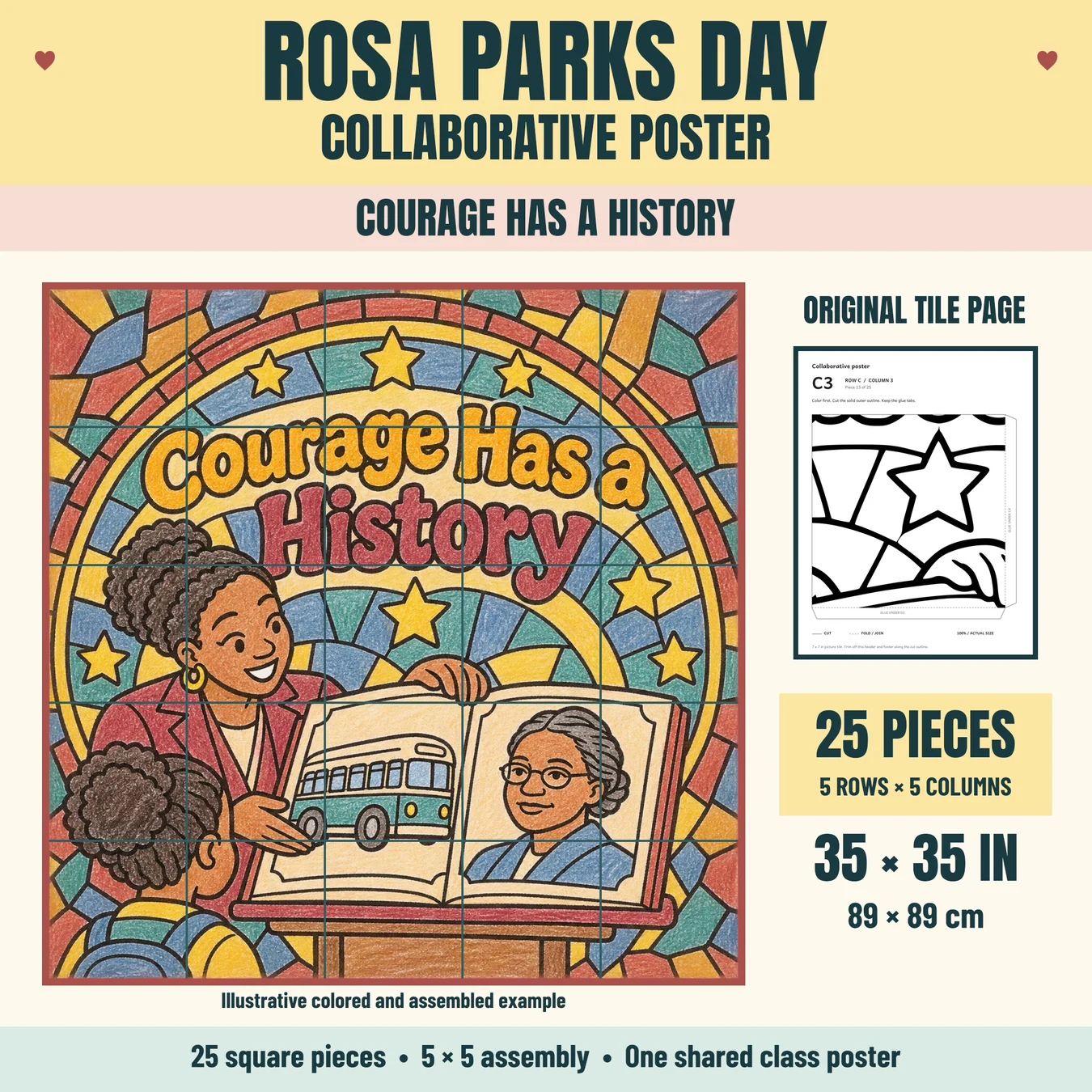
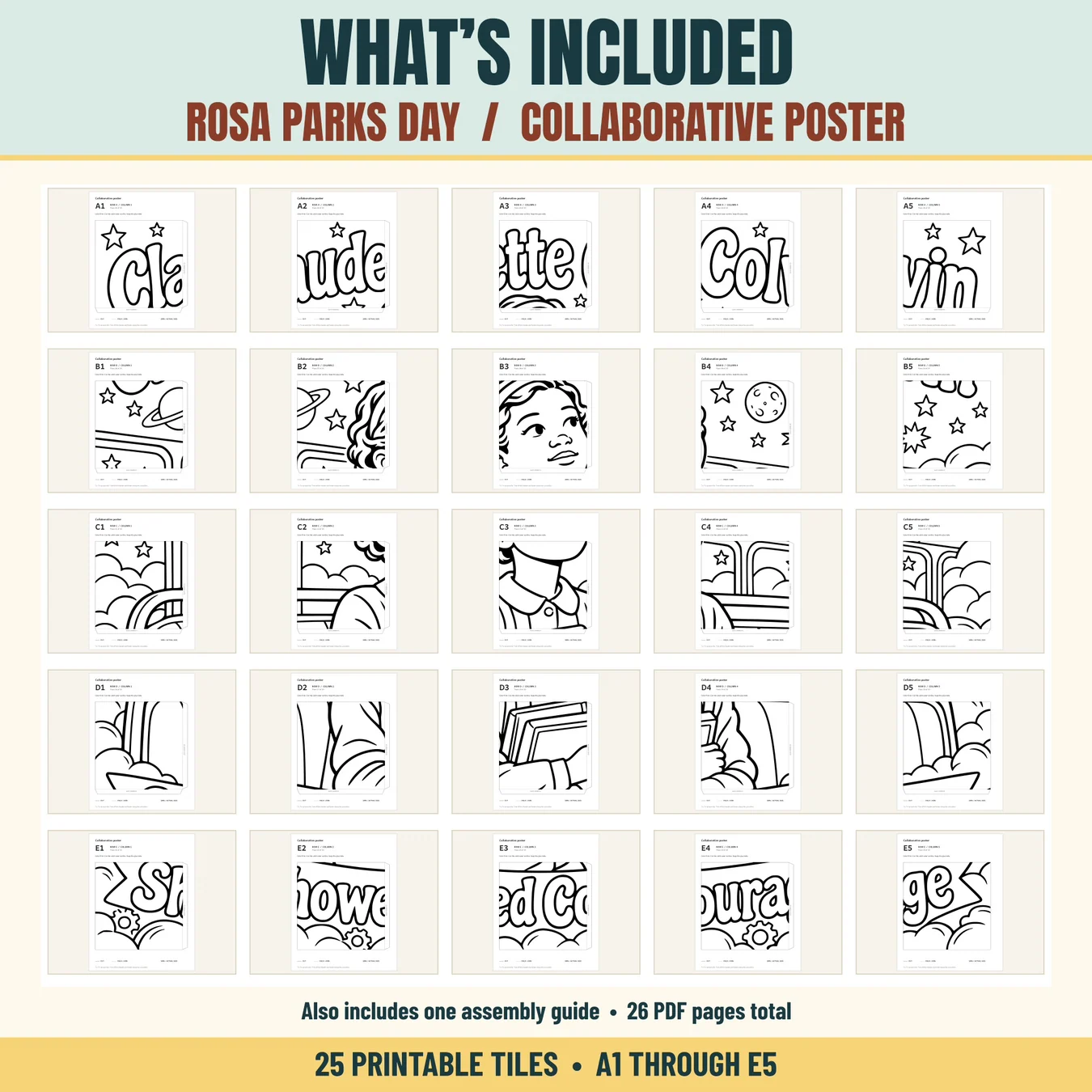
Best for: Connect courage to preparation.
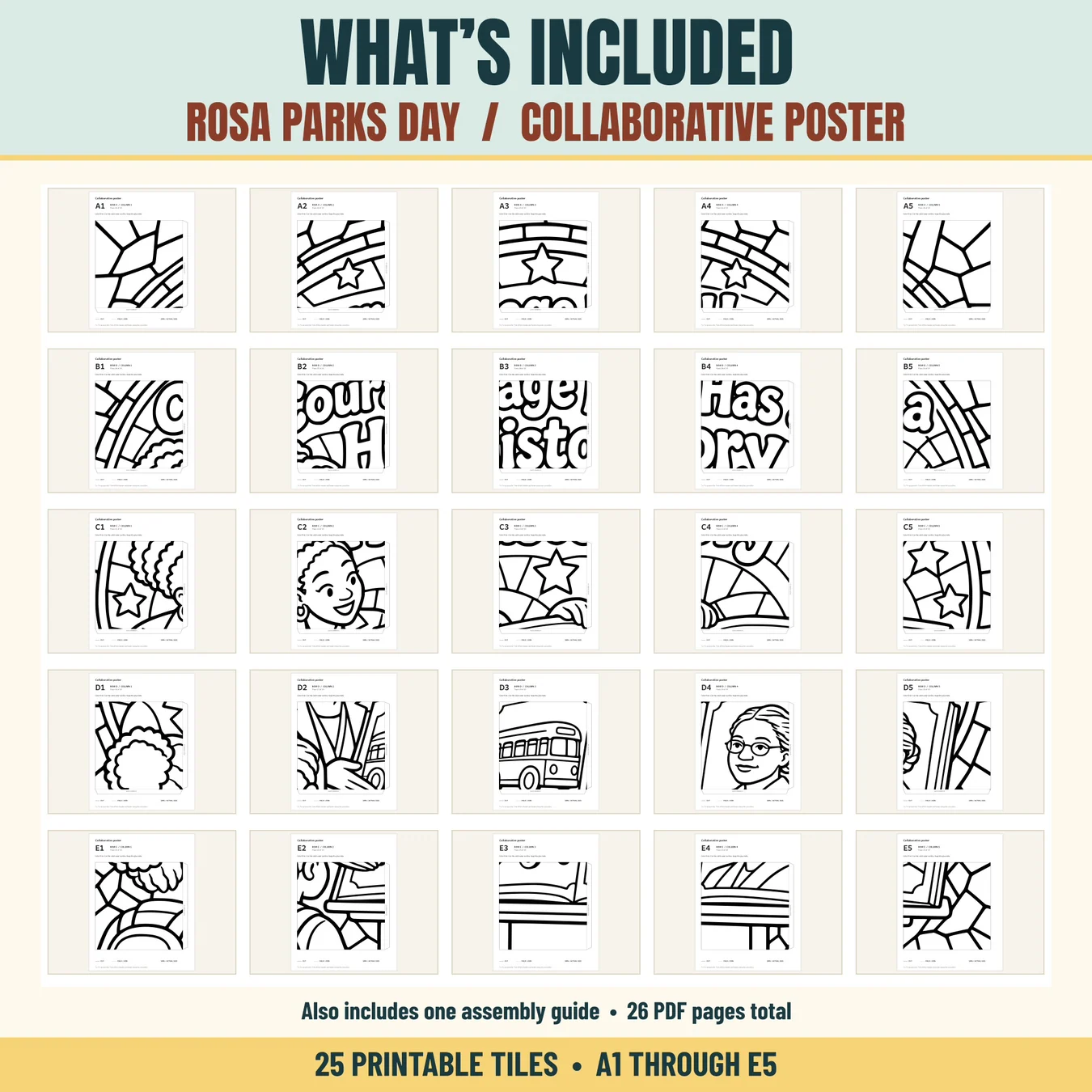
Two figures appear beside a bus within a circular design.
Classroom idea: What earlier actions help explain a later act of courage?
Give pairs a short reading about local civil rights organizing. Ask them to make two columns, “visible action” and “work behind it,” and attach evidence to both before writing a caption.
Open the individual Courage Has a History teaching guide.
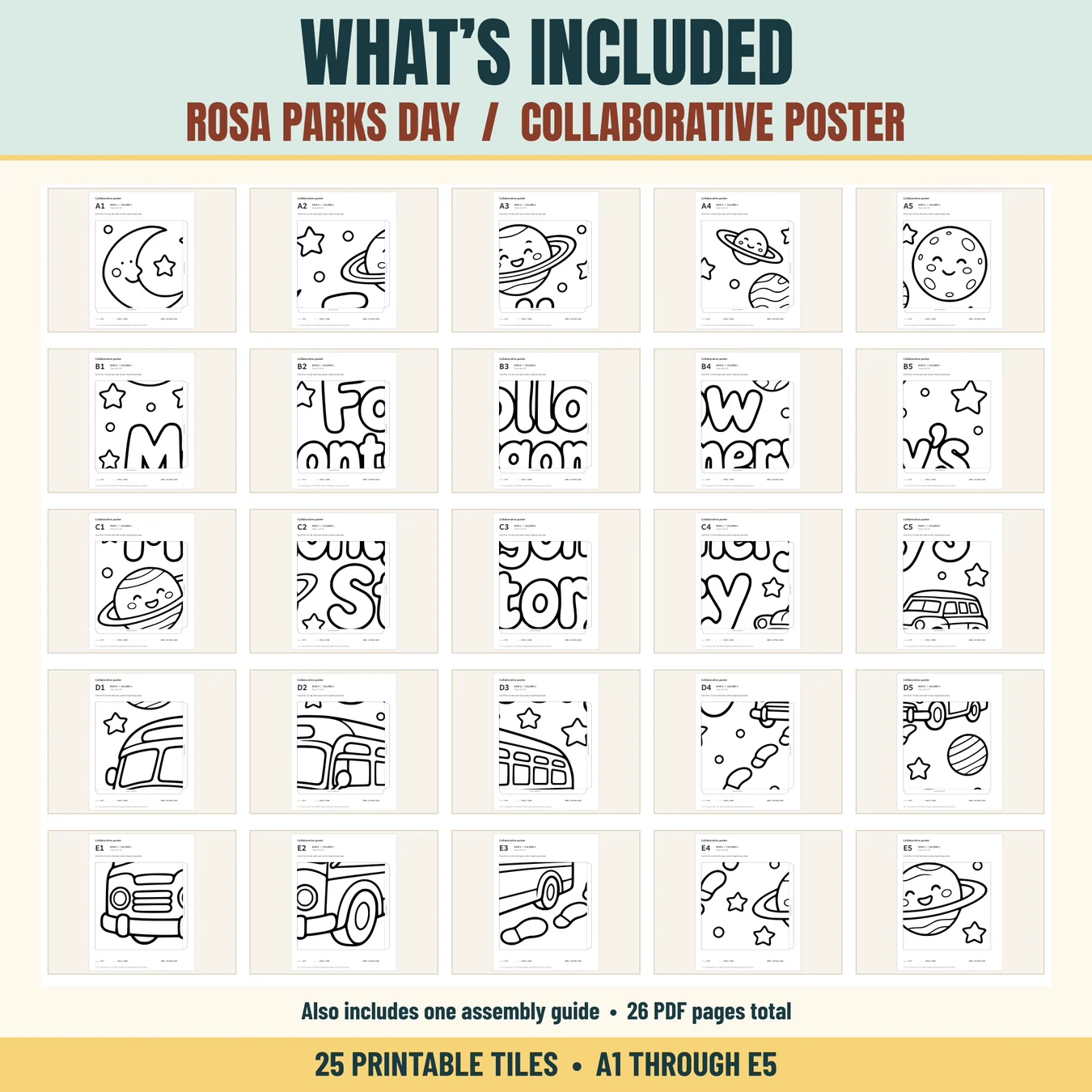
21. Follow Montgomery's Story Collaborative Poster
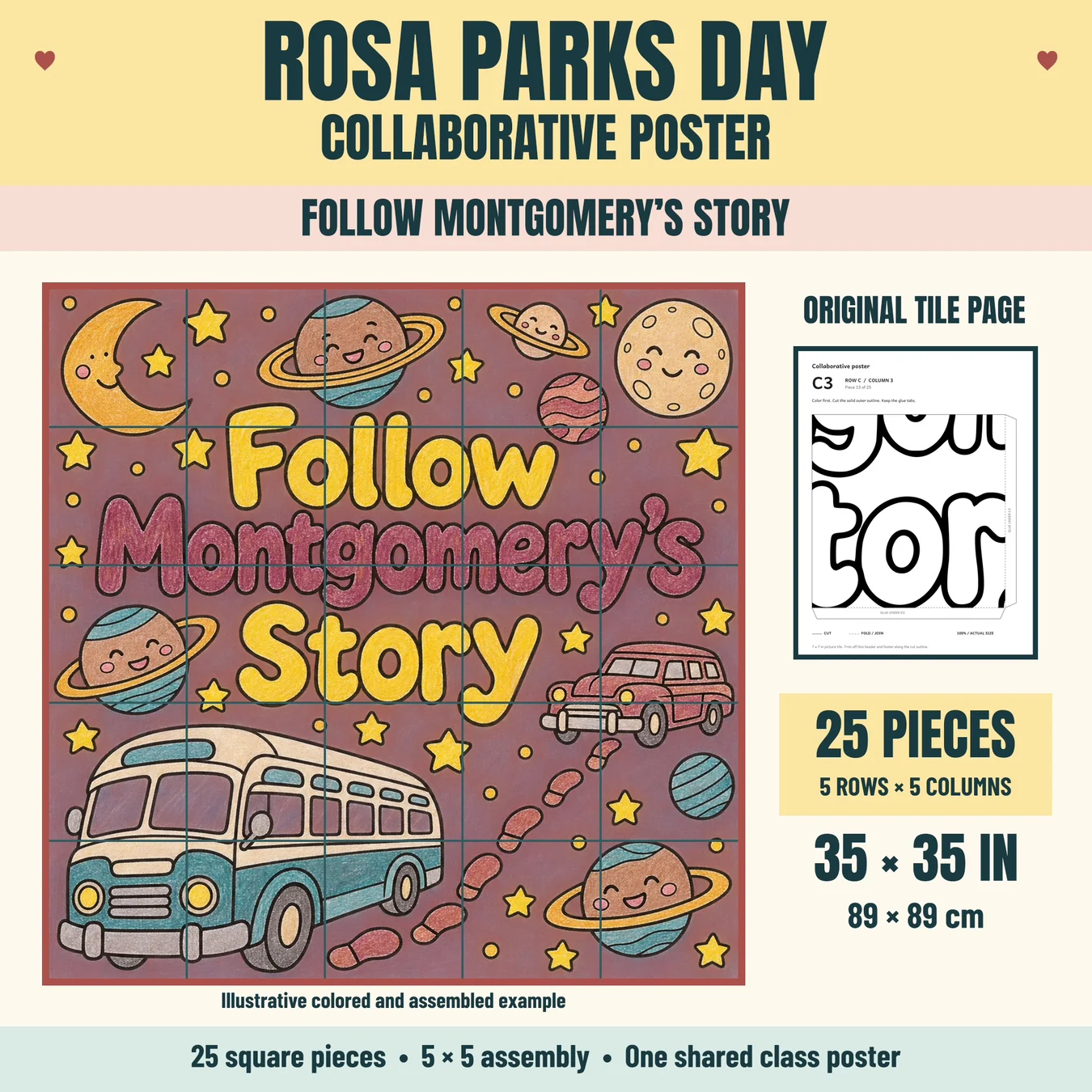
Best for: Separate events from causes.
A bus and stars sit below the invitation to follow Montgomery’s story.
Classroom idea: How do historians explain why one event led to another?
Place source-backed event cards in sequence. Then ask pairs to choose two cards and add an arrow caption that explains their relationship. Have another group check whether that relationship is supported by the reading.
Open the individual Follow Montgomery's Story teaching guide.
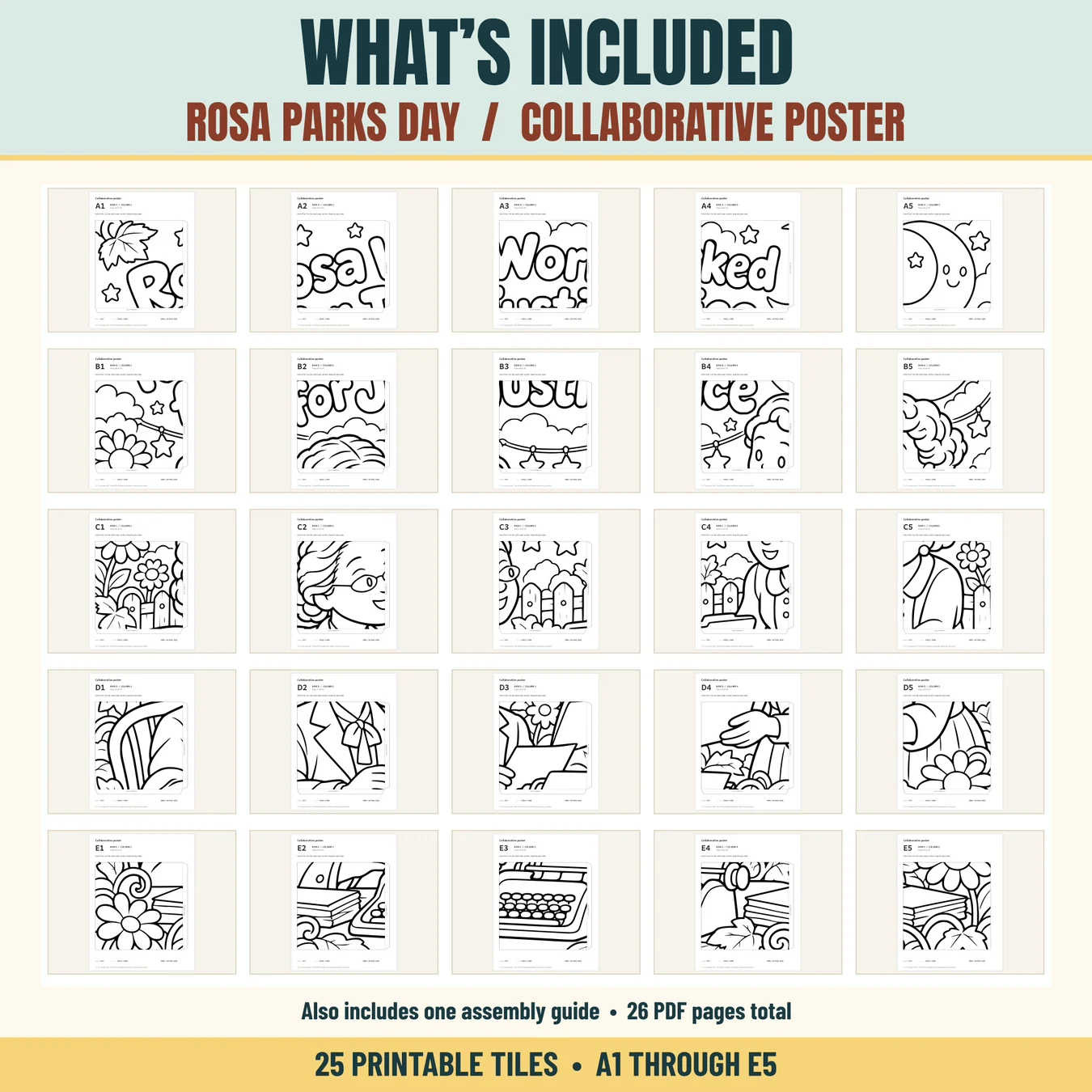
22. Rosa Worked for Justice Collaborative Poster
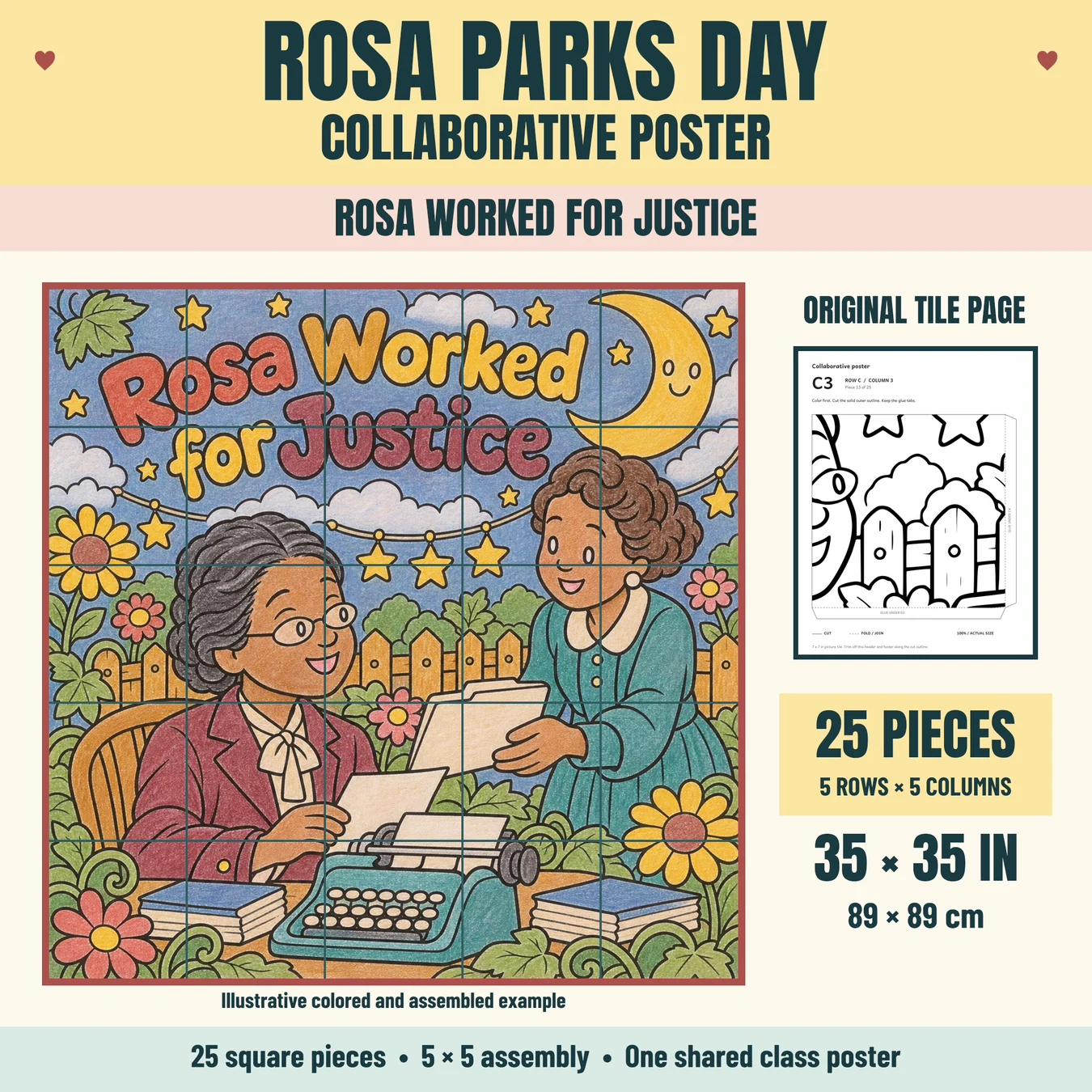
Best for: Turn a biography into a timeline.
Two organizers share papers at a desk.
Classroom idea: What was Parks doing before she became widely known?
Ask students to select three supported details from a biography. Put each detail on a timeline with an approximate date when needed. Mark which details came from the biography and which questions remain unanswered.
Open the individual Rosa Worked for Justice teaching guide.
23. Montgomery Organized Together Collaborative Poster
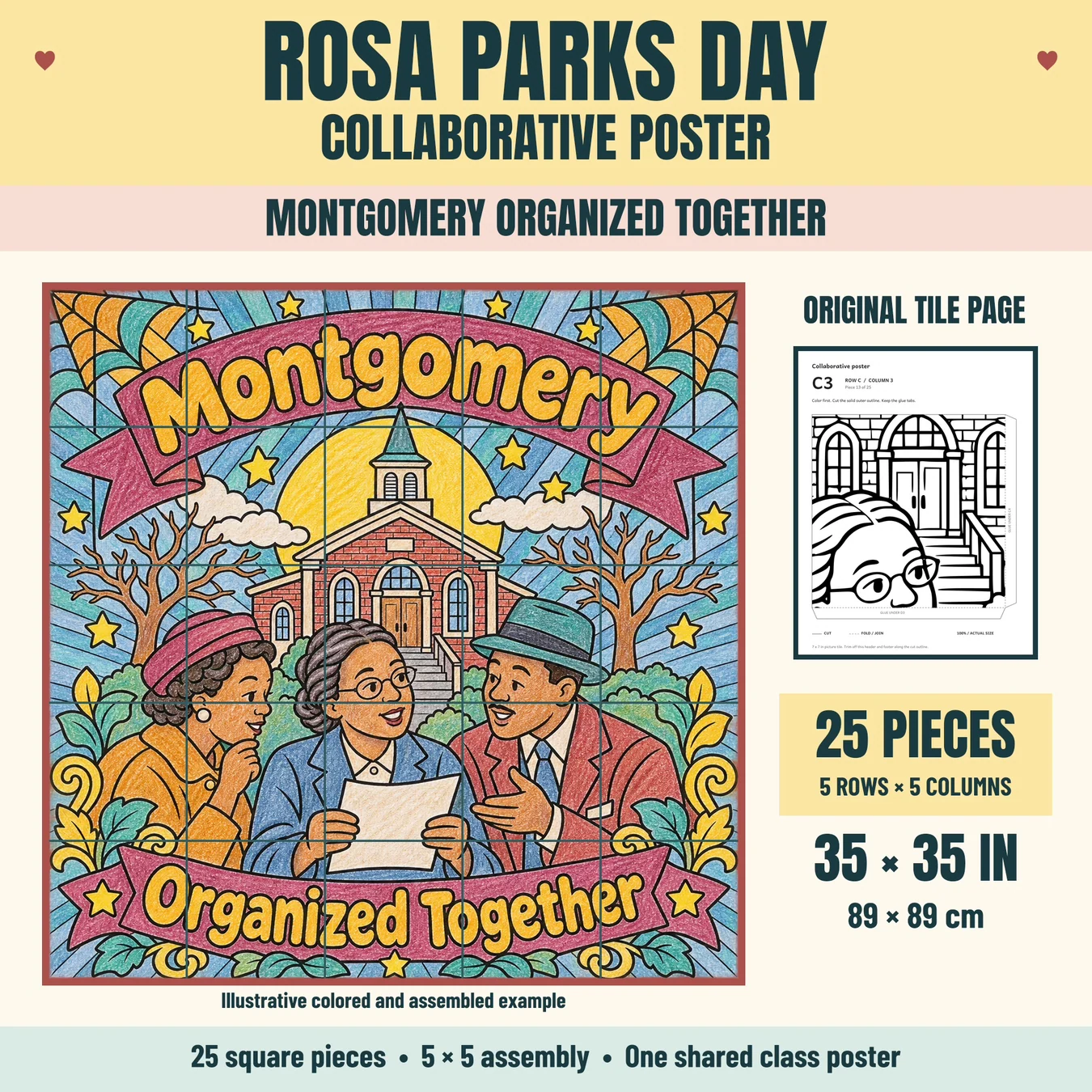
Best for: Build an organizer’s task board.
A group gathers with papers in front of a public building.
Classroom idea: What work did a community boycott require every day?
Sort task cards into communication, transportation and meetings. Ask groups to place one resource and one dependency next to each task, then show which work had to continue after the first day.
Open the individual Montgomery Organized Together teaching guide.
24. Word Spread Across Montgomery Collaborative Poster
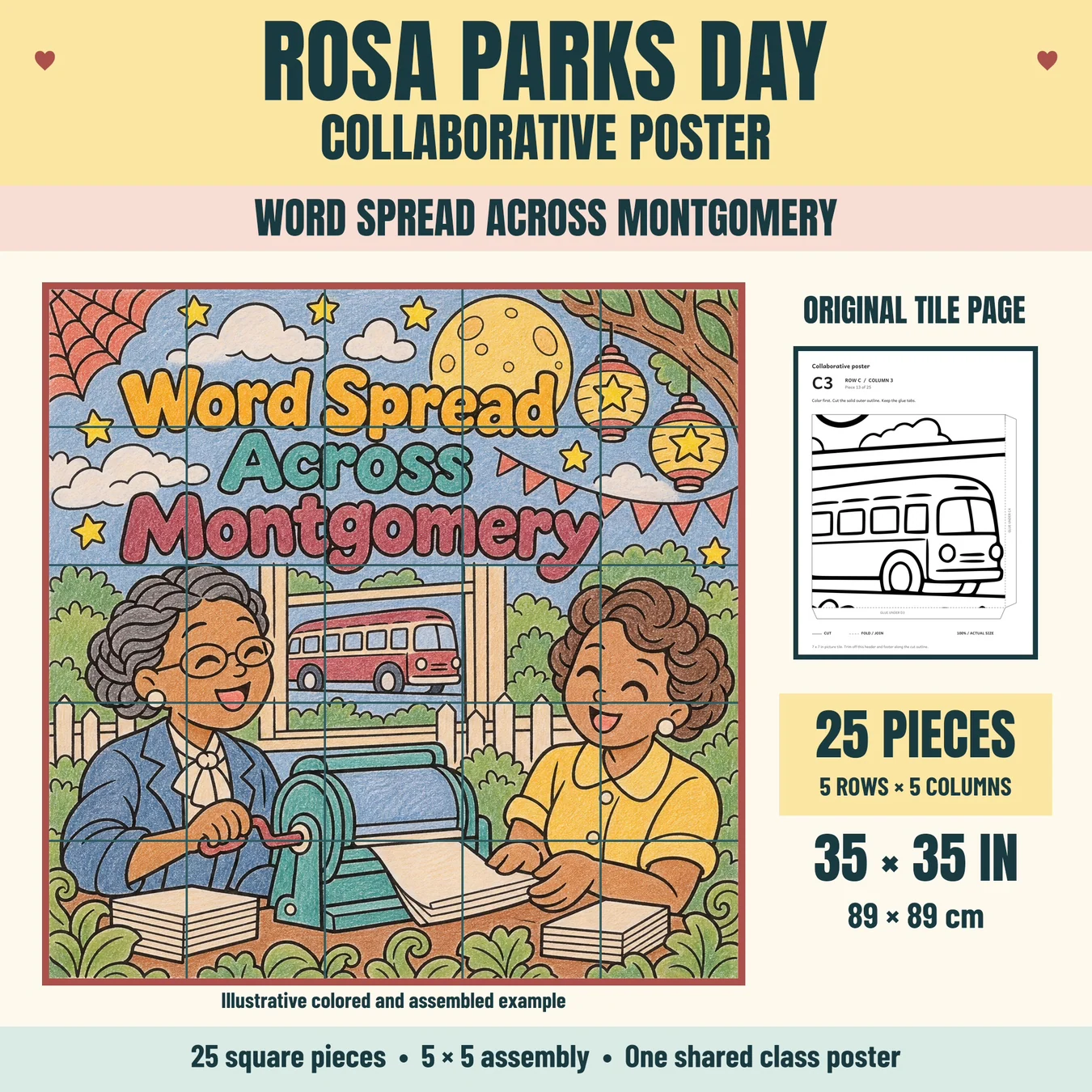
Best for: Trace how news travels.
Two people exchange papers, with a bus behind them.
Classroom idea: How could neighbors learn the same information in time to act?
Ask teams to draw a communication chain with a writer, printer, distributor and reader. Give them a fictional missing link and ask what would happen to the message. Compare with an account of how boycott notices circulated in Montgomery.
Open the individual Word Spread Across Montgomery teaching guide.
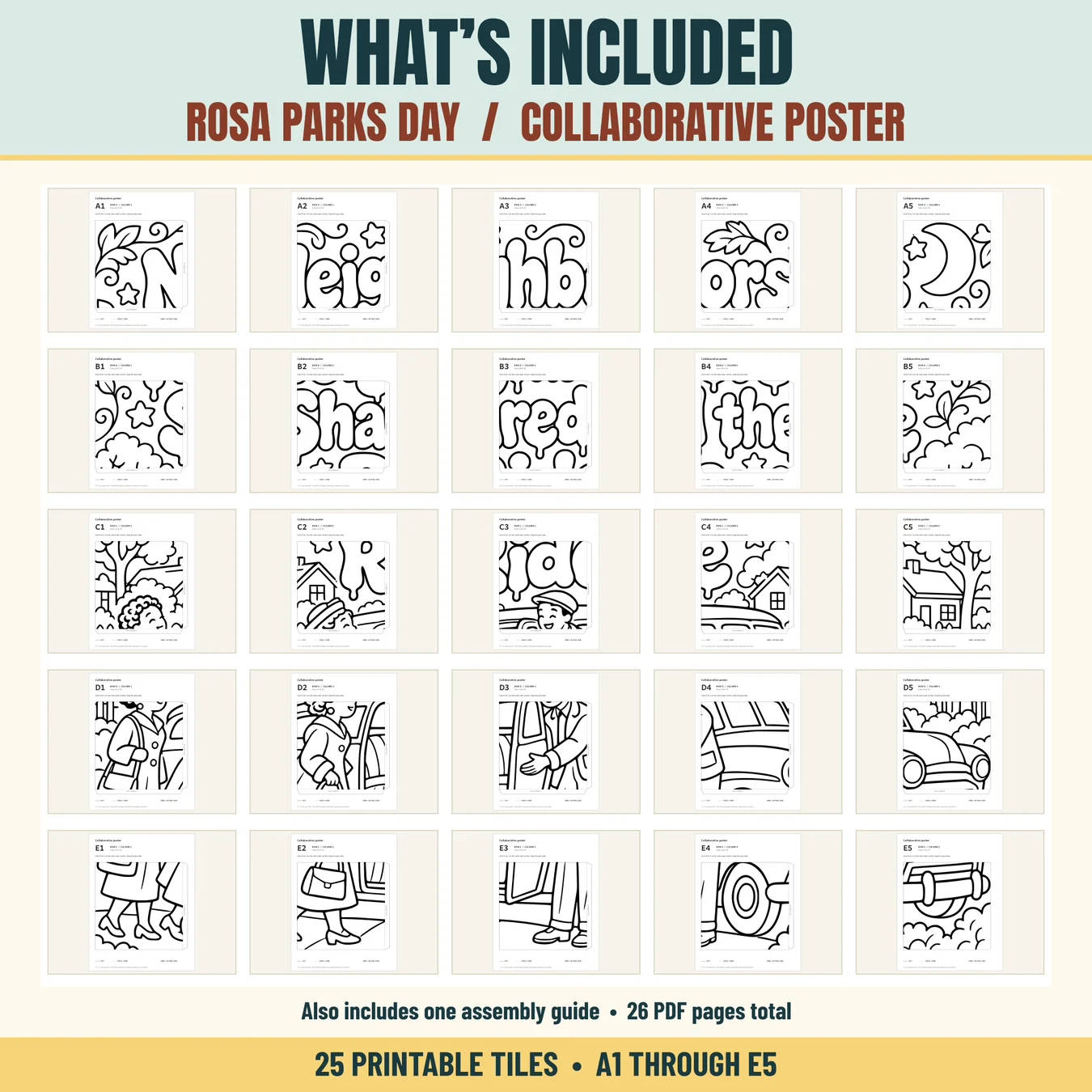
25. Neighbors Shared the Ride Collaborative Poster
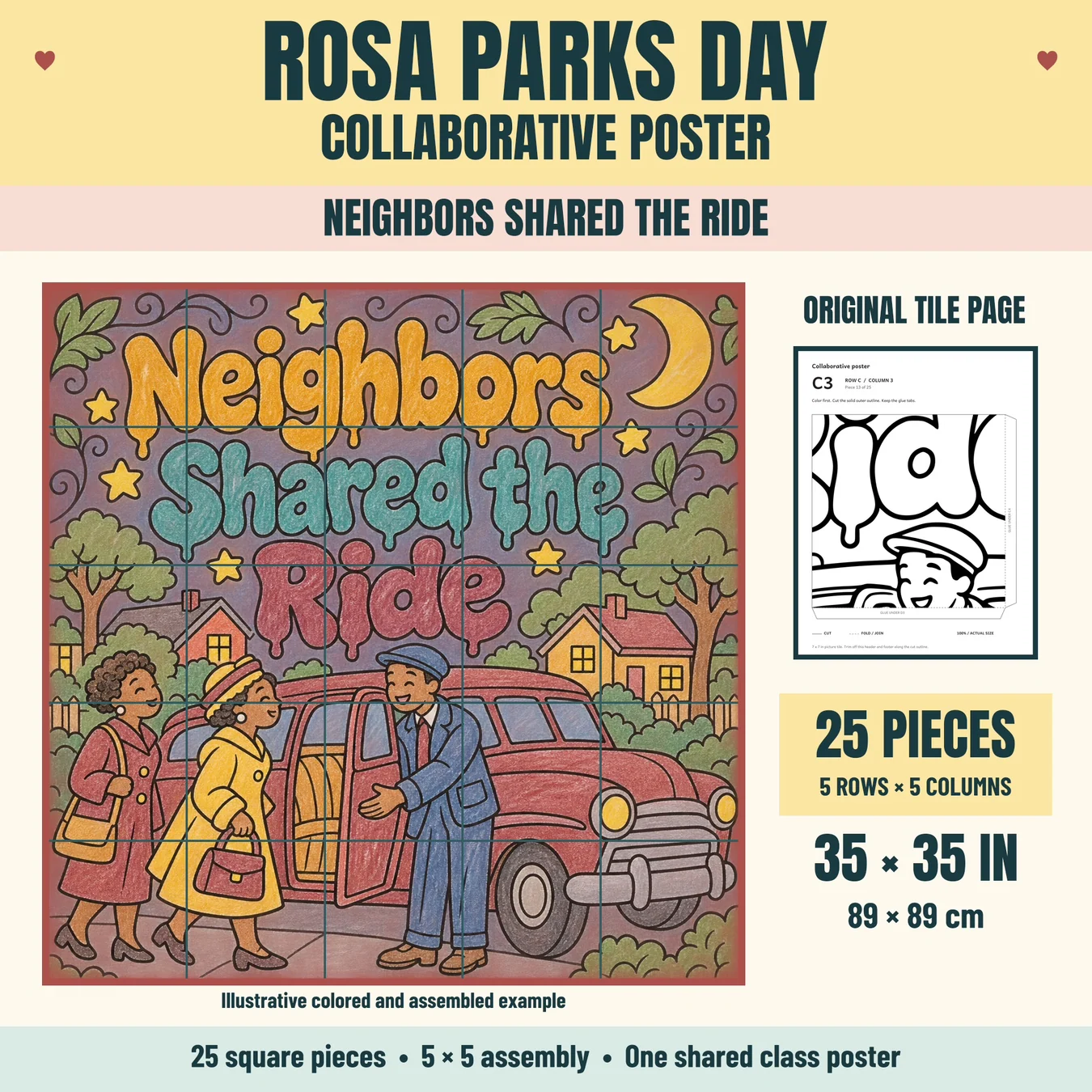
Best for: Share limited seats.
Neighbors gather near a car at night.
Classroom idea: How can people organize rides when not everyone fits in one car?
Use counters for passengers and slips for two cars with different capacities. Give groups a fictional set of departure times and ask them to make a feasible plan, then identify one assumption the plan relies on.
Open the individual Neighbors Shared the Ride teaching guide.
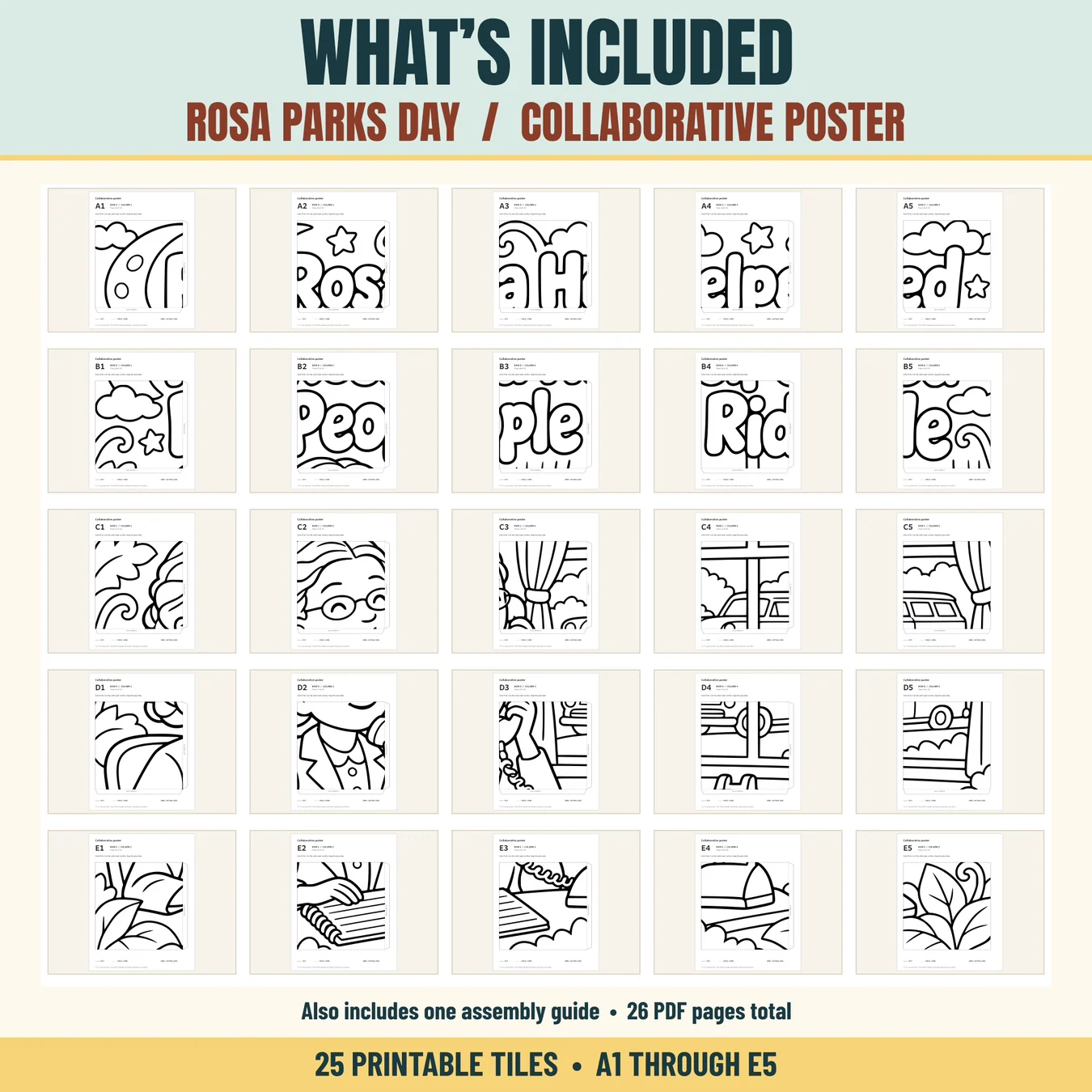
26. Rosa Helped People Ride Collaborative Poster
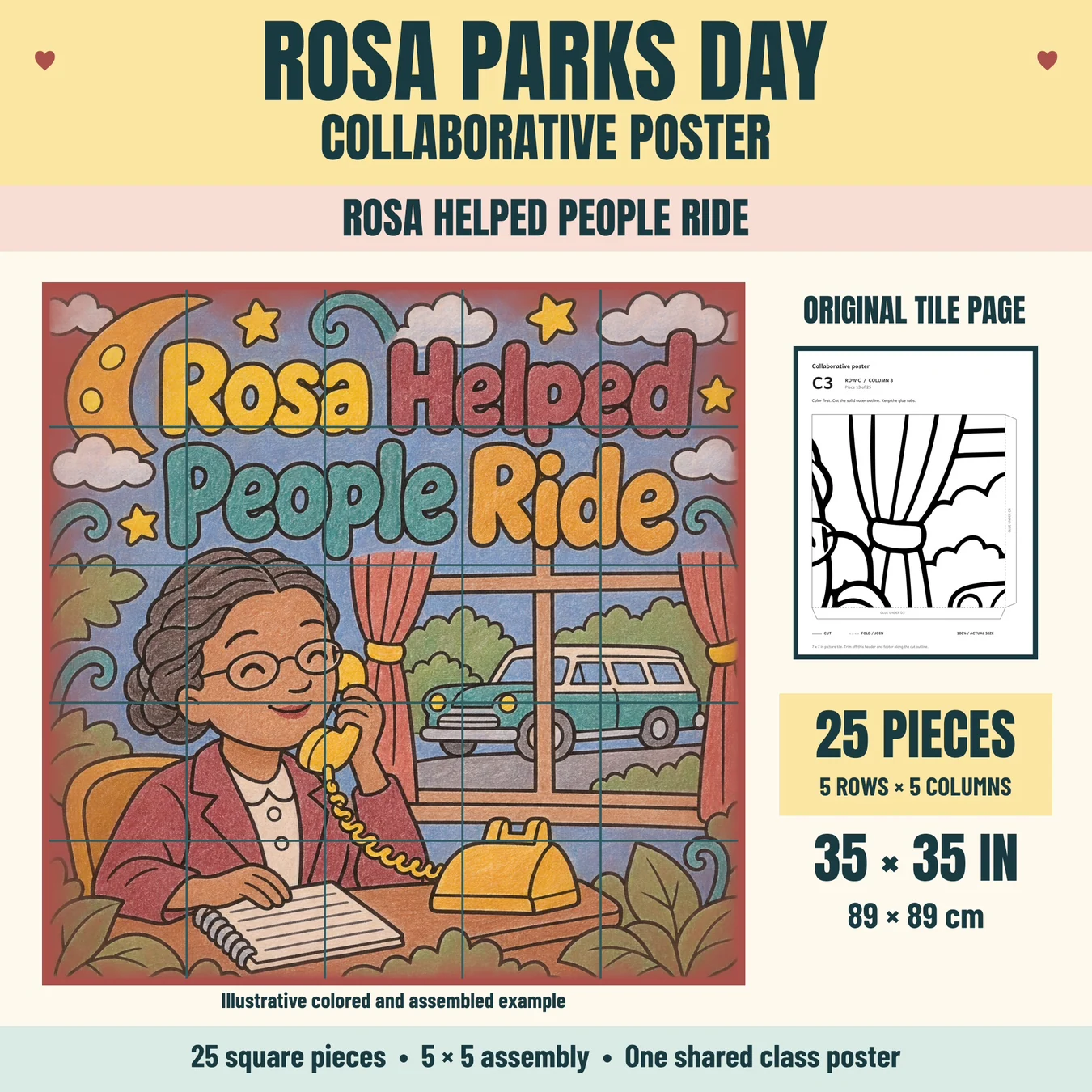
Best for: Plan a ride network.
An illustrated Rosa Parks sits by a telephone with a bus in the background.
Classroom idea: What arrangements made it possible to avoid taking the city bus?
Give teams a fictional route card with a home, workplace and meeting point. Ask them to design a ride schedule that meets two shift times. Then compare their choices with the historical carpool instructions.
Open the individual Rosa Helped People Ride teaching guide.
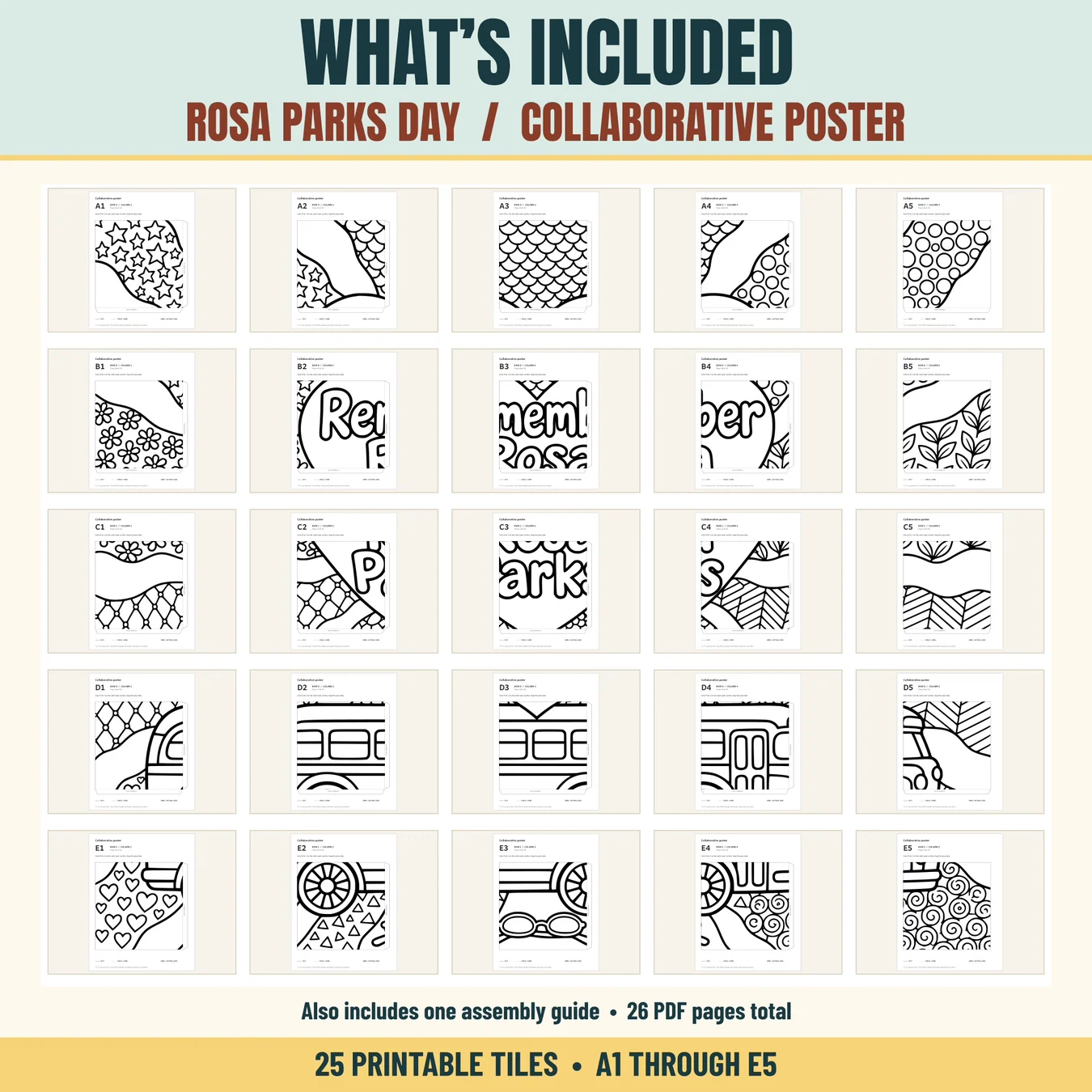
27. Remember Rosa Parks Collaborative Poster
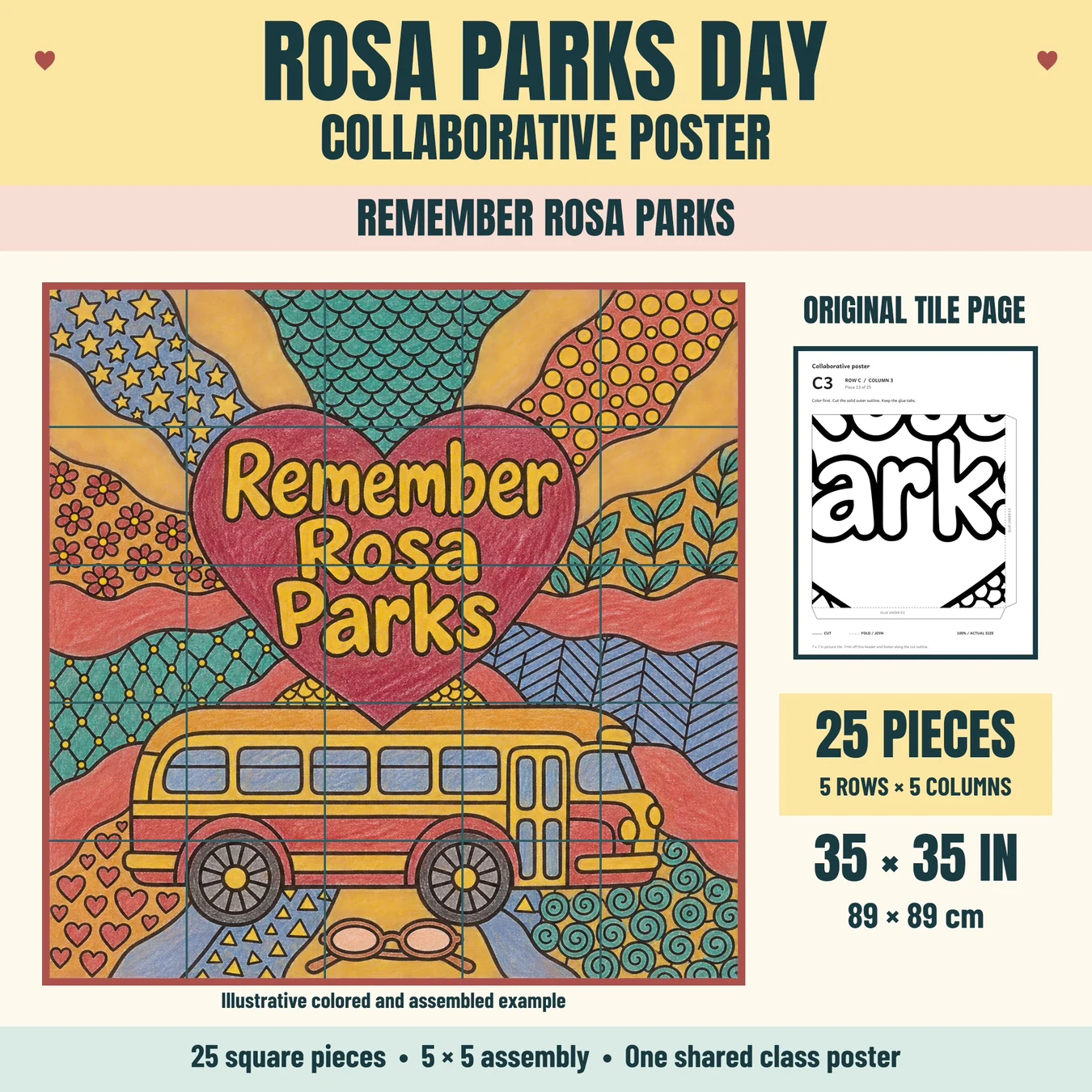
Best for: Remembering beyond one event.
A city bus sits below a large heart.
Classroom idea: What gets left out when we remember only the bus arrest?
Give pairs one short biography excerpt on Parks’s work before 1955 and one about the boycott. Invite them to create a museum label with a date or period for each part and one sentence that connects the two.
Open the individual Remember Rosa Parks teaching guide.
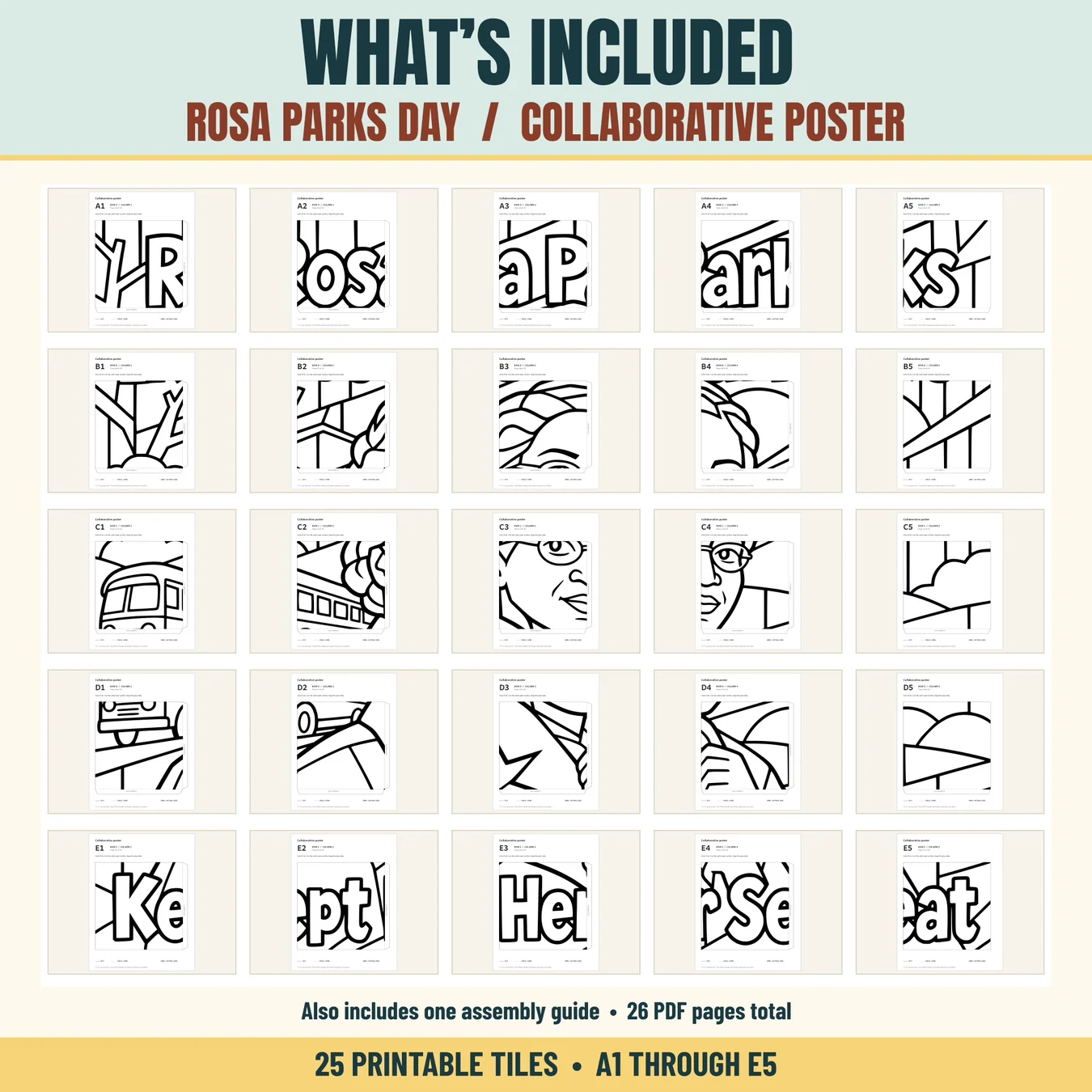
28. Rosa Parks Kept Her Seat Collaborative Poster
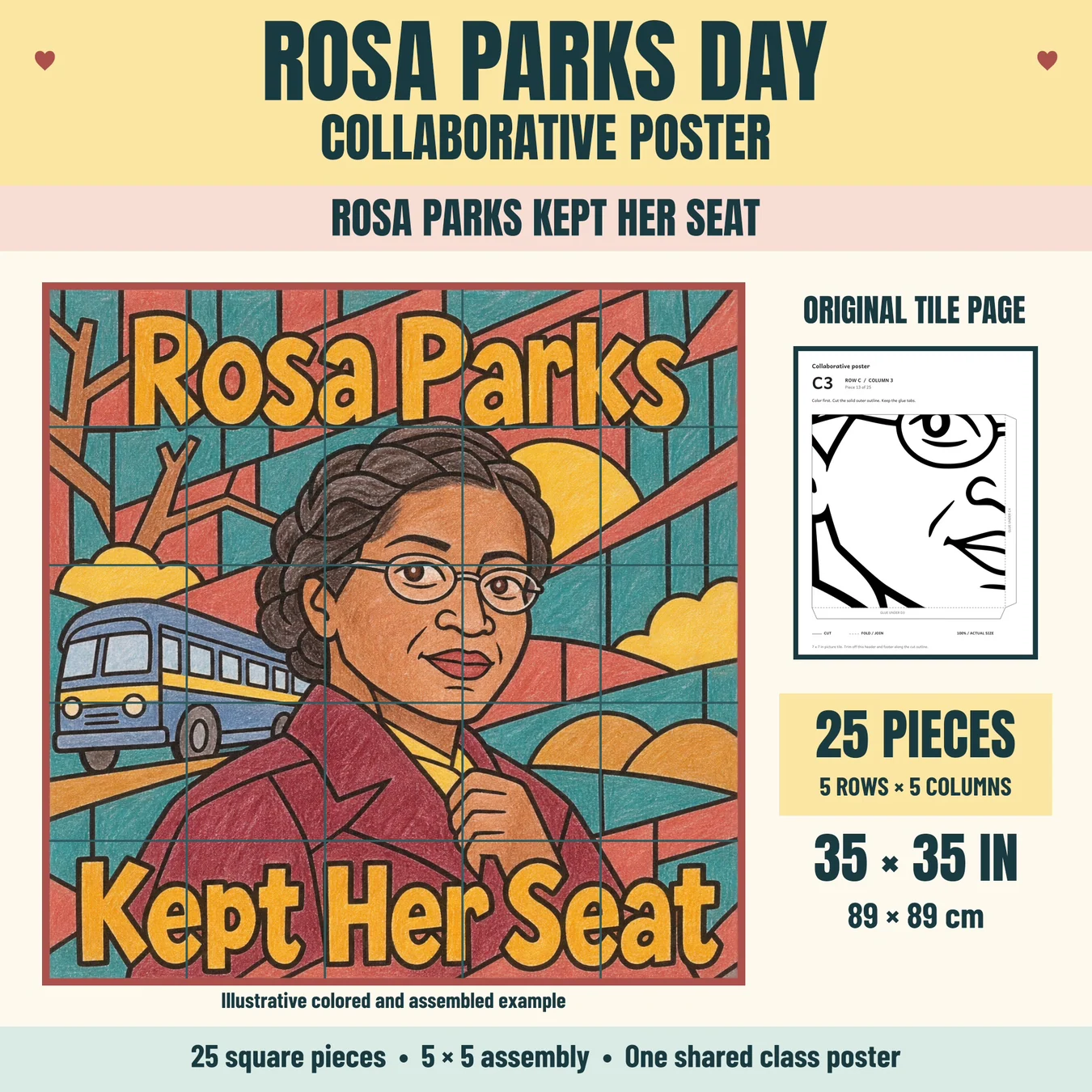
Best for: Reconstruct an event from evidence.
An illustrated portrait of Rosa Parks fills the design in front of a bus.
Classroom idea: What can a record tell us about December 1, 1955?
Use a teacher-selected excerpt from Parks’s account and an image of the bus seating diagram in the Library of Congress exhibit. Ask groups to write one detail from each source and place both around a sentence they can support.
Open the individual Rosa Parks Kept Her Seat teaching guide.
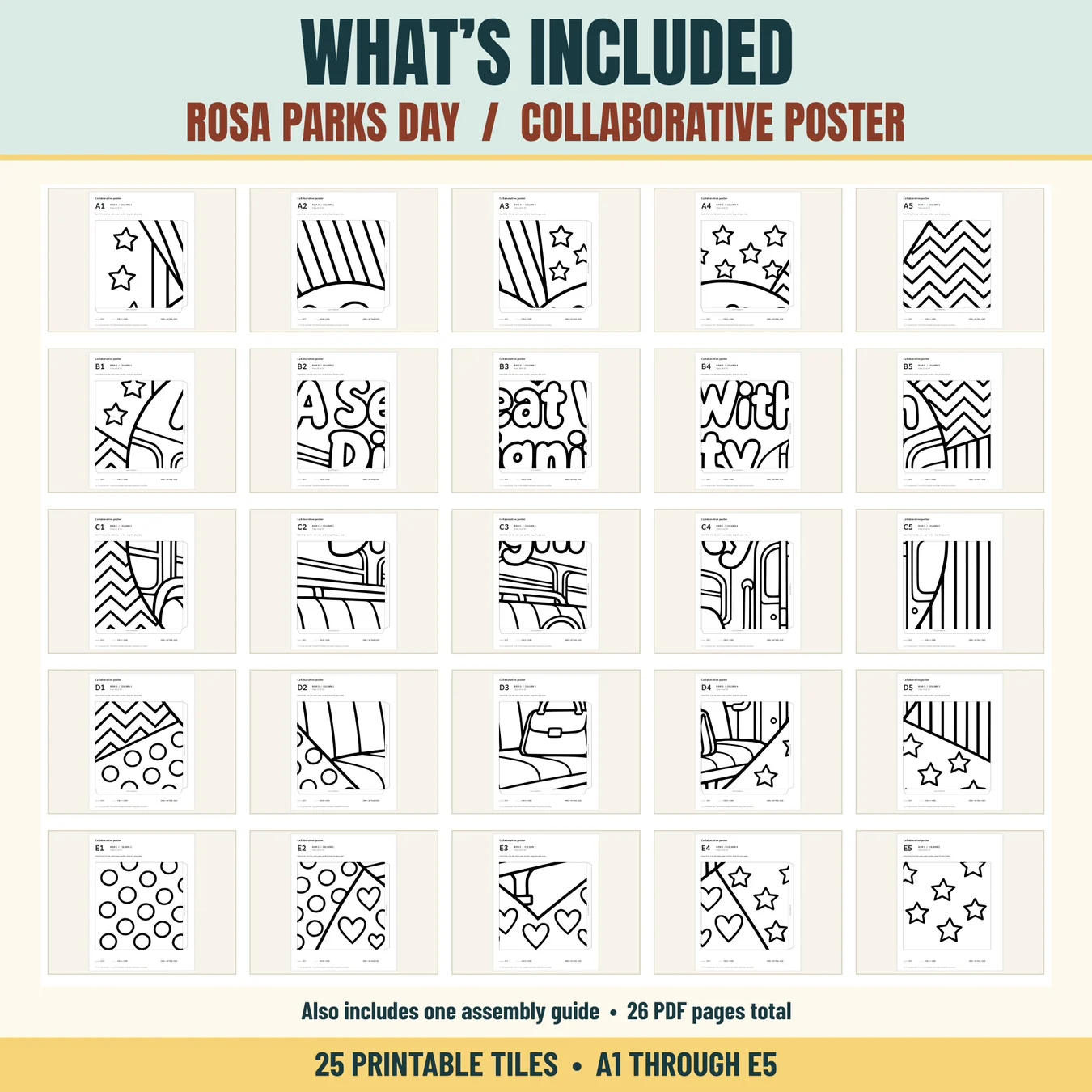
29. A Seat With Dignity Collaborative Poster
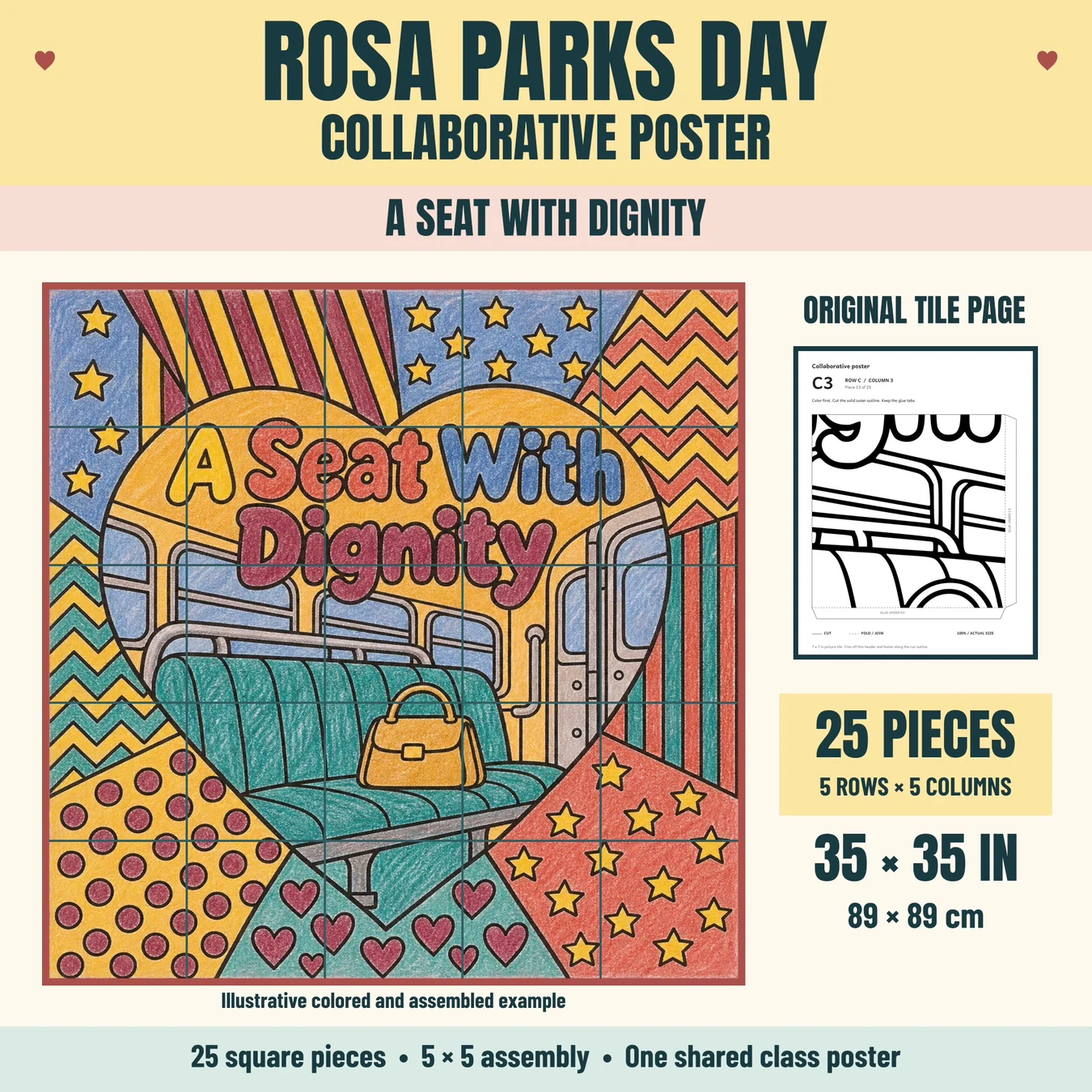
Best for: Dignity in public space.
An empty seat inside a bus centers the message about dignity.
Classroom idea: What does dignity mean when people use a public service?
Give groups a neutral example such as using a public library. Ask them to draw two columns, “access” and “treatment,” and identify one way people can be denied each. Then use a historical reading to connect both ideas to segregation on buses.
Open the individual A Seat With Dignity teaching guide.
30. Honor Rosa Parks Day Collaborative Poster
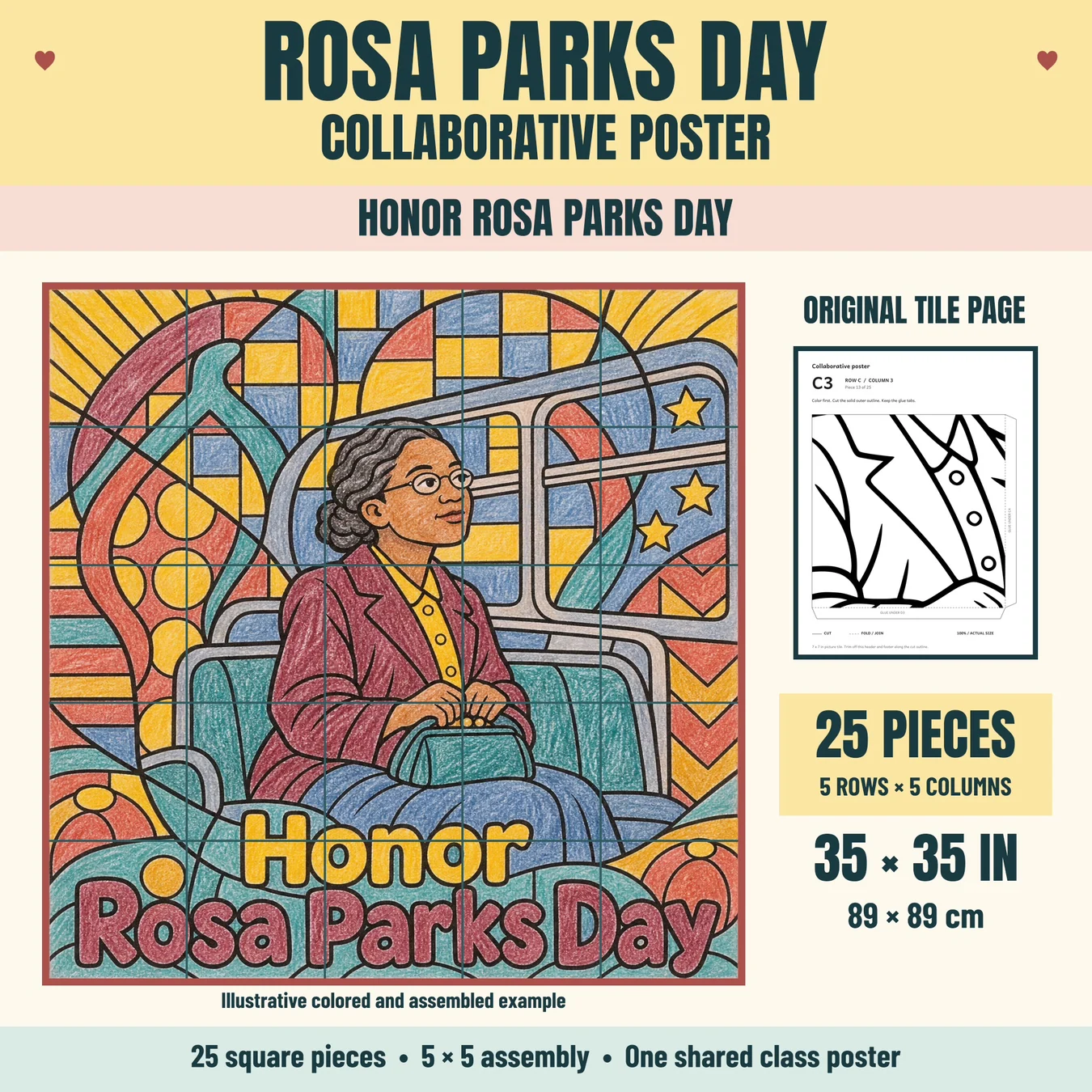
Best for: A two-part memorial label.
An illustrated Rosa Parks sits inside a bus beneath patterned windows.
Classroom idea: What should a visitor learn from a display honoring Rosa Parks?
After a read-aloud, give partners a card divided into “What happened” and “Why we remember.” Have them use the first side for an event supported by the reading and the second for an explanation in their own words.
Open the individual Honor Rosa Parks Day teaching guide.
Print, color and assemble
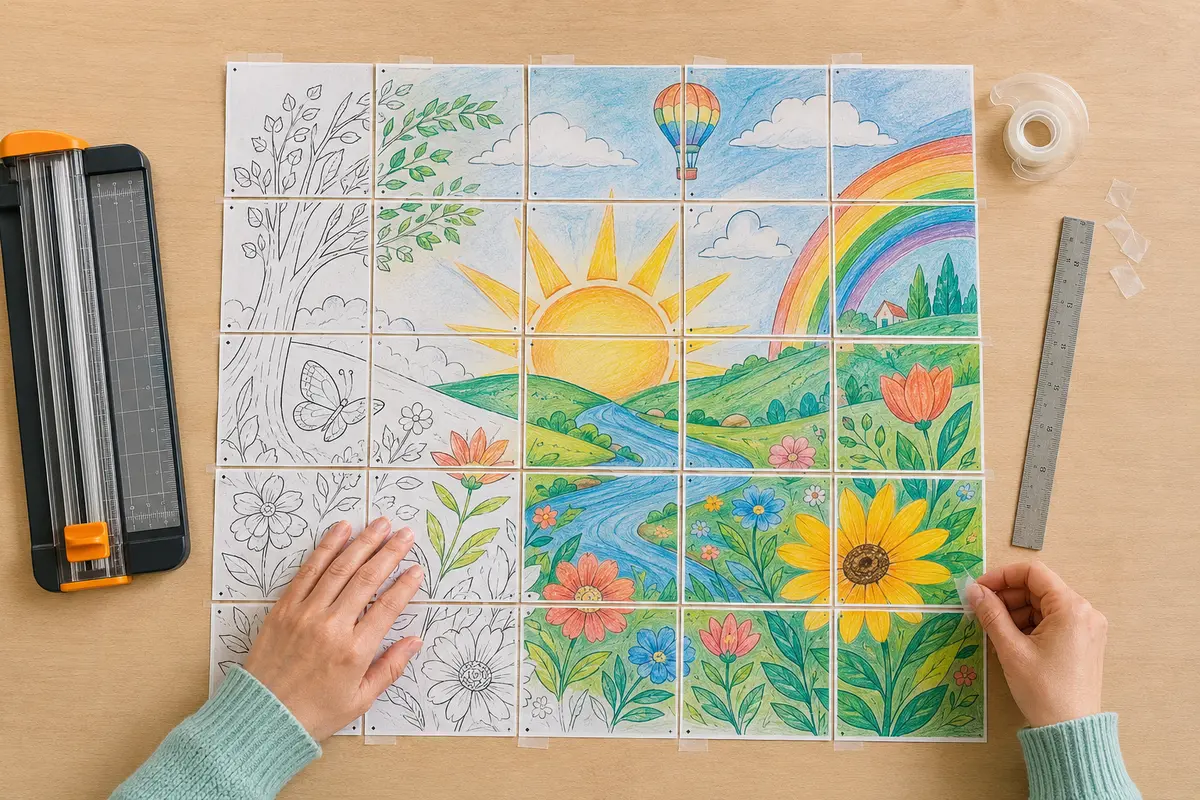
- Print one test tile using the scale specified in the PDF. Use the same settings for all 25 tiles and keep the assembly map separate.
- Give each learner a numbered tile or assign shared jobs for sorting, checking and joining pieces.
- Lay the colored tiles out in five rows of five, align the edges using the map and attach them from the back.
- Add a short source-based caption beside the mural. Leave room for the 35-inch square and its captions.
What each download contains
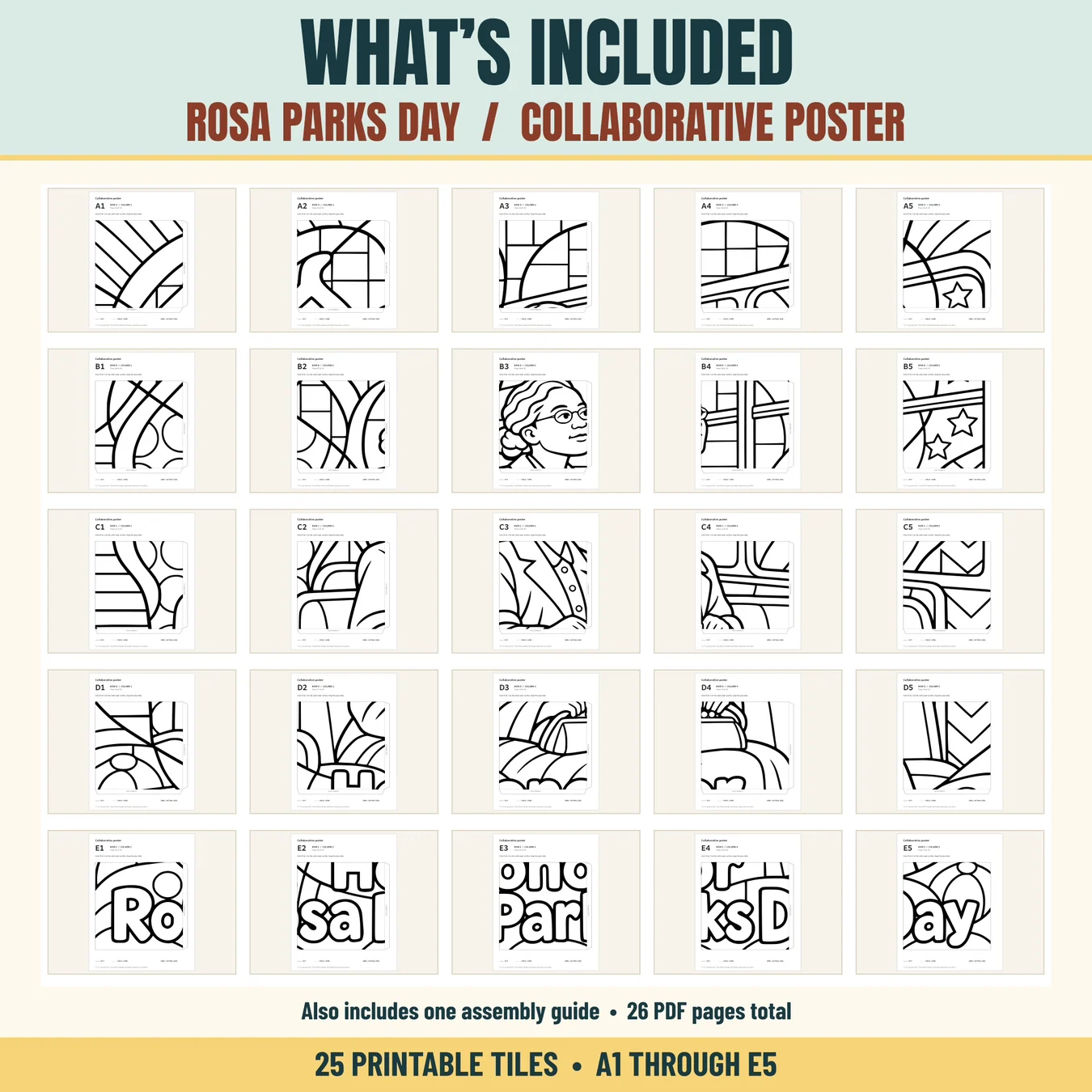
The listing includes one 26-page digital PDF: 25 numbered black-and-white coloring tiles and one assembly map. At the intended print scale the five-by-five mural measures 35 × 35 inches (about 89 × 89 cm). The color cover is a preview. The teaching examples here are optional extensions for your class.
Sources for planning the lesson
Ready to create together?
Choose a printable, give every student a piece, and watch the big picture come to life.
Explore Rosa Parks Day posters ↗Frequently asked questions
How do I choose among the Rosa Parks Day designs?
Choose the historical question first. The designs support different lessons about biography, communication, carpool planning, evidence and public access. Use the matching individual teaching guide for an activity tied to that question.
What files are described in the Rosa Parks Day listings?
The checked listings describe a 26-page digital PDF with 25 numbered black-and-white coloring tiles and one assembly map. The intended five-by-five picture measures 35 × 35 inches at the specified scale.
Do the posters replace a historical reading?
No. Pair the illustration with a teacher-selected source such as the Rosa Parks Papers or a documented account of the Montgomery bus boycott. Students should distinguish an artwork detail from a statement supported by a source.
Are the lesson cards and classroom models included in the PDF?
The teaching activities are extensions written for the guide. The product is the tiled coloring-poster PDF and assembly map. Prepare any writing cards, route models or source excerpts separately.
Can the whole class participate without 25 individual students?
Yes. Use partners or extra turns and assign meaningful sorting and assembly jobs. Check that all 25 coordinates are complete before joining the rows.